India Pharma Outlook Team | Wednesday, 25 March 2026
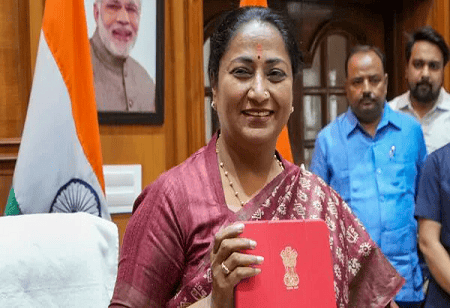
The Delhi Health Budget 2026 places strong emphasis on expanding critical care capacity across hospitals. Plans include scaling up ICU facilities, strengthening emergency response systems, and improving access to life-saving treatment.
This comes as public hospitals in the capital continue to face high patient loads, often operating at or beyond capacity. A major highlight of the budget is the push toward hospital infrastructure expansion.
The government has set aside around Rs 1,000 crore for ongoing construction and is aiming to complete nearly 10 to 13 delayed hospital projects. These efforts are expected to add close to 6,500 new beds across the city, easing pressure on existing facilities and improving patient access, especially in high-density areas.
Child healthcare and early diagnosis form another key pillar of the budget. The government is introducing large-scale newborn screening programs designed to detect diseases at an early stage. Under this initiative, more than 50 diagnostic tests may be conducted using a single blood sample to identify genetic and congenital conditions. The expansion of free diagnostic services is expected to reduce long-term health risks and lower treatment costs for families.
Also Read: How to Bridge the Healthcare Gap in Emerging Markets with MedTech
The focus on preventive healthcare is further reflected in the strengthening of primary health systems. AroundRs 320 crore has been allocated for Ayushman Arogya Mandir centers, with plans to upgrade hundreds of facilities across Delhi. These centers are expected to offer over 200 diagnostic services, bringing essential healthcare closer to local communities and reducing dependence on major hospitals.
Financial protection and access to treatment are also being expanded under the budget. A significantRs 2,144 crore has been earmarked for the rollout of the Ayushman Bharat scheme in Delhi. The move aims to extend health insurance coverage to a wider population, including vulnerable groups such as transgender individuals, ensuring more inclusive access to care.
The Delhi Health Budget 2026 also introduces a digital health push, with Rs 10 crore allocated for a health card system. This system will use QR-based technology to store patient records, allowing doctors to quickly access medical histories and improve treatment efficiency. In addition, the government is working on systems like real-time hospital bed tracking and expanding ambulance services to strengthen emergency response.
Overall, the Delhi Health Budget 2026 reflects a clear shift in strategy rather than scale. Instead of a large funding jump, the government is focusing on strengthening healthcare delivery through infrastructure, early diagnosis, and preventive care. The approach aims to reduce long-term pressure on hospitals while improving access, efficiency, and outcomes across the city’s healthcare system.
Key data: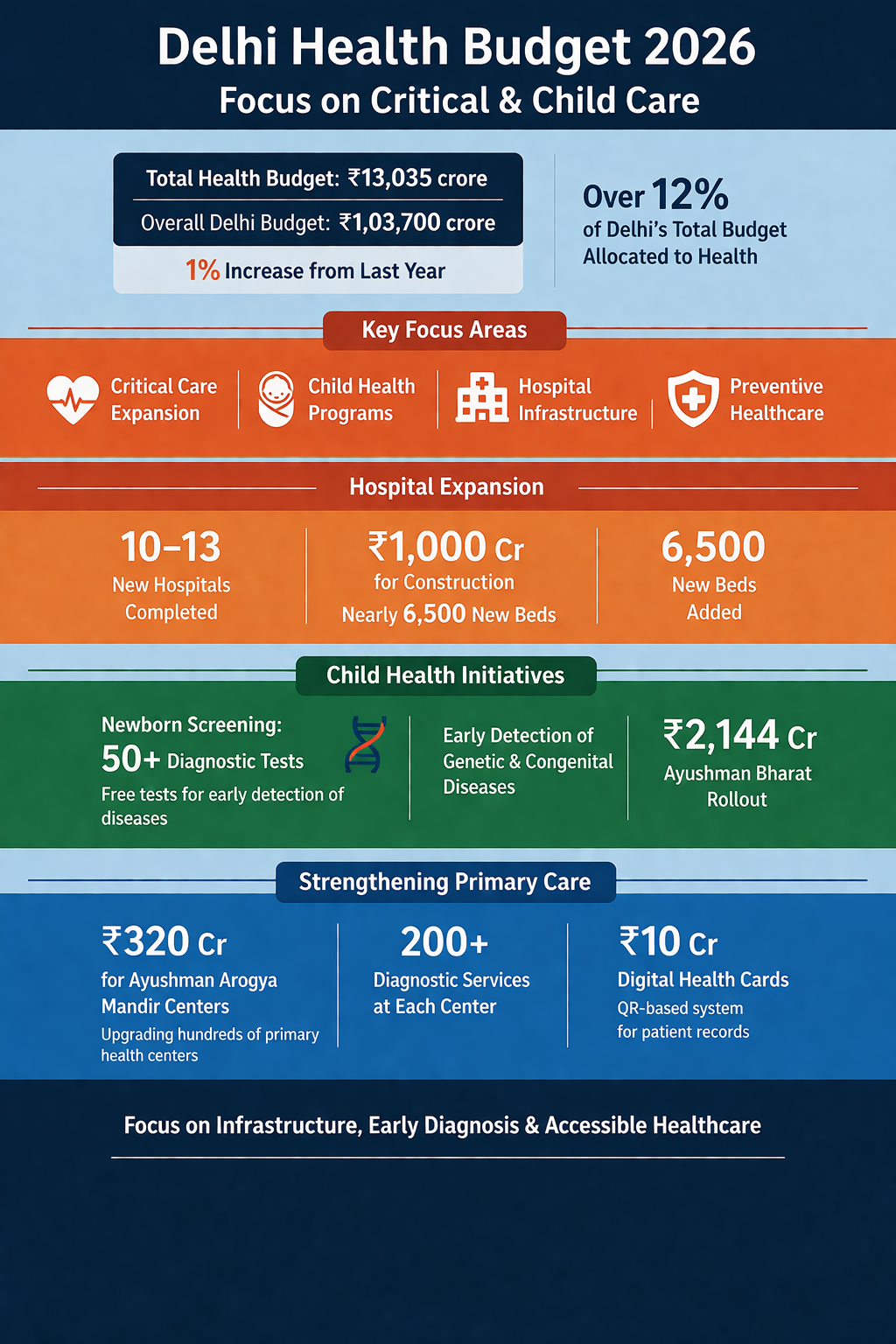
Infrastructure & Capacity Expansion
Why it matters: Delhi hospitals often run over capacity. These additions aim to reduce overcrowding and waiting time.
Child Healthcare & Preventive Care
Primary Healthcare Strengthening
Insurance & Healthcare Access
Expands financial protection and access to treatment.
Digital Health Push
Doctors can instantly access medical history → faster treatment.

.jpg)