India Pharma Outlook Team | Thursday, 21 May 2026
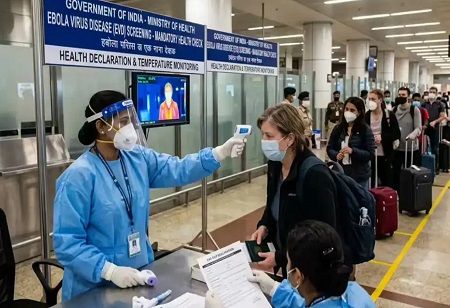
India tightens Ebola vigilance with no cases reported yet amid the WHO alert, as the Centre steps up preparedness measures following the World Health Organization (WHO)’s declaration of a global health emergency.
While officials have confirmed that no Ebola cases in India have been detected so far, health authorities are taking precautionary steps to strengthen surveillance, testing, and emergency response systems. The move reflects growing concerns over the Ebola outbreak in parts of Africa and the risk of international spread through travel.
The Union Health Ministry recently held a high-level review meeting involving officials from the Ministry of Health and Family Welfare, the National Centre for Disease Control (NCDC), the Indian Council of Medical Research (ICMR), and other public health agencies. The discussion focused on India Ebola preparedness and the country’s ability to respond quickly if a suspected infection emerges.
Officials said India currently faces a low risk of infection but stressed the importance of staying prepared in an interconnected world where international travel can increase the possibility of imported cases. Authorities have assured citizens that there is no immediate cause for concern, but preventive action remains necessary.
Also Read: India Plans National Registry to Track Implantable Medical Devices
As part of its preparedness strategy, the government has strengthened airport screening in India and health checks at ports, especially for travelers arriving from countries affected by the Ebola outbreak. Health teams are reviewing standard procedures related to quarantine, surveillance, hospital preparedness, and patient management to ensure a quick response if required.
The National Institute of Virology (NIV Pune) has been identified as the main laboratory for Ebola testing in India. Officials said more laboratories could be added if the situation changes or if additional testing capacity becomes necessary. The government emphasized that these efforts are precautionary and aimed at avoiding delays in identifying and managing any suspected case.
Medical experts have also tried to ease public anxiety by explaining that Ebola spreads very differently from respiratory diseases such as COVID-19. The virus mainly spreads through direct contact with infected bodily fluids, including blood, saliva, vomit, or contaminated surfaces. Because of this mode of transmission, experts say the chances of rapid community spread remain relatively low without close contact.
The WHO recently declared the Ebola outbreak a global health emergency after cases and deaths increased in parts of Central Africa, particularly in the Democratic Republic of Congo Ebola outbreak and Uganda. The decision was taken due to concerns that the outbreak could spread across borders if strong containment measures are not implemented quickly.
Health officials are especially concerned because the outbreak involves the Bundibugyo Ebola strain, for which no approved vaccine is currently available. Treatment mainly depends on early diagnosis, supportive medical care, strict isolation, and infection control practices. Experts have warned that developing an effective vaccine for the strain could take time.
India has faced Ebola-related concerns in the past. In 2014, a traveler returning from Liberia tested positive in Delhi, but authorities managed the situation effectively through quick isolation and contact tracing, preventing any wider spread.
For now, the Centre continues to closely monitor the global situation while urging people to avoid panic and rely only on verified updates from official health authorities. Officials maintain that although the risk to India remains low, staying alert and prepared is essential to prevent any possible health emergency.