
India Pharma Outlook Team | Tuesday, 09 June 2026
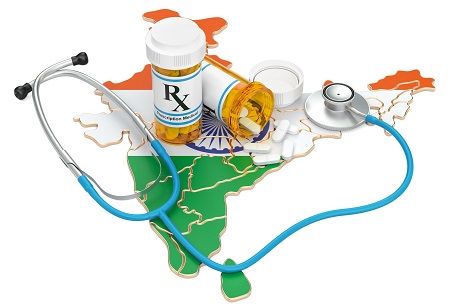
India seeks global partnerships to accelerate pharma growth as the country enters a new phase of expansion, strengthening its position as a trusted destination for pharmaceutical manufacturing, innovation, and healthcare solutions.
With the industry currently valued at approximately USD 60 billion, policymakers believe it has the potential to reach USD 120 billion within the next five years, driven by innovation, international collaboration, advanced manufacturing, and rising healthcare demand. The vision reflects India’s ambition to move beyond being a leading supplier of generic medicines and emerge as a global hub for pharmaceutical research, drug development, biotechnology, MedTech, and healthcare innovation.
Addressing the Global Ambassador Meet on the Pharmaceutical Sector and the curtain-raiser for GDRC 2026 and IPHEX 2026 in New Delhi, Union Commerce and Industry Minister Piyush Goyal invited international pharmaceutical companies to become part of India's growth story. He emphasized that India is ready to serve as a customer, innovator, technology partner, clinical trial destination, and manufacturing hub for the global pharmaceutical industry, supported by a strong manufacturing base, skilled workforce, and rapidly evolving innovation ecosystem.
The minister highlighted that India remains the world's fastest-growing major economy despite global geopolitical uncertainties and trade challenges. He noted that the country's economy expanded by 7.7 percent during the financial year ended March 2026, providing a strong foundation for healthcare and pharmaceutical investments. Goyal also reaffirmed India's commitment to providing market access to high-quality innovative pharmaceutical products while encouraging deeper global engagement in the country's healthcare ecosystem.
For decades, India has been recognized as the “Pharmacy of the World” due to its ability to produce affordable, high-quality medicines at scale. The country supplies a significant share of generic medicines used across global markets and remains a key contributor to public healthcare systems worldwide. Generic medicines manufactured in India help millions of patients access treatment at lower costs, particularly in developing economies.
Also Read: The Evolving Role of India as a Talent Hub for Healthcare R&D
According to Goyal, affordability remains one of India's greatest strengths. Generic medicines account for nearly 80-90 percent of the volume of medicines sold in the United States while representing only a small percentage of overall spending, demonstrating their critical role in improving healthcare access. Millions of patients across the world continue to benefit from medicines produced by Indian pharmaceutical companies.
The sector’s strength lies in its extensive manufacturing network, skilled workforce, and regulatory capabilities. India hosts the highest number of US FDA-approved pharmaceutical manufacturing facilities outside the United States, reinforcing its reputation as a trusted production destination. Additionally, around 65-70 percent of the World Health Organization’s vaccine requirements are sourced from India, highlighting the country's importance in global healthcare supply chains.
India's global standing was further strengthened during the COVID-19 pandemic. Domestic pharmaceutical companies successfully met local demand while supplying medicines and vaccines to more than 100 countries. The country's ability to provide healthcare support during a period of global disruption reinforced its reputation as a reliable and responsible pharmaceutical partner.
Trade policy is also supporting the industry's expansion. Over the past several years, India has signed multiple free trade agreements covering more than 50 countries, providing preferential market access for pharmaceutical products across major international markets. These agreements are expected to create new export opportunities and strengthen the competitiveness of Indian pharmaceutical manufacturers.
While generic medicines remain a cornerstone of the industry, India is increasingly focusing on innovation-led growth. Rising investments in research and development, biotechnology, specialty medicines, biosimilars, and advanced therapeutics are opening new opportunities for domestic and international companies.
Goyal identified innovation as one of the three pillars supporting the future of India's pharmaceutical sector, alongside trust and partnerships. He noted that patent filings in India have nearly doubled in recent years, reflecting a growing culture of research and innovation. Government-backed initiatives such as the Biopharma Shakti programme and broader innovation support schemes are encouraging companies to develop next-generation therapies and healthcare solutions.
Also Read: India's MedTech Opportunity Attracts Top EMS Companies
Indian pharmaceutical companies are increasingly investing in complex biologics, biosimilars, precision medicine, and novel drug delivery systems. These high-value segments are expected to play a significant role in future industry growth while helping India move up the pharmaceutical value chain.
Global partnerships are emerging as a key growth driver. International pharmaceutical companies are being encouraged to view India not only as a manufacturing base but also as an innovation partner, technology collaborator, clinical trial destination, and strategic market. India's population of more than 1.4 billion people, expanding middle class, rising healthcare awareness, and increasing healthcare expenditure make it one of the world's most attractive pharmaceutical markets.
India’s healthcare growth is increasingly being driven by advancements in MedTech, digital health, biotechnology, and diagnostics alongside its pharmaceutical industry. Investments in medical devices, diagnostic equipment, wearable technologies, and AI-powered healthcare solutions are strengthening the country’s healthcare ecosystem. Government initiatives, including medical device parks, startup incubators, and research collaborations, are encouraging domestic innovation and reducing reliance on imports.
Digital technologies such as artificial intelligence, automation, machine learning, and data analytics are transforming drug discovery, manufacturing, and healthcare delivery. Telemedicine, remote patient monitoring, and digital diagnostics are also improving access to quality healthcare across the country. Meanwhile, the biotechnology sector is gaining momentum through increased investment in vaccines, biosimilars, advanced biologics, and emerging therapies. Together, these developments are positioning India as a growing global hub for healthcare innovation, precision medicine, and next-generation medical technologies.
Beyond commercial growth, India's pharmaceutical ambitions are closely linked to improving global healthcare access. Goyal emphasized that trust, innovation, and partnerships form the foundation of the country's healthcare vision. He also reiterated India's commitment to ensuring equitable access to medicines, resilient supply chains, and sustainable healthcare production.
Drawing on the philosophy of "Sarve Santu Niramaya" and the broader vision of "One Earth, One Family, One Future," the minister stressed the importance of international cooperation in addressing global healthcare challenges. He called on global pharmaceutical companies to deepen their engagement with India and contribute to building a more accessible and innovation-driven healthcare ecosystem.
With supportive government policies, growing international interest, strong manufacturing capabilities, expanding biotechnology and MedTech sectors, and a rapidly evolving innovation ecosystem, India is well-positioned for substantial expansion. As global demand for healthcare solutions continues to rise, the country is set to play an even greater role in shaping the future of pharmaceuticals, medical technology, and healthcare worldwide.


.jpg)
