
India Pharma Outlook Team | Tuesday, 10 March 2026
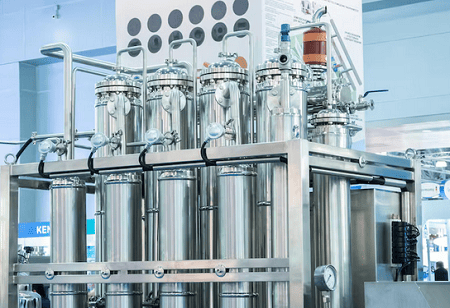
Neuland Laboratories is preparing to enter the peptide manufacturing market at commercial scale with a major new facility at its 17-acre Bonthapally manufacturing campus near Hyderabad.
The company plans to bring the first of four modules online by summer 2026, marking a key expansion from clinical-stage production to full commercial operations.
Module One has already secured firm customer commitments worth about USD 30 million, showing strong early demand. Once operational, the module will add 6,370 liters of reactor capacity designed for both solid-phase peptide synthesis (SPPS) and liquid-phase peptide synthesis (LPPS). The plant will support LPPS reactor sizes ranging from 250 L to 3,000 L, along with SPPS reactors operating at up to 500 L scale.
Also Read: Role of Wellness in Corporate & Community Health
Construction started last year and the facility is designed to handle a wide range of production volumes—from development batches to multi-ton commercial manufacturing. The site is also built to support complex and long-chain peptide programs.
The expansion comes as global peptide manufacturing capacity tightens, partly driven by rising demand for GLP-1 therapies. Neuland aims to support innovator pharmaceutical companies and emerging biotech firms that are struggling to secure clinical and commercial manufacturing slots.
Saharsh Davuluri, Vice Chairman and MD at Neuland Labs, said: “The site has been designed for ongoing expansion, with space to accommodate additional SPPS synthesizers of 2kL and multiple 5kL [LPPS] reactors as future modules come online. This allows us to scale responsibly and in line with customer needs.”
To support the ramp-up, the company expects double-digit growth in R&D headcount this year, while its manufacturing workforce will more than double. The new facility will work alongside Neuland’s existing 1,174,000-liter API manufacturing capacity across three US FDA-approved plants and a nearby R&D center, enabling faster scale-up, smoother technology transfer and quicker development-to-commercial execution.
.jpg)