
India Pharma Outlook Team | Friday, 07 August 2026
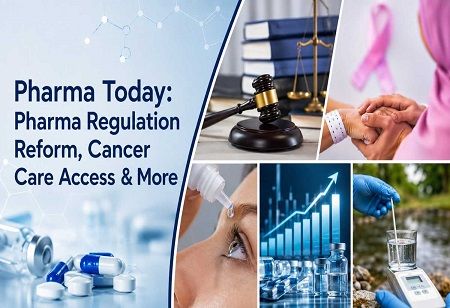
Pharma regulation reform, cancer care access, and drug safety drive the latest developments in the pharmaceutical sector.
Policymakers and companies have accelerated structural changes and healthcare outreach. The government now plans a comprehensive overhaul of drug and medical device laws to align with global standards and improve compliance.
At the same time, industry players expand cancer care access through large-scale partnerships and patient support programs.
Meanwhile, drug safety remains in focus as companies respond to recalls and strengthen transparency.
Alongside these shifts, strong financial growth and innovation continue, with Emcure reporting robust revenue gains and IIT Guwahati advancing low-cost diagnostic technology.
India pushes pharma regulation reform with a new comprehensive drugs law aimed at replacing the outdated Drugs and Cosmetics Act, 1940. The proposed legislation will unify the regulation of pharmaceuticals, medical devices, and cosmetics under a modern framework. Authorities plan stricter compliance rules, enhanced quality standards, and better oversight mechanisms.
The reform will introduce risk-based regulation for medical devices and streamline approval pathways. It will also align India’s regulatory system with global benchmarks to boost exports and attract investments. The move comes as India strengthens its position as a global pharma manufacturing hub while ensuring higher drug safety standards domestically.
Also Read: Impact of Modern Technology on the Indian Life Sciences Sector
Cancer care access expands significantly as Pfizer and Tata Cancer Care Foundation reach over one million beneficiaries across five Indian states. The initiative focuses on early detection, screening, and awareness programs, particularly in underserved regions.
Dr Kailash Sharma, Chief Advisor, Tata Cancer Care Foundation and Director, Assam Cancer Care Foundation, said, "Over these years, our partnership with Pfizer has strengthened community awareness, expanded screening and built local healthcare capacity across multiple states. Together, we have demonstrated how community-led, collaborative models can improve access to cancer care and create lasting public health impact."
The partnership delivers affordable diagnostics and supports patients through treatment pathways. It also strengthens healthcare infrastructure by enabling access to oncology services in rural and semi-urban areas. This milestone highlights the growing role of public-private partnerships in improving cancer care access and reducing the burden of late-stage cancer diagnosis.
Drug safety takes centre stage as Sun Pharma publishes a list of safe-to-use eye care products following a recent recall linked to contamination concerns. The company acted quickly to reassure patients and healthcare providers by identifying unaffected products.
Sun Pharma strengthened quality control measures and enhanced transparency to rebuild trust. The company also reinforced its commitment to global manufacturing standards and patient safety. This move reflects increasing regulatory scrutiny and industry focus on drug safety in ophthalmic products.
Emcure Pharma reports strong financial performance as Q1 revenue rises 23 per cent to Rs 2,580 crore, reflecting steady growth across domestic and international markets. The company benefits from strong demand in key therapeutic segments and expanding global presence.
Operational efficiency and product portfolio strength support margin improvement. Emcure continues to invest in innovation and market expansion, positioning itself for sustained growth. The results underline resilience in the Indian pharma sector amid evolving regulatory and market dynamics.
Satish Mehta, Managing Director and CEO, Emcure Pharmaceuticals, said, "We have begun FY27, the second year of our five-year plan, on a strong footing. FY26 was about putting the building blocks in place across teams, portfolio, integration and operating discipline. FY27 is about delivery, and Q1 is an encouraging early signal.”
Innovation strengthens healthcare and environmental safety as IIT Guwahati develops a low-cost device for instant detection of water toxicants. The device enables rapid and accurate identification of harmful substances, making it suitable for real-time monitoring.
Researchers designed the solution to support public health by ensuring safe drinking water, especially in resource-limited settings. The technology offers scalability and affordability, which can significantly improve environmental surveillance and preventive healthcare systems.
Pharma regulation reform, cancer care access, and drug safety continue to shape India’s pharmaceutical landscape as policy, industry, and innovation converge. Regulatory overhaul will modernize compliance and boost global competitiveness, while partnerships expand healthcare reach. At the same time, strong financial performance and technological advancements reinforce the sector’s growth trajectory.
.jpg)