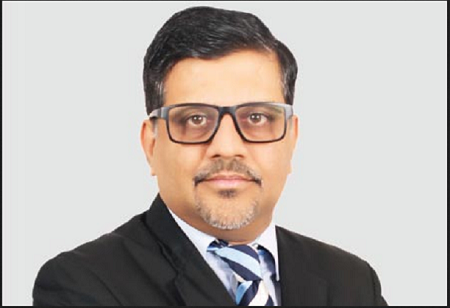
Nitin Stephen Abel, Senior Director, Terumo Interventional Systems, Terumo India
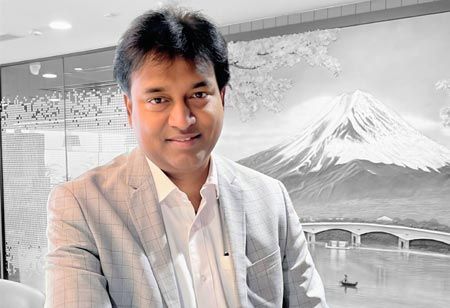
Nitin Stephen Abel, Senior Director at Terumo Interventional Systems, Terumo India, engaged in a conversation with Thiruamuthan, Assistant Editor at India Pharma Outlook, discusses India’s rapid evolution in interventional radiology from diagnostic applications to advanced therapeutic care, highlighting progress in devices, AI integration, image-guided techniques, and strategies to expand access across tier-2 and tier-3 cities. Nitin Stephen Abel is a strategic growth leader in medical devices and diagnostics, with over two decades of cross-functional expertise across India, Asia-Pacific, and MEA. He excels in business transformation, people development, and navigating complex healthcare ecosystems.
Interventional radiology in India is evolving rapidly from a diagnostic to a definitive therapeutic discipline. How do you see this transformation shaping the future of patient care in the country?
What we’re seeing today is a paradigm shift in how care is delivered. Twenty years ago, radiology in India was largely a diagnostic specialty with more than 12,000 radiologists across the country, and only a sparse subset practicing interventional procedures. Over the years, with advances in imaging, techniques, and clinician confidence, this subset has steadily grown into a strong and recognized community of over 1,200 interventional radiologists, expanding year on year. A field which was once viewed primarily as a diagnostic area, has now evolved into a definitive treatment discipline.
Today, interventional radiology spans the entire continuum of care from therapeutic lesion access (TLA) to closure. This evolution matters because it gives patients treatment options that are less invasive, highly precise, and capable of delivering outcomes comparable to surgery but with significantly faster recovery.
In India, with the sheer patient volumes and the pressure on operating rooms, the ability to treat complex conditions in a controlled, image-guided setting has made a meaningful difference. It reduces hospital stays, improves patient comfort, and expands access to treatments for individuals who may not be ideal candidates for open surgery.
Looking ahead, I believe interventional radiology will continue to anchor itself as a core pillar of modern healthcare delivering safer, faster, and more accessible care for patients across the country.
Also Read: Addressing Antimicrobial Resistance (AMR) Through Collaborative Efforts
Innovation is central to advancing interventional techniques. How is Terumo India driving the adoption of cutting-edge devices and technologies that enhance procedural precision and clinical outcomes?
For us at Terumo India, innovation has always been meaningful only when it enhances clinical confidence and procedural predictability. Rather than simply expanding the portfolio, we focus on building solutions that strengthen every step of the interventional workflow, from vascular access to therapeutic lesion access to final closure.
In the therapeutic lesion access space (TLA), Terumo has truly pioneered the category. Our microcatheters such as Progreat Lambda offer enhanced tip flexibility and tip shape variations, enabling clinicians to reach complex lesions with confidence. Solutions like Occlusafe enable targeted and controlled therapeutics during procedures such as Balloon Transarterial Chemoembolization.
Closure of the arteriotomy site is equally critical. Traditionally, it has been performed through application of pressure, a process that can be time-consuming and inconsistent depending on the technique. With device-assisted vascular closure systems like Angio-Seal, clinicians can achieve faster and more predictable hemostasis, enabling quicker mobilisation and improved cath-lab efficiency.
But innovative solutions alone are not enough. What truly drives such technology adoption is the ecosystem built around it, which includes training, proctoring, discussing clinical evidence and offering real-time support. That is why we invest deeply in all of these because we want clinicians to feel fully supported, not just when they choose a device, but every time they use it.
Interventional radiology is reshaping patient care in India by providing precise, minimally invasive treatments, expanding access, and enabling faster recovery, even in regions with limited surgical resources
Minimally invasive procedures are redefining patient expectations. What trends are you observing in India regarding acceptance, awareness, and demand for image-guided therapies?
Patients today are far more informed and proactive in making decisions about their treatment, thanks to hospitals and new-age platforms that empower them with the right information. We increasingly hear patients ask for options that help them return to their daily lives sooner, avoid large incisions, and reduce the risk of complications. This change in mindset has directly strengthened the acceptance of image-guided therapies across specialties, whether it is liver oncology, vascular interventions or cardiac care.
In urban centers, this demand is already well established, but what is encouraging is how quickly it is growing in tier-2 and tier-3 cities as well. With clinicians speaking more openly about minimally invasive options, and the procedural outcomes becoming widely known, we are seeing a clear shift in preference towards interventional radiology led therapies.
Alongside this growing acceptance, there is still a large population of people who lack awareness about such minimally invasive therapies. And this is where the industry has to work together to create better therapy awareness to build stronger patient awareness so that early screening of such patients can ensure that they reach the right treatment at the right time to create real and long-term impact.
Workforce capability is pivotal for the specialty’s growth. How is Terumo India supporting training, simulation-based learning, and industry-academia collaboration to build a stronger talent pipeline in interventional radiology?
The growth of radiology in India depends on the specialists who perform these procedures, which is why training remains one of our highest priorities. For instance, we at the Terumo India Skill Lab have created a training ecosystem that mirrors real procedural settings. Our simulation models such as the Mentice simulator, Left Arm Puncture Model, Micro Catheter Model, Vascular Closure Device Model, and the Liver Flow and Iliac Models give young doctors the opportunity to practice, learn, and refine their skills before they enter an actual cath lab.
With the addition of a fully functional cath lab at Terumo India Skill Lab, we are now co-creating realistic training modules with leading interventional radiology societies to match the feel of a live procedure. Simulation is an important part of the journey, and it is strengthened further through our partnerships with academic institutions, IR societies, and experienced practitioners. Together, these efforts support continuous learning and help build a strong and future-ready talent pool for the specialty.
Artificial intelligence and digital integration are reshaping interventional workflows. How is AI being applied to improve pre-procedure planning, real-time decision support, and post-procedure outcomes?
AI is steadily becoming a silent partner in the interventional suite. It helps clinicians plan procedures with greater clarity by enhancing CT and MR images, mapping vessels, assessing lesion characteristics, and highlighting potential risks well before the first puncture is made. By supporting better image quality and interpretation, AI helps clinicians start each procedure with greater confidence and precision.
Inside the procedure room, AI-driven imaging enhancements and intelligent overlays support real-time decisions. They guide wire navigation, flag anatomical variations, and help clinicians maintain precision even in challenging cases. The intent is not to replace judgement, but to strengthen it, especially as case complexity increases.
After the procedure, AI tools are being used to monitor patient progress, identify early warning signs and personalise follow-up care. This is particularly valuable in procedures where long-term outcomes matter, such as oncology, vascular interventions, and structural heart therapies.
From a global innovation standpoint, how can multinational MedTech leaders like Terumo help scale access to advanced interventional solutions across India’s tier-2 and tier-3 healthcare systems?
Scaling interventional care in India requires an ecosystem approach—devices, training, and continuous knowledge support. At Terumo India, our focus is on making our technologies adaptable across infrastructure levels, so they remain reliable, intuitive, and easy to integrate even in evolving cath labs.
Training is equally crucial. Our digital learning platform, eTISL, plays a strong role here by giving clinicians across India access to procedural videos, case recordings, training modules, and updated insights from TISL. For many clinicians in tier-2 and tier-3 cities, this becomes an important bridge to gain confidence before adopting advanced therapies.
We also continue to expand hands-on workshops, clinical mentoring, and partnerships with medical institutions so that access to advanced care grows in a structured and sustainable way.
Also Read: Why Global Pharma Expects CDMOs to Be Ready for Joint Inspections
What do you see as the biggest challenges—be it infrastructure, awareness or policy—and the most promising opportunities for interventional radiology to reach its full therapeutic potential in India?
When I look at the interventional radiology landscape, the gaps are quite clear. India needs broader access to cath labs across regions, the right number of trained physicians who are confident performing IR procedures, and adequate physician coverage to support growing patient volumes. These are practical challenges we see every day, and they directly influence how quickly IR can grow as a therapeutic specialty.
At the same time, there is a strong and positive shift underway. As screening improves and diagnoses happen earlier, more patients are reaching hospitals at stages where minimally invasive therapies can make a meaningful difference. Patient awareness is also improving. Once families understand that many conditions can be treated without open surgery and with quicker recovery, the preference for image-guided therapies becomes natural.
From a policy standpoint, we are seeing encouraging steps. The government’s focus on expanding insurance penetration, along with GST reductions in the insurance segment, is prompting more people to opt for coverage. This in turn enables hospitals, especially in tier-2 and tier-3 cities to invest in better infrastructure, including cath labs. These policy moves may not always be visible immediately, but they do create a more stable environment for advanced specialties like IR to expand.
So, while access, awareness, and talent remain the real challenges, the opportunity ahead is substantial. With continued emphasis on training, stronger collaborations with medical societies, supportive policies, and wider infrastructure development, interventional radiology can firmly establish itself as a mainstream therapeutic discipline in India - one that is consistent, dependable, and accessible to patients across the country.

.jpg)

, CDSCO.jpg "Fostering a Quality Culture in the Pharmaceutical Industry")