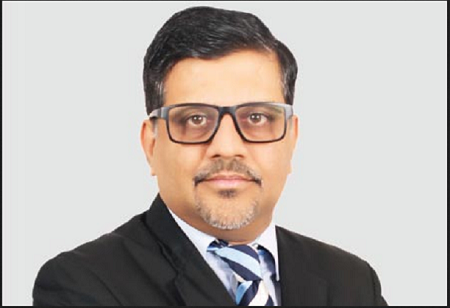
Jayakumar A V, President (Quality), Ajanta Pharma Ltd

In an interaction with Thiruamuthan, Assistant Editor at India Pharma Outlook, Jayakumar A V, President (Quality), Ajanta Pharma Ltd (NSE: AJANTPHARM & BSE: 532331), discusses how pharmaceutical manufacturers can turn deviation management from a compliance exercise into a strategic quality tool. He explores recurring deviations, root-cause analysis, data integrity, GMP expectations, and predictive analytics, while highlighting the need for stronger quality culture, connected systems, skilled teams, and proactive risk prevention across manufacturing operations.
Having spent years working in pharmaceutical quality, what has been the biggest shift in how organizations view deviation management today compared to a decade ago?
A deviation is simply any time a process, a result, or a step does not go exactly as planned. Ten years ago, most companies looked at a deviation as a paperwork problem. The main goal was to explain what went wrong, close the file quickly, and be ready to show it to an inspector. Today, the thinking has changed. Good companies now treat every deviation as useful information about their process. Instead of asking “how do we close this file,” the question has become “what is this telling us, and could it happen somewhere else in the plant?” Quality is no longer seen as the job of one department alone. Production teams, engineers, and quality staff now look at deviations together, because most problems sit at the meeting point of people, machines, and methods. This is a healthy shift: from treating quality as a compliance exercise to treating it as a way to understand and improve how medicines are actually made.
From your experience, why do many quality teams still struggle to convert recurring deviations into meaningful organizational learning rather than repeated investigations?
This happens for a few simple reasons. First, most investigations work under a deadline. Once a deviation is raised, the team is expected to close it within a fixed number of days, so they focus more on finishing the paperwork than on truly understanding why it happened. Second, many investigations stop at the easiest explanation, such as “operator error,” instead of asking why the operator could make that error in the first place. A good root cause goes deeper, into training, equipment design, work pressure, or unclear instructions. Third, information about similar deviations is often scattered across different lines, sites, or software systems, so nobody notices that the same problem has appeared five times in five different places. Finally, in some organizations, people hesitate to report small problems honestly for fear of blame, which hides the patterns trend analysis depends on. Real learning needs time, honest reporting, and someone senior enough to connect the dots across the whole plant, not just within one investigation file.
The real strength of a quality system lies not in how quickly it closes deviations, but in how effectively it prevents recurrence.
As India strengthens its position as a global pharmaceutical manufacturing hub, what quality challenges are becoming more critical in managing deviations across increasingly complex production environments?
As Indian manufacturers supply more countries, they must satisfy many regulators at once, each with slightly different expectations, while running larger, more complex plants with multiple products, multiple production lines, and materials from many suppliers. This complexity makes it harder to spot a deviation pattern early, because the same type of problem may look slightly different depending on the product or line where it occurs. Many plants also run a mix of old, manual equipment alongside newer automated lines, so deviation data comes in different forms, some on paper and some electronic, which makes it harder to compare and trend. There is also a growing shortage of experienced quality professionals who can do a thorough scientific investigation, not just fill a form. Managing this complexity well, while keeping data honest and complete, is becoming one of the most important quality challenges for India’s manufacturing hub ambitions.
Despite significant investments in quality systems, what structural gaps continue to prevent pharmaceutical manufacturers from identifying hidden risks through deviation trends at an early stage?
Even after heavy investment, several structural gaps remain. Many companies still design their quality systems mainly to pass an audit, not to generate insight, so they capture data but rarely analyze it for patterns. Deviation records often sit in separate systems from equipment maintenance data, supplier quality data, and customer complaints, so nobody gets the complete picture. Investigations are usually judged on speed of closure, not on the depth of understanding they produce, which discourages people from digging deeper. There is also no simple, standard way of labeling or coding deviations across departments, which makes it hard to group similar events and see a trend. Finally, senior leadership review meetings often focus only on how many deviations are open or closed, rather than what the deviation patterns tell the organization about its underlying risks. Closing these gaps needs connected data systems, standard categories, and leaders who ask “what pattern do you see” rather than only “how many are pending.”
With India's revised GMP expectations and evolving global regulatory standards reshaping quality practices, what policy and regulatory priorities should manufacturers focus on next?
Good Manufacturing Practice (GMP) is the set of rules that ensures medicines are made safely and consistently every time. India’s updated GMP rules, along with global expectations, are pushing the industry towards more mature, science-based quality management, and manufacturers should treat this as an opportunity rather than a burden. The first priority is building a genuine quality culture, where people report problems honestly because they know the goal is improvement, not punishment. The second is data integrity: every record, whether on paper or on a computer, must be accurate, complete, and not quietly changed later. The third is training people not just to follow procedures, but to understand the science behind them, so they can think through a problem instead of only filling a form. Smaller manufacturers will also need support through cost-effective digital tools and shared industry training, so that the whole sector, not only the largest companies, can meet these higher standards.
As pharmaceutical companies generate larger volumes of manufacturing and quality information, how is deviation trend analysis evolving from a compliance requirement into a strategic quality management tool?
Not long ago, deviation trend reports were mainly prepared to satisfy an inspector during an audit. Today, forward-looking companies are using the same data very differently. When deviations from every batch, every line, and every site are collected in one connected system, patterns start to appear that a single investigation would never reveal, such as a particular raw material batch, a particular shift, or a particular piece of equipment showing up again and again. This turns deviation data into an early warning system. Instead of only reacting after a problem occurs, quality teams can use these patterns to decide where to invest in new equipment, where additional training is needed, or which supplier needs closer attention. In this way, deviation trend analysis is moving from a regulatory checkbox to a genuine business and quality strategy tool, sitting alongside cost and production data in leadership discussions.
Beyond investigating individual deviations, how should organizations strengthen their quality processes to ensure recurring issues lead to lasting improvements across manufacturing operations?
Investigating one deviation at a time will never be enough. Organizations need a second, higher-level layer of review, where a cross-functional team regularly looks across all recent deviations together, not one by one, to spot repeating patterns. Equally important is checking whether past corrective actions actually worked, rather than assuming that closing the file means the problem is solved; many companies skip this follow-up step. Deviation data should also be linked to related information, such as equipment breakdown records, training records, and customer complaints, because a recurring deviation is often tied to a gap in one of these areas. Finally, senior leaders should review these trends regularly, not delegate them entirely to the quality department, since visible leadership attention often turns a repeated problem into a lasting fix rather than a repeated investigation.
Driven by rapid advances in AI, automation, and digital quality technologies, where do you see the greatest opportunity for predictive analytics to strengthen deviation investigations and risk prevention?
The biggest opportunity is spotting warning signs before a deviation happens, rather than investigating only after the fact. Modern plants generate enormous amounts of data from sensors, equipment, and quality tests. Artificial intelligence and predictive analytics tools can study this data continuously and flag small, early changes, such as a machine running slightly outside its normal range, or an environmental reading drifting before it breaches a limit, long before it becomes a reportable deviation. Automation also helps by reducing the human errors that cause many deviations, such as manual calculation mistakes or missed steps. That said, these tools work best as support for experienced people, not as a replacement. The technology can point to where to look; trained quality professionals are still needed to understand why something is happening and to judge what it means for patient safety. Used this way, predictive analytics can shift quality management from reacting to problems to preventing many of them.
As global regulators increasingly emphasize proactive quality management, what will determine whether companies can build quality systems that are resilient, consistent, and globally competitive?
Three things will matter most. First is leadership commitment, since a quality culture starts at the top; when leaders genuinely value honest reporting and prevention over simply meeting numbers, the rest of the organization follows. The second is people, because technology and procedures only work well with trained, motivated staff who understand the science behind what they do, not just the steps to follow. The third is consistency across sites, meaning that a company with multiple factories applies the same high standard everywhere, not just at its flagship plant, since a single weak link can affect the whole company’s reputation. Companies that invest steadily in all three areas, rather than treating quality as a cost to be minimized, will be seen as reliable, global-standard suppliers over the long run.
Looking ahead, as pharmaceutical manufacturing becomes increasingly technology-intensive and globally interconnected, what will determine whether companies build truly resilient and predictive quality systems?
Looking further ahead, resilience will depend on how well companies connect their digital systems, not just how advanced each individual system is. A plant may have excellent sensors, a strong quality database, and modern equipment, but if these systems cannot share data easily, valuable warning signs get missed in the gaps. Companies that succeed will be the ones that build one connected view of quality across the entire product journey, from raw material to finished medicine to market feedback, so a risk noticed in one place can be checked everywhere else it might also exist. This also requires people who are comfortable working with data and technology, and a culture that keeps learning and adjusting rather than assuming today’s system is good enough forever. Global interconnection also means that a quality issue in one country’s supply chain can affect medicines everywhere, so companies with strong, shared standards across all their sites and suppliers will be the most resilient.
What's your personal mantra?
My personal mantra is simple: quality is not an inspection, it is a habit. It is not something we check for at the end of the process; it has to be built into every step, by every person, every single day.
Finally, what five key leadership lessons would you share with emerging leaders in pharmaceutical manufacturing?
The first lesson is to treat quality as everyone’s responsibility, not just the quality department’s job; the best plants are the ones where operators, engineers, and managers all feel personally accountable for getting it right.
Second, encourage honest reporting; a small problem reported early is far cheaper and safer than a big one discovered late, so leaders must reward openness rather than punish it.
The third is to ask “why” more than once; the first reason given for a problem is rarely the real one, and real root causes usually need a few more questions.
The fourth is to invest in people as much as in equipment, because even the best machines and software depend on trained, motivated people to use them well.
The fifth is to stay close to the shop floor; leaders who regularly walk the plant, talk to operators, and see the process with their own eyes make far better decisions than those who only read office reports.
About the Author:
A V Jayakumar brings over three decades of pharmaceutical quality experience, with leadership across quality control, regulatory compliance, inspections, and manufacturing operations. His career spans Torrent Pharma, Cipla, Aurobindo, USV, Glenmark, and Ajanta Pharma. He has led global quality operations, supported regulatory readiness across markets, driven paperless and Industry 4.0 initiatives, and built expertise in strengthening quality systems and compliance.

.jpg)


, CDSCO.jpg "Fostering a Quality Culture in the Pharmaceutical Industry")