Manish Sabharwal, Co-Founder of TeamLease Services
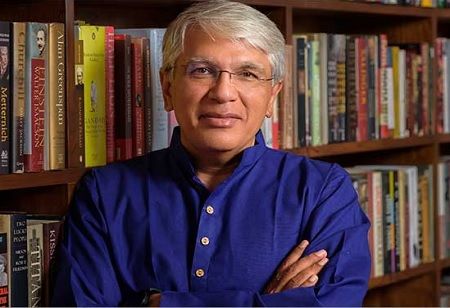
In an interview on “How India Built Pharma Industry Against All Odds,” Manish Sabharwal, Co-Founder of TeamLease Services, breaks down the rise of India’s pharmaceutical sector. He explores how a constrained economy and a tightly regulated system gave way to a globally dominant generics industry. Drawing on policy shifts, entrepreneurial grit, and global market forces, he explains how India became the “pharmacy of the world”—and what it will take to stay ahead as the industry moves toward innovation, biologics, and complex therapies.
Was India’s pharmaceutical success inevitable, or did it defy expectations?
India’s pharmaceutical success was anything but inevitable. By most economic assumptions, a country with low per capita income, weak infrastructure, and a tightly controlled business environment should not have emerged as a global leader in drug manufacturing. Yet, India not only built a strong domestic industry but went on to supply medicines to more than 200 countries, earning the label of the “pharmacy of the world.”
What makes this story compelling is how sharply it contrasts with traditional development narratives. India did not begin with deep research ecosystems or large pools of venture capital. Instead, it built its pharma strength gradually, often under constraints that would have discouraged risk-taking. This success highlights an important truth: industries are not always born out of ideal conditions. Sometimes, they emerge because a few critical decisions create just enough space for ambition to take shape.
What role did policy play in shaping the pharma industry’s rise?
Policy did not micromanage the growth of the pharma sector—but it created the conditions that made growth possible. The most defining moment was the Indian Patents Act, 1970, which replaced product patents with process patents. This allowed Indian companies to manufacture drugs through alternative processes, effectively enabling the rise of generics.
What stands out is the nature of this intervention. It did not involve heavy subsidies, large public investments, or state-backed champions. Instead, it was a structural shift that changed incentives. It lowered entry barriers and encouraged competition, allowing multiple firms to experiment and scale.
Equally important was the global context. Regulatory changes in markets like the United States created pathways for generic approvals, giving Indian firms access to international demand. The combination of domestic policy flexibility and global opportunity created a powerful growth engine.
This reinforces a key lesson: policy is most effective when it sets direction without controlling execution.
Also Read: Transforming API & Pharma Manufacturing with Next-Gen EHS Technologies
How did entrepreneurs convert this opportunity into a global industry?
Entrepreneurs were the real force that translated policy into progress. Operating in a system that was often hostile to private enterprise, they built companies with limited capital, minimal institutional support, and constant regulatory hurdles.
What set them apart was their ability to focus on efficiency and scale. Instead of competing on innovation initially, they mastered process engineering—producing high-quality medicines at significantly lower costs. Over time, this capability became a competitive advantage in global markets.
Companies such as Cipla and Lupin demonstrated that Indian firms could meet stringent international standards while maintaining cost leadership. Their success was not built overnight. It was the result of decades of investment in manufacturing, compliance, and market access.
Another defining trait was patience. These entrepreneurs were not driven by short-term valuations or rapid exits. They were building institutions—businesses designed to last, evolve, and expand across generations. This long-term mindset played a crucial role in shaping the industry’s trajectory.
Why did pharma succeed when other sectors struggled to scale globally?
The pharma sector succeeded because it combined focus with ambition. Unlike many industries that remained inward-looking, pharma companies actively pursued global markets. They understood early that scale and sustainability would come from competing internationally, not just serving domestic demand.
At the same time, they resisted the temptation to diversify too quickly. Many Indian businesses historically expanded across unrelated sectors, diluting expertise and attention. Pharma companies, in contrast, stayed committed to their core domain. This allowed them to build deep technical knowledge, strong regulatory capabilities, and consistent operational excellence.
Another important factor was the alignment between policy and industry needs. While many sectors struggled with excessive control and unclear regulations, pharma benefited—at least in its early years—from a framework that encouraged participation and competition.
The result was an industry that developed both depth and scale, a combination that is difficult to replicate.
Is India’s position as the “pharmacy of the world” enough for future growth?
India’s current position is strong, but it is not secure. The generics model, which has driven the industry’s growth so far, is inherently limited. It is built on cost efficiency, and as more players enter the market, pricing pressure increases. Margins shrink, and differentiation becomes harder.
At the same time, the global pharmaceutical landscape is evolving. There is increasing demand for biologics, biosimilars, and advanced therapies—segments that require higher levels of research, investment, and technical capability. These areas offer better margins but also demand a different approach.
For India, this means the future cannot rely solely on scale. The industry must transition toward innovation-driven growth. This includes investing in research and development, building capabilities in complex drug manufacturing, and moving up the value chain.
The challenge is not just technical—it is strategic. It requires a shift in mindset from being a cost leader to becoming a value creator.
What structural challenges are slowing down this transition?
Despite its strengths, the Indian pharma industry operates within a system that often creates friction. Regulatory complexity remains a significant issue. Multiple layers of approvals, compliance requirements, and administrative processes increase the cost and time required to innovate.
This environment affects smaller firms more than larger ones. While established companies have the resources to navigate complexity, emerging players often struggle to scale. This limits competition and reduces the diversity of innovation within the sector.
Another challenge is the gap in advanced research capabilities. While India has a strong base in manufacturing and generics, it is still building depth in cutting-edge areas such as drug discovery and biologics. This requires not just investment, but also stronger collaboration between industry, academia, and research institutions.
Supply chain dependencies, particularly in active pharmaceutical ingredients (APIs), add another layer of vulnerability. Reducing these dependencies will be critical for long-term resilience.
Finally, there is the issue of talent. Innovation-driven growth demands a workforce with specialized skills in research, regulatory science, and advanced manufacturing. Bridging this gap is essential for the industry’s next phase.
What policy mindset is needed to unlock the next phase of growth?
The future of Indian pharma will depend on a shift in policy thinking—from control to enablement. The industry’s early success came from a framework that allowed flexibility and competition. Recreating that environment is key.
This does not mean the absence of regulation. Pharmaceuticals, by nature, require strong oversight to ensure safety and quality. However, regulation must be clear, predictable, and efficient. Uncertainty and excessive complexity do more harm than good.
Policy should focus on:
The goal is to reduce friction without compromising standards. In doing so, policy can once again become a catalyst rather than a constraint.
Conclusion
India’s pharmaceutical journey is a story of what happens when opportunity meets execution. It shows that even in challenging environments, industries can emerge and scale if the right conditions are created.
The next chapter will be more demanding. It will require moving beyond generics, investing in innovation, and addressing structural bottlenecks. But the foundation is already in place.
India does not need to reinvent its strengths. It needs to build on them—by giving entrepreneurs the space to think bigger and act faster.


.jpg)


, CDSCO.jpg "Fostering a Quality Culture in the Pharmaceutical Industry")