

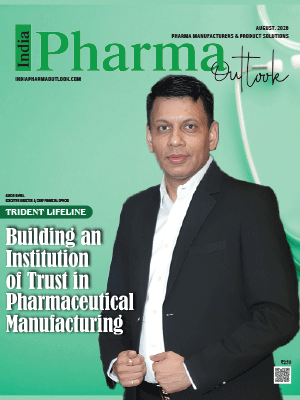
Trident Lifeline envisions to build a globally respected pharmaceutical institution recognized for quality, innovation, governance, and responsible growth
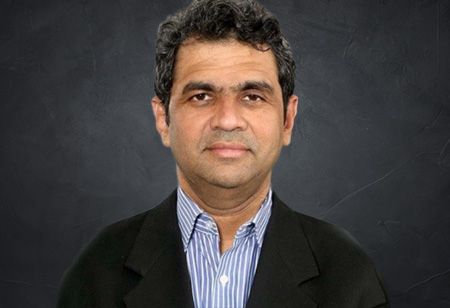
Ashish Bafna, Executive Director & Chief Financial Officer


The pharmaceutical finished dosage contract manufacturing industry has become a cornerstone of modern healthcare, enabling pharmaceutical companies to bring quality medicines to market with greater speed, efficiency, and regulatory confidence.
As global demand for affordable healthcare continues to rise, contract manufacturers are no longer viewed simply as production partners; they are expected to deliver robust quality systems, technological capabilities, regulatory compliance, and supply chain resilience.
India's emergence as one of the world's leading pharmaceutical manufacturing hubs has further accelerated this transformation, with Indian manufacturers playing an increasingly significant role in supplying medicines across regulated and emerging markets alike.
Within this evolving landscape, Trident Lifeline has steadily built a reputation as a trusted pharmaceutical formulation manufacturer driven by quality, capability, and sustainable growth. From manufacturing a diversified portfolio of formulations to serving customers in over 46 countries, the company's evolution reflects a carefully planned strategy rather than rapid expansion alone.
Behind this journey lies a leadership philosophy that views finance not merely as a function of reporting numbers but as a catalyst for organizational growth. As Executive Director & Chief Financial Officer, Ashish Bafna has played an instrumental role in supporting Trident Lifeline's transformation into a publicly listed pharmaceutical company while helping build a business founded on governance, financial discipline, regulatory excellence, and long-term stakeholder value.
Finance Beyond Numbers
For Ashish Bafna, finance has always extended beyond accounting, reporting, or balance sheets. A Chartered Accountant who qualified in 1999, he has spent over 27 years building expertise across financial planning, corporate governance, strategic business management, and organizational development. Throughout his professional journey, he has consistently believed that sustainable businesses are created through disciplined decision-making, ethical leadership, and carefully planned growth.
Trident Lifeline envisions to build a globally respected pharmaceutical institution recognized for quality, innovation, governance, and responsible growthAshish Bafna, Executive Director & Chief Financial Officer
His association with Trident Lifeline began during one of the company's most defining phases. As a consultant involved in its fundraising and IPO journey, he had the opportunity to closely observe the organization's leadership, strategic direction, and long-term aspirations. What impressed him most was the management's vision of building an institution rather than merely creating a high-value business.
That conviction ultimately inspired him to join Trident Lifeline as Chief Financial Officer before assuming the additional responsibility of Executive Director. He recognized an organization with a diversified product portfolio, a strong commitment to quality, growing international presence, dedicated manufacturing capabilities, resilient supply chain systems, and an expanding research ecosystem. More importantly, he saw a company prepared to invest patiently in building long-term credibility rather than pursuing short-term gains.
This philosophy continues to define his leadership today. Financial stewardship, in his view, is not limited to safeguarding resources but involves enabling sustainable expansion, strengthening governance, supporting innovation, and ensuring that every strategic decision contributes to lasting value for customers, investors, employees, and society.
Investing in Sustainable Growth
The pharmaceutical manufacturing industry is experiencing significant transformation. Higher regulatory expectations, digital manufacturing technologies, specialty formulations, automation, and increasingly complex global supply chains are redefining how pharmaceutical companies select their manufacturing partners.
Ashish Bafna believes these industry shifts present opportunities for organizations that are willing to invest consistently in capability building.
Under his financial leadership, Trident Lifeline has adopted a measured expansion strategy that balances ambitious growth with disciplined capital allocation. Rather than pursuing expansion for its own sake, every investment has been aligned with strengthening manufacturing infrastructure, technological capabilities, and long-term competitiveness.
The results are evident. Over the past four years, the company has recorded annual revenue growth exceeding 50 percent while significantly expanding its global footprint to more than 46 countries. During the same period, Trident Lifeline has established three modern manufacturing facilities, strengthening its transition from a contract manufacturing and loan licence business into a fully integrated pharmaceutical formulation manufacturer.
“The company's manufacturing capabilities now extend across tablets, capsules, dry syrups, liquid formulations, ointments, nutraceuticals, cosmetics, and medical devices, allowing it to serve both contract manufacturing clients and customers seeking comprehensive pharmaceutical solutions under one roof”, shares Ashish Bafna.
The growth story, however, is far from complete. With approximately 50,000 square metres of industrial land already secured and regulatory approvals in place, Trident Lifeline has outlined an ambitious five-year roadmap to establish five additional manufacturing facilities. These investments are intended not only to increase production capacity but also to position the company for sustained global expansion in an increasingly competitive pharmaceutical landscape.
Building Trust Through Quality and Governance
In pharmaceuticals, growth can never come at the expense of quality. Regardless of market opportunities or production volumes, patient safety remains the industry's ultimate responsibility.
Ashish Bafna firmly believes, “Quality and compliance cannot be confined to individual departments; they must become part of an organization's culture. At Trident Lifeline, this philosophy is reflected in systems that integrate quality across every stage of manufacturing rather than treating compliance as a regulatory obligation alone.”
The company maintains rigorous quality management practices supported by Good Manufacturing Practices (GMP), continuous employee training, structured skill development, regular process reviews, and performance monitoring. Employees across all levels are encouraged to take ownership of quality, reinforcing accountability throughout the organization.
Equally important is the company's dedicated regulatory affairs team, which continuously evaluates evolving regulatory requirements across international markets. Before entering any new geography, regulatory expectations are thoroughly assessed to ensure manufacturing processes align with country-specific standards from the outset.
Technology has become another important pillar of Trident Lifeline's governance framework. Investments in advanced manufacturing equipment, automation, AI-enabled systems, and CFR-compliant machinery have strengthened product consistency, documentation integrity, traceability, and operational efficiency. These investments not only enhance manufacturing performance but also reinforce customer confidence in the company's ability to consistently deliver safe, reliable, and compliant pharmaceutical products.
For Ashish Bafna, governance and quality are inseparable. Strong financial systems support operational excellence, while operational excellence ultimately strengthens long-term business sustainability.
An Institution with a Larger Purpose
Every organization encounters moments that test its resilience. For Trident Lifeline, changing market dynamics, supply chain disruptions, evolving regulatory frameworks, and global geopolitical uncertainties have all presented significant challenges in recent years. Rather than responding with short-term measures, the company has chosen to remain focused on transparency, operational continuity, and sustainable decision-making. These experiences have reinforced Ashish Bafna's belief that resilient organizations are built through empowered teams, ethical leadership, and robust systems capable of adapting to uncertainty.
One milestone that particularly reflects Trident Lifeline's long-term outlook is its strategic collaboration with NIPER Ahmedabad, one of India's premier pharmaceutical research institutions. The partnership has resulted in the company becoming the first organization in the institute's history to enter into a technology transfer agreement. Through this collaboration, Trident Lifeline has acquired technology for the treatment of a rare skin cancer while also supporting patient access through its corporate social responsibility initiatives.
Looking ahead, the company's ambitions extend beyond manufacturing expansion. The vision is to build a globally respected pharmaceutical institution recognized for quality, innovation, governance, and responsible growth. Every investment in infrastructure, technology, research, and people is intended to strengthen that objective.
For Ashish Bafna, the true measure of success is not defined solely by revenue growth or manufacturing capacity. It lies in building an organization that creates enduring value for every stakeholder - customers, employees, shareholders, suppliers, regulators, and ultimately the patients who depend on its products. It is this philosophy of institution-building, supported by financial prudence and long-term thinking, that continues to shape Trident Lifeline's journey and positions the company for sustained success in the global pharmaceutical manufacturing industry.
The Trident Lifeline Advantage

, CDSCO.jpg "Fostering a Quality Culture in the Pharmaceutical Industry")