
Process Analytical Technology (PAT) is central to AURUS’ vision for the next phase of pharmaceutical machinery
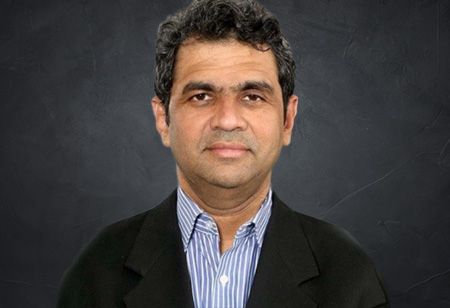
Prakash Kanath, Founder & MD, Pratik Kanath, Director


Pharmaceutical manufacturing demands equipment that can deliver consistent performance across complex and varied processing requirements. The effectiveness of such machinery depends not only on sound mechanical engineering, but also on how well it is designed around the characteristics and processing needs of different formulations.
Powders differ in density, flow and moisture; formulations respond differently to mixing and granulation; and the same operating parameters cannot simply be carried from one product to another. For manufacturers of granulation and size-reduction equipment, this makes process understanding almost as important as mechanical engineering.
AURUS approaches machinery from precisely this standpoint. The pharmaceutical machinery brand from Kanath Engineering Pvt Ltd manufactures Oscillating Granulators, Rapid Mixer Granulators, Multi Mills, Cone Mills and Sifters, with its equipment currently installed across 15 countries. Its proposition, however, is not centered on the machine catalogue alone.
The company works with customers to understand what they intend to process, how the formulation behaves and what operating and compliance parameters the equipment needs to address.
Behind AURUS is a manufacturing legacy that began in 1981 with Prakash Kanath, Founder of Kanath Engineering who came from Kerala to Mumbai in search of work. Prakash eventually built his own engineering business at a time when high-quality pharmaceutical machinery was largely associated with German imports. His objective was to prove that equipment manufactured in India could meet comparable expectations of build quality, performance and durability.
His son, Pratik Kanath, a Mechanical Engineering graduate, represents the next phase of that journey. His contribution has been to take the company’s long-standing emphasis on quality and combine it with closer application understanding, structured engineering and newer technologies.
Process Analytical Technology (PAT) is central to AURUS’ vision for the next phase of pharmaceutical machineryPrakash Kanath, Founder & MD, Pratik Kanath, Director
The Gap Was Not in Machines Alone
When Pratik entered the business, he did not immediately begin expanding the product range. He spent time meeting pharmaceutical manufacturers and understanding where existing machinery was falling short. Those conversations pointed to a recurring problem. There were several companies capable of manufacturing equipment, but fewer could help a customer understand what happened when a particular formulation entered that equipment.
That distinction influenced the development of AURUS. Since formulations can behave differently during granulation, milling and other processes, the company works on the machine and its operating parameters together. Customer discussions therefore begin well before manufacturing.
“AURUS uses defined SOPs and detailed questionnaires from the inquiry stage through installation. Sales, design and development teams participate in the process so that factors affecting the application are captured before the machine reaches production. The approach has translated into commercial momentum”, speaks Pratik Kanath, Director.
According to the company, it has grown approximately 90–100 percent year-on-year over the last three years. A notable recent project involved an order for 20 machines from a single limited company, secured primarily on the strength of AURUS’ technical proposition.
Testing Before the Machine Exists
AURUS uses engineering software to evaluate designs for stress, fluid dynamics and vibration at the development stage. Once manufacturing begins, inspections continue at multiple points rather than being concentrated only at final dispatch. Completed machines undergo checks covering vibration, heat, sound and surface finish. The last parameter is particularly important in pharmaceutical environments, where poorly finished product-contact surfaces can create cleaning and contamination concerns.
“There is another side to this testing that is less visible but increasingly important: Documentation. AURUS records the tests conducted on its machines so that customers have supporting information when equipment is taken through qualification and audit processes”, says Pratik Kanath.
For Pratik, this is not administrative paper work added after engineering is complete. It is part of making a machine easier for a pharmaceutical company to adopt. Time spent resolving documentation gaps or equipment qualification issues is time taken away from production. This compliance-oriented thinking also extends to projects involving 21 CFR Part 11 and hazardous processing environments.
AURUS works with pharmaceutical companies, including businesses preparing for regulated international markets, to understand the equipment implications of such requirements. For volatile materials, the company also addresses ATEX considerations and classifications such as Zone 1 and Zone 2 where applicable.
Learning from Markets Beyond India
AURUS’ presence across 15 countries has required the company to think beyond exporting a machine and leaving service to the customer. It works with partners in different international markets and brings partner teams to its facility for training in operation, maintenance and troubleshooting. This gives customers access to technical assistance closer to their location while allowing AURUS to maintain greater consistency in after-sales support.
International exhibitions are equally useful for what the company learns from them. Interactions with pharmaceutical manufacturers overseas expose its team to requirements that may not yet be widespread in India. These interactions offer an early view of evolving global expectations around compliance, automation, process control and equipment performance. AURUS channels these insights back into its engineering and product-development efforts, enabling the company to prepare for emerging requirements rather than respond to them only after they become established in the domestic market.
From Automation to Real-Time Process Intelligence
AURUS is consequently working towards integrating PAT into its technology portfolio and, over time, exploring how artificial intelligence can further strengthen equipment intelligence, process visibility and control. “Alongside technology development, the company intends to expand its machinery portfolio, manufacturing capabilities and international presence while sustaining its growth momentum. Underpinning these ambitions are three principles which I have inherited from my father: honesty, quality and innovation”, shares Pratik Kanath. These principles provide a clear link between the company’s four-decade engineering legacy and the direction in which the next generation is taking the business.
Prakash Kanath built Kanath Engineering around the belief that Indian machinery could compete on quality with global equipment. More than four decades later, AURUS is extending that ambition—seeking to compete not only through how well its machines are built, but through how intelligently they support the pharmaceutical processes they are designed to perform.

.jpg)

, CDSCO.jpg "Fostering a Quality Culture in the Pharmaceutical Industry")