

Biocipher AI aims to support future research, accelerate therapeutic discovery, strengthen infectious disease surveillance, and improve preparedness for emerging global health threats
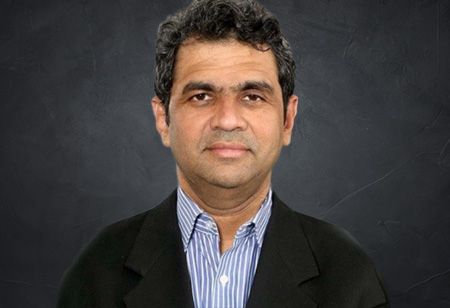
Dr Omkar Babu K, Co-Founder & Chief of Innovation & Strategy


Every hour matters in infectious disease management. Yet across much of healthcare, clinicians still wait anywhere between 48 and 72 hours for laboratory reports before confirming pathogens or identifying antimicrobial resistance (AMR).
During that period, physicians often rely on empirical treatment, increasing the risk of ineffective therapies, prolonged hospital stays, rising healthcare costs, and the growing global challenge of antimicrobial resistance.
As healthcare systems increasingly embrace precision medicine, the conversation is no longer limited to making diagnostics more accurate; it is about making them dramatically faster without compromising scientific reliability.
This is where artificial intelligence is beginning to reshape biotechnology. Rather than replacing laboratory science, AI is becoming an intelligence layer that can accelerate genomic interpretation, streamline molecular workflows, and convert enormous volumes of biological data into clinically actionable insights within hours instead of days. Biocipher AI was established with precisely this vision.
Rather than positioning itself as another molecular diagnostics company, the Bengaluru-based biotechnology startup is building an AI-powered infectious disease intelligence platform that combines advanced molecular biology with computational analytics to deliver rapid, clinically relevant diagnosis and antimicrobial resistance profiling.
By reducing diagnostic turnaround times while maintaining exceptionally high analytical accuracy, the company is helping clinicians move from reactive treatment toward evidence-based precision care.
Its expanding collaborations with leading healthcare institutions demonstrate a broader ambition—not simply to improve diagnostics, but to redefine how infectious diseases are detected, interpreted, and managed in the era of AI-driven healthcare.
Biocipher AI aims to support future research, accelerate therapeutic discovery, strengthen infectious disease surveillance, and improve preparedness for emerging global health threatsDr Omkar Babu K, Co-Founder & Chief of Innovation & Strategy
A Pandemic-Era Insight That Became a Company
For Dr. Omkar, Co-Founder and Chief of Innovation & Strategy, Biocipher AI emerged from years of scientific research rather than entrepreneurial ambition alone. Armed with a Master's degree in Genetics and a PhD in Biotechnology specialising in Population Genetics, his career took him through biotechnology startups before heading the Genetics and Genomics Division as Lab Director and Principal Investigator of the Indian Biodata Bank Project at Global Gene Corp.
Biocipher AI began with an ambitious R&D programme involving collaborations with research institutions to validate nearly 200 diagnostic panels covering multiple infectious diseases. Within a relatively short period, that research evolved into a commercially deployed platform capable of delivering rapid pathogen detection alongside antimicrobial resistance profiling two critical capabilities that directly influence treatment decisions and patient outcomes.
Engineering Clinical Confidence, Not Just Faster Reports
For many AI healthcare companies, speed becomes the headline. Biocipher AI, however, believes speed is valuable only when it is supported by scientific rigour. This philosophy has shaped the company's technology architecture from the outset.
Its AI models are designed to operate as explainable decision-support systems rather than opaque algorithms. Every analytical output is linked to validated biological evidence, enabling clinicians to understand not merely what the system reports but why a particular pathogen, biomarker, or resistance mechanism has been identified.
Equally important is the company's emphasis on data quality. As Dr. Omkar explains, scaling AI in biotechnology is not about collecting more data but building cleaner, structured, clinically validated datasets capable of producing consistent results.
Thousands of real-world clinical samples continue to strengthen the company's machine learning models, while expert biotechnologists remain actively involved in validating outputs and monitoring system performance.
This human-in-the-loop approach allows Biocipher AI to maintain exceptionally high diagnostic reliability while continuously improving model accuracy through ongoing clinical learning.
Scaling Precision Diagnostics Across Healthcare Networks
Innovation in healthcare ultimately succeeds only when clinicians trust it. Recognising this early, Biocipher AI chose clinical validation over commercial promotion. Rather than asking hospitals to adopt a new technology based solely on technical specifications, the company worked directly with physicians by testing real-world patient samples and demonstrating measurable improvements in diagnostic turnaround time and treatment planning. That strategy proved instrumental in driving adoption.
Today, leading hospital chains across Bengaluru and Hyderabad rely on Biocipher AI's diagnostic capabilities. Behind this growing footprint lies an operational model built for consistency. Standardised laboratory workflows, AI-enabled automation, and rigorous quality protocols allow the company to replicate identical testing standards across its expanding laboratory network while steadily improving operational efficiency.
"The platform has evolved far beyond a single diagnostic solution. Today, Biocipher AI supports nearly 200 diagnostic panels across 22 specialties, reflecting a deliberate strategy of building scalable clinical infrastructure rather than isolated products," adds Dr. Omkar.
Building the Next Generation of Diagnostic Intelligence
Biocipher AI's ambitions extend well beyond reducing laboratory turnaround times. The company envisions a healthcare ecosystem where clinicians receive highly accurate diagnostic insights within minutes rather than hours, enabling truly personalised and proactive patient care.
Integrating next-generation sequencing, PCR technologies, CRISPR-based diagnostics, and increasingly sophisticated AI models, Biocipher AI is steadily building the infrastructure required to make this vision a reality.
At the same time, the company recognises that every diagnostic interaction also contributes to a larger scientific resource. By creating structured genomic and microbial datasets, Biocipher AI aims to support future research, accelerate therapeutic discovery, strengthen infectious disease surveillance, and improve preparedness for emerging global health threats.
As biotechnology enters an era increasingly defined by data intelligence, Biocipher AI is positioning itself not merely as a diagnostics company, but as a technology platform shaping how infectious diseases are understood, diagnosed, and managed. In doing so, it is helping move healthcare beyond reactive intervention towards faster, smarter, and more precise clinical decision-making.
.jpg)



, CDSCO.jpg "Fostering a Quality Culture in the Pharmaceutical Industry")