

Capsules have given Ramsar Pharmaceuticals its initial market identity, but Susanta does not intend the company to remain confined to one formulation or geography
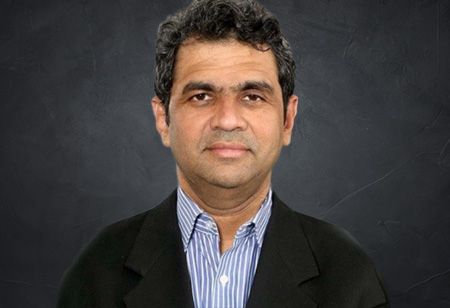
Susanta S Sahoo, Director


Pharmaceutical manufacturing leaves little room for inconsistency. A capsule reaching a patient is the end product of a chain that involves formulation, manufacturing discipline, quality control, distribution, prescribing confidence and, ultimately, patient acceptance.
For pharmaceutical companies, particularly younger entrants, the commercial challenge is therefore inseparable from a more fundamental one: earning the confidence of the medical fraternity. Ramsar Pharmaceuticals has built its business around this reality.
Operating in pharmaceutical marketing and manufacturing, the company is steadily establishing its presence with capsules at the core of its portfolio while expanding into other formulations. Its method has been deliberately grounded: work with dependable manufacturing partners, stay close to doctors and distributors, understand what the market is asking for, and build the business without compromising product quality.
For founder Susanta S Sahoo, this approach comes from years spent observing the pharmaceutical business from within. With an educational background in science, he entered the pharmaceutical industry and gained practical exposure to both marketing and manufacturing.
Those years gave him not only an understanding of how the industry operates but also a reason to start Ramsar - to build a pharmaceutical business where affordable medicines, ethical practices and patient benefit could coexist with commercial growth.
Capsules have given Ramsar Pharmaceuticals its initial market identity, but Susanta does not intend the company to remain confined to one formulation or geographySusanta S Sahoo, Director
Trust Before Scale
Starting a pharmaceutical company is one thing; persuading doctors to place confidence in a new name is quite another. Susanta identifies this as one of Ramsar’s earliest and most consequential challenges. “Doctors already have access to products from established pharmaceutical companies with years of market presence behind them.
A new entrant cannot reasonably expect to displace that familiarity through promotion alone. It has to prove itself through the product, its availability and the service surrounding it”, mentions Susanta.
Ramsar consequently concentrated on what it could control: manufacturing partnerships, quality standards, reliable supply and consistent support to its healthcare network. The company’s operating principles - quality, integrity, innovation and customer centricity - were shaped around this approach rather than treated simply as corporate values.
“We believe sustainable growth comes from trust rather than aggressive promotions”, says Susanta. For the company, that means ensuring that every interaction - from product supply to communication with healthcare professionals - reinforces reliability and long-term credibility.
That distinction is important to how Ramsar goes to market. Its engagement with doctors includes scientific communication, educational initiatives and continuous medical education support. The focus is on adding value to these interactions through relevant scientific information while understanding the practical requirements doctors encounter in patient care.
Distributors and chemists, meanwhile, provide another layer of market intelligence as well as the reach required to keep products available where they are needed.
Trust, in Susanta’s view, accumulates gradually. A doctor has to see consistency in a medicine and in the company behind it. A distributor has to know that commitments will be honoured. Maintaining those experiences repeatedly is what turns an unfamiliar pharmaceutical name into a credible one.
Letting the Market Inform the Portfolio
Ramsar’s product decisions are not made in isolation from its field operations. The company uses its relationships with doctors, physicians, hospitals, chemists and distributors to understand prescribing behaviour, patient requirements and gaps emerging in the market.
This is where its team assumes a role beyond sales execution. Field-level conversations are brought back into the organization as feedback, giving management visibility into what healthcare professionals are encountering in practice and what they expect from pharmaceutical companies.
Susanta considers this transparency one of the team’s strongest attributes. “Rather than filtering market feedback, the team is expected to communicate it clearly so the company can respond to actual requirements. Scientific assessment and quality considerations then feed into portfolio reviews and decisions around introducing products”, says Susanta.
This direct flow of information also helps Ramsar identify changing requirements early and assess where new formulations or product categories could provide meaningful value.
The same feedback loop is influencing Ramsar’s marketing practices. Alongside conventional doctor engagement, the company is using digital platforms to communicate with healthcare professionals and support their requirements.
Digital engagement is helping the company make communication more timely and accessible while retaining the personal relationships central to its approach. The intention is not to replace relationship-led pharmaceutical marketing, but to make those relationships more responsive.
Beyond Capsules: The Road Ahead
Capsules have given Ramsar Pharmaceuticals its initial market identity, but Susanta does not intend the company to remain confined to one formulation or geography. The portfolio is already moving beyond capsules to include injectables, with additional pharmaceutical categories under consideration. The aim is to broaden the portfolio in a measured manner, prioritizing products that respond to identified market needs while maintaining the quality standards on which the company wants to build its reputation.
Simultaneously, the company is working to deepen its reach across India. The longer-term ambition is to take Ramsar beyond the domestic market and explore international opportunities when the organization is ready for that scale.
A pan-India footprint, entry into international markets, new pharmaceutical solutions and employment creation form part of that roadmap. As Ramsar expands, Susanta wants the organization to preserve the accessibility and relationship-led culture that helped it establish its early market presence.
Yet the principle underneath those plans remains much the same as it was at the beginning. Ramsar wants to grow by giving doctors, distributors and patients reasons to trust it repeatedly. In pharmaceuticals, where reputations are built slowly and can be tested with every product, that may ultimately prove more valuable than growth for its own sake.
.jpg)


, CDSCO.jpg "Fostering a Quality Culture in the Pharmaceutical Industry")