
TOXREMEDIES advocates involving toxicologists early, alongside chemistry and development teams, to anticipate potential issues rather than discovering them near commercialization
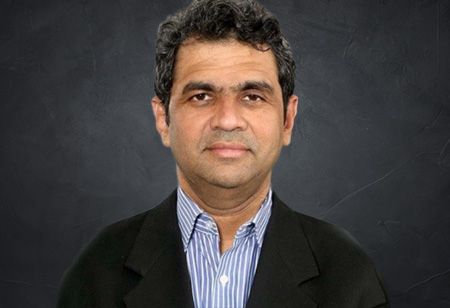
Milind Deore, Founder


During drug development, apart from drug molecule, the drug developers need to evaluate impurities, degradants, genotoxicity, environmental impact and occupational exposure while navigating increasingly rigorous regulatory expectations. In addition, there might be issues around cleaning validations at manufacturing locations and PDE calculations.
Toxicology assessment in pharmaceutical industry is moving into a phase where safety decisions can no longer depend solely on conventional testing. Computational modelling, read-across, weight-of-evidence frameworks and New Approach Methodologies (NAMs) are creating opportunities to answer safety questions with greater precision and, in appropriate cases, reduce dependence on animal studies.
The US FDA's 2026 draft guidance on NAMs reflects this shift, providing a validation framework for their use in drug development and encouraging approaches that improve the human relevance of nonclinical safety assessment.
It is within this changing scientific environment that TOXREMEDIES is building its position as a specialized toxicology consultancy. Established around two years ago, the firm brings together deep pharmaceutical toxicology experience with emerging assessment methodologies to help organizations arrive at defensible safety conclusions.
Its approach is built around a fundamental principle: additional testing should not automatically be the first answer to every toxicological question. Instead, TOXREMEDIES examines whether existing evidence, computational methods and scientific reasoning can address the issue while protecting patient safety and meeting regulatory expectations.
TOXREMEDIES advocates involving toxicologists early, alongside chemistry and development teams, to anticipate potential issues rather than discovering them near commercializationMilind Deore, Founder
Experience that Shapes the Science
TOXREMEDIES draws significantly from its founder, Milind Deore’s more than three decades of experience spanning academia and the pharmaceutical industry. A veterinarian by training, he pursued postgraduate studies and a PhD in toxicology while spending approximately 15 years in academics.
His Ph.D. in toxicology earned him a National award for his significant research. This period exposed him to safety of pharmaceutical and consumer products, medical devices, pesticides and environmental toxicology.
His transition to Ranbaxy brought a different perspective—an understanding of toxicology across the drug-development lifecycle, from early molecule to eventual market launch through drug development process.. A subsequent career at Johnson & Johnson expanded this exposure globally, culminating in his role as Global Head for Toxicology.
Working across geographies and product categories provided first-hand experience of how safety science must respond to differing regulatory requirements regarding patient safety.
His credentials as a Diplomate of the American Board of Toxicology (DABT) and European Registered Toxicologist (ERT) further complement this experience. Following retirement from Johnson & Johnson, TOXREMEDIES became a means to continue applying that knowledge to human health and patient safety.
Looking Beyond the Obvious Answer
A defining element of TOXREMEDIES consulting philosophy is its weight-of-evidence approach. Toxicological findings are not always black and white. A study may raise a concern while published literature, historical human exposure or information from related chemicals provides a different perspective.
Rather than viewing a substance through one dataset, the firm examines evidence across multiple sources. A chemical used in pharmaceuticals, for instance, may also have relevant safety information from food or another industry. Structurally similar substances may provide evidence through read-across, while validated in-silico tools and computational modelling can add another layer of assessment.
This becomes particularly relevant when clients face impurities and degradants. “TOXREMEDIES advocates involving toxicologists early, alongside chemistry and development teams, to anticipate potential issues rather than discovering them near commercialization.
Once an impurity is identified, the assessment follows a practical sequence: determine whether it can be avoided, establish whether it can be controlled within acceptable limits and, where neither is possible, determine whether its safety can be scientifically supported”, speaks Milind Deore.
The firm's philosophy is not to avoid experimental studies, but to treat them as one part of a wider scientific toolkit. Where a robust assessment can answer the question without unnecessary testing, it can potentially save both development time and cost.
Building Defensible Regulatory Assessments
The value of this approach becomes clearest when evidence and regulatory expectations do not immediately align. In the past, TOXREMEDIES’ founder encountered such a situation involving nitrosamines in an important marketed pharmaceutical product.With regulators considering a very low acceptable level, the team examined the underlying chemistry, evidence from similar molecules and drugs, established regulatory assessment frameworks and existing experimental information.
By integrating these different lines of evidence, it developed a scientific justification for a higher acceptable level. The assessment was submitted to European regulators and accepted, helping resolve the issue without unnecessary additional studies.
“The experience continues to influence our consulting model: scientific credibility comes not from selecting the most convenient evidence, but from integrating relevant evidence into a transparent argument that can withstand regulatory scrutiny”, shares Milind Deore.
Preparing for the Next Generation of Toxicology
The next phase for TOXREMEDIES will center on strengthening capabilities in computational toxicology, AI-enabled approaches, NAMs and Next-Generation Risk Assessment (NGRA) while expanding expertise in environmental and occupational safety. Environmental risk assessment (ERA) of pharmaceutical products is a new norm coming up globally.
This direction mirrors a broader regulatory movement. The FDA is actively advancing NAMs, including in-silico and human-relevant approaches, as part of efforts to improve drug-safety evaluation while reducing or replacing animal use where scientifically appropriate.
TOXREMEDIES also intends to deepen collaboration with specialists and organizations that bring complementary expertise. For the firm, emerging technology does not replace toxicological judgement; it expands the evidence available to it.
Its longer-term opportunity lies in bringing these capabilities together to help pharmaceutical companies address human health, occupational and environmental risks faster and more cost-effectively—without compromising the scientific rigor on which credible safety decisions depend.


, CDSCO.jpg "Fostering a Quality Culture in the Pharmaceutical Industry")