India Pharma Outlook Team | Saturday, 12 September 2026
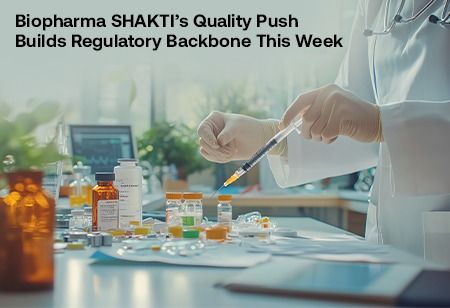
India’s shift toward chronic care and complex therapies is creating a stronger commercial case for biologics and biosimilars.
At the same time, the Biopharma SHAKTI initiative is building the research, manufacturing and regulatory infrastructure needed to capture that opportunity.
This convergence became visible this week when the Indian Pharmacopoeia Commission (IPC) convened a national conference on biosimilar quality and safety.
The event focused on pharmacopoeial standards, analytical characterization, comparability, immunogenicity and pharmacovigilance, showing how India is strengthening the quality backbone behind its next phase of biopharma growth.
India’s pharmaceutical market is moving from an acute-care-heavy model toward therapies for diabetes, cardiovascular disease, cancer and other chronic conditions. These therapies create longer treatment cycles and more predictable demand.
GLP-1 receptor agonists and dual agonists add another high-value opportunity as patents begin to open and Indian companies prepare domestic manufacturing, licensing and generic development.
The government has positioned Biopharma SHAKTI to support this transition. The policy push began with its proposal in the Union Budget 2026–27 on February 1, 2026, with an outlay of Rs 10,000 crore over five years.
PIB published on February 2, 2026 outlined the initiative’s focus on biologics and biosimilars, including three new NIPERs, upgrades to seven existing NIPERs, more than 1,000 accredited clinical trial sites and stronger CDSCO capacity.
The government also wants the initiative to support high-value biologics and biosimilars and reduce import dependence. A PIB release dated March 10, 2026, quoting Minister of State for Chemicals and Fertilizers Anupriya Patel, reiterated the Rs 10,000-crore, five-year allocation and the focus on domestic development and manufacturing.
On March 4, 2026, Union Minister for Chemicals and Fertilisers Jagat Prakash Nadda highlighted the commercial case for the policy during a post-Budget webinar. Nadda said that 40 percent of medicines globally could be biologics by 2035 and pointed to patents worth USD 300 billion set to expire by 2030 as an opportunity for India to move into biologics. He also said that even a one-percent share of the global biosimilars market could create an annual opportunity of Rs 2 lakh crore for India.
Also Read: How to Apply for India's Rs 10,000 Crore Biopharma SHAKTI Scheme
Funding and infrastructure alone cannot create an export-ready biologics industry. Manufacturers also need reliable analytical methods, reference standards and regulatory confidence.
That is where this week’s IPC conference becomes significant. IPC, along with IDMA, BIRAC and C-CAMP, brought together 160 stakeholders to examine the scientific and regulatory challenges surrounding biosimilars.
Discussions covered critical quality attributes, analytical characterization, comparability assessment, immunogenicity and pharmacovigilance. Experts from organizations including WHO and USP also contributed to the technical sessions.
The release of the Indian Pharmacopoeia Reference Substance for Enoxaparin Sodium provides a tangible example of this quality infrastructure. The authenticated reference material can support bioassay testing and more consistent assessment of biological activity.
The market pull from chronic care and GLP-1 therapies creates demand for more complex products. SHAKTI provides the policy and institutional framework to respond to that demand. IPC’s work adds another layer by strengthening the standards that manufacturers need to develop, test and validate these products.
The scheme also points toward a broader change in development models. Non-Animal Methodologies (NAMs), including human-relevant approaches such as organoids and organ-on-chip systems, are gaining attention as India expands its biologics capabilities.
For companies targeting biosimilars and complex biologics, this convergence could improve the commercial pathway from research to manufacturing. Stronger standards can support more consistent testing, while stronger regulatory capacity can improve confidence in domestic development and global submissions.
India now needs to translate SHAKTI’s funding into functioning institutions, stronger clinical research capacity, faster scientific review and commercially viable biologics. The government has also set an ambitious target of 100 biologics by 2047.
This week’s IPC conference shows that the quality side of that ambition is already taking shape. The larger opportunity lies in connecting that regulatory backbone with the growing commercial demand for chronic care biologics, biosimilars and GLP-1 therapies.