
India Pharma Outlook Team | Wednesday, 02 September 2026
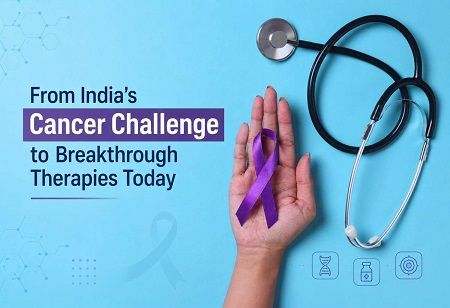
India confronts a growing cancer challenge today as colorectal cases climb and metabolic diseases reshape the nation’s health landscape.
This highlights an urgent need for early detection alongside pharmaceutical companies delivering breakthrough therapies that target blood, breast, and lung cancers.
Roche secures global rights to an experimental blood cancer drug, Cipla brings a next-generation bispecific therapy into key markets, and AstraZeneca reports strong progress with a lung cancer combination.
These advances arrive at a critical moment. They offer real hope against a rising burden and show that science continues to push forward even as the disease challenge intensifies across the country.
Public health measures have reduced many preventable infections, yet metabolic and lifestyle-related conditions now demand greater attention. Fatty liver disease affects 38.6 percent of Indian adults and 35.4 percent of children, according to an AIIMS-led systematic review.
Doctors link the condition closely to diabetes, obesity, and hypertension. The disease often stays silent until liver damage advances. A recent study finds clinically significant liver fibrosis in one in four patients with type 2 diabetes.
"India is facing an epidemiological shift at this time. We have made significant strides in controlling preventable disease through awareness, vaccinations and improving quality of life, however alongside these we are now seeing metabolic disease on a scale we have never handled before," said Dr Pramod Garg, professor and head of the Department of Gastroenterology and Human Nutrition at AIIMS.
Colorectal cancer forms a sharp part of this rising challenge. India recorded 40,430 new cases among men and 24,433 among women in 2022. Physicians now see more cases among younger adults. Blood in the stool, persistent changes in bowel habits, and unexplained weight loss require prompt evaluation.
Persistent infections continue to add pressure as Helicobacter pylori remains widespread and links to peptic ulcers and gastric cancer. A community study led by AIIMS finds celiac disease in roughly one in 96 people in northern India. Specialists now diagnose inflammatory bowel disease every week.
These trends set the stage for the World Congress of Gastroenterology 2026, which India hosts from September 30 to October 3. Experts will examine diagnostics, endoscopy, gut microbiome research, and artificial intelligence tools. Early evaluation and preventive steps can detect many conditions before they progress. India must move beyond treating advanced disease and actively promote good health.
Also Read: How Regulatory Readiness Can Shape Pharma's Global Growth
Roche pays Simcere Pharmaceutical Group 75 million dollars upfront for exclusive global rights to SIM0660. This experimental drug targets B-cell malignancies. B cells produce antibodies and form a key part of the immune system. Simcere remains eligible for up to about 1.46 billion dollars in additional milestone payments.
Roche gains the rights to develop, manufacture, and commercialize the candidate worldwide. A Simcere spokesperson confirms that SIM0660 currently sits at the preclinical stage. The agreement reflects strong industry interest in new approaches to blood cancers that still need better options.
Cipla strengthens its oncology portfolio with a novel bispecific antibody-drug conjugate. The company licenses rolditamig deuderuxtecan from China’s Sino Biopharmaceutical subsidiary. Cipla receives exclusive rights to develop and commercialize the drug in India, South Africa, and five other emerging markets. Cipla will handle local clinical development, regulatory work, and commercialization.
The Chinese firm stands to receive up to 123 million dollars in upfront, development, and regulatory milestone payments plus double-digit royalties on annual sales. Achin Gupta, Managing Director and Global CEO of Cipla, states that breast cancer remains a significant healthcare challenge and that this agreement adds a promising HER2-targeted therapy to the portfolio.
The drug targets two previously untapped domains of the HER2 protein. It uses a specialized linker that releases the cancer-killing payload inside the cell. The candidate currently runs multiple Phase 3 trials for HER2-low and HER2-positive breast cancer, colorectal cancer, and biliary tract cancer. China’s National Medical Products Administration has granted it three Breakthrough Therapy Designations.
In a Phase 1b study, the therapy delivered an overall objective response rate of 53.4 percent among heavily pretreated HER2-low patients. Among those previously treated with existing antibody-drug conjugates, 44.4 percent achieved remission. The drug also shows a favorable safety profile, with an interstitial lung disease rate of just 0.55 percent.
AstraZeneca and China’s Hutchmed report encouraging results from a late-stage trial. Their combination of Tagrisso and Orpathys significantly improves progression-free survival when given as first-line treatment. The trial focuses on patients with EGFR-mutated advanced non-small cell lung cancer whose tumours show moderate to high levels of the MET protein.
The combination helps patients live longer without disease progression compared with Tagrisso alone. Leading principal investigator Yi-Long Wu notes that the combination delivers a clear clinical benefit that could reshape primary treatment strategy for this distinct patient group. The study also shows encouraging benefits in overall survival, a key secondary goal.
Cancer therapies make up nearly half of AstraZeneca’s sales, and Tagrisso ranks among its best-selling drugs. The company continues to pursue ambitious growth targets, and this result supports that effort.
India faces a rising cancer challenge that demands earlier detection and stronger prevention. At the same time, pharmaceutical companies advance breakthrough therapies that expand options for blood, breast, and lung cancers. Roche, Cipla, and AstraZeneca each contribute distinct progress. These developments offer hope and underline the need for continued investment in both awareness and innovation.

.jpg)
