
India Pharma Outlook Team | Tuesday, 27 October 2026
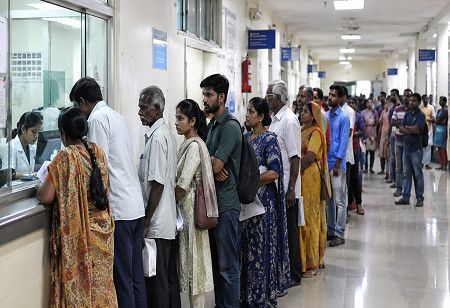
Long OPD queues define the daily struggle at government hospitals. Patients stand for hours outside token counters.
Elderly people shift weight from one foot to the other. Parents clutch feverish children while cash transactions drag on and counters grow crowded.
That familiar ordeal of the OPD queue is now meeting a direct challenge across Haryana.
The state has rolled out a dual reform of UPI payments and online OPD registration that aims to return time and dignity to patients without shutting anyone out. This practical shift puts patients first and turns long waits into shorter, smoother hospital visits.
Haryana has introduced UPI-based digital payments at 610 public healthcare institutions. At the same time, the Health Department has expanded online OPD pre-registration through the e-Upchar Hospital Management Information System.
The network covers all 23 district civil hospitals, 52 civil and sub-civil hospitals, 121 community health centers, and 414 primary health centers. Officials designed these steps to shorten waiting times, simplify processes, and increase transparency in public hospitals.
Also Read: Telemedicine for Senior Chronic Care: Clinical Guidelines and Remote Care Technologies Guide
Patients can now finish OPD registration from home and arrive only at their allotted time. The system reduces the need to join long lines at traditional counters.
These practical tools cut congestion at payment and registration points and make hospital visits more orderly. Cash payments and walk-in registration remain fully available at every facility. Patients without smartphones or digital literacy continue to access services exactly as before. This safeguard ensures the reforms do not exclude the most vulnerable and avoids the common trap of digital initiatives that leave people behind.
Additional Chief Secretary for Health and Family Welfare, Sumita Misra, stated that the measures make healthcare more convenient, transparent and patient-friendly. She noted that digital tools now deliver secure and streamlined services while simplifying hospital registration.
The statewide rollout followed a successful pilot at the District Civil Hospital in Panipat. After that trial, a state-level workshop on 13 October directed Civil Surgeons to implement UPI payments by 16 October, and the system became operational across all 23 districts within the set timeline.
Technology in public hospitals is finally measured by how much less suffering it causes rather than by how modern it appears. Haryana’s dual reform offers a practical reduction in OPD queue hardship and treats patients’ time and dignity as non-negotiable.