India Pharma Outlook Team | Thursday, 30 July 2026
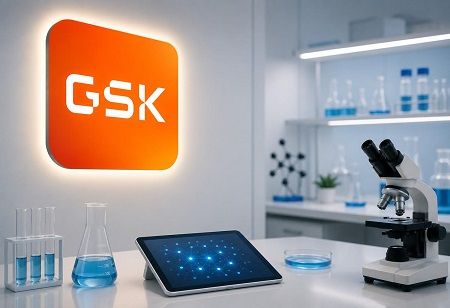
AI partnerships now drive a major shift in how global drug makers build and scale innovation pipelines. GSK has moved decisively in this direction with a new USD 110 million deal with Relation Therapeutics.
GSK uses AI partnerships to access advanced computational biology tools and human data-driven platforms that can accelerate early-stage drug discovery.
The collaboration focuses on identifying novel targets for diseases such as fibrosis and osteoarthritis, where traditional methods have delivered limited success.
GSK strengthens its external innovation model through this agreement, aiming to improve success rates, reduce development timelines, and unlock higher-value assets in its research pipeline.
GSK continues to sharpen its R&D strategy by scaling AI partnerships that complement its internal research capabilities. The USD 110 million agreement with Relation Therapeutics includes upfront funding along with milestone-based payments tied to drug discovery progress.
GSK gains access to Relation’s machine learning platform, which integrates human genetics and patient-derived data to identify new therapeutic targets. This approach allows GSK to diversify its pipeline without increasing fixed R&D costs. The company has already emphasized external collaborations as a key pillar in its growth strategy, especially after outlining cost optimization plans and pipeline expansion targets in its recent financial updates.
Also Read: Pharmaceutical 4.0: Redefines Compliance, Automation & AI
Relation Therapeutics strengthens its position in the biotech ecosystem through this AI partnership deal with GSK. The startup uses large-scale human datasets combined with advanced machine learning models to map disease biology at a deeper level.
"Deepening our understanding of the underlying biology of disease starts with richer data, to be used in models that can give us greater confidence in the discovery of therapeutic targets that can ultimately yield medicines. Through this collaboration with GSK, we will generate novel datasets from physiologically relevant human disease systems that can help reveal important biological mechanisms and support future discovery efforts," said David Roblin, Chief Executive Officer of Relation Therapeutics.
Its platform analyzes cellular data to uncover relationships between genes, proteins, and disease pathways. This capability allows faster identification of drug targets compared to traditional trial-and-error methods. The partnership validates Relation’s technology and signals strong industry confidence in AI-native biotech firms that focus on precision medicine and data-led discovery models.
The AI partnerships between GSK and Relation Therapeutics will prioritize diseases such as fibrosis and osteoarthritis, which represent significant unmet medical needs. Fibrosis affects multiple organs and lacks effective targeted therapies, while osteoarthritis impacts millions globally with limited disease-modifying treatments.
GSK aims to leverage AI-driven insights to identify novel biological pathways and accelerate the development of first-in-class or best-in-class therapies. By focusing on these complex conditions, GSK positions itself to capture high-value segments in the global pharmaceutical market.
AI partnerships like the GSK-Relation deal are transforming the economics of drug development. Traditional drug discovery can take over a decade and cost billions, with high failure rates in clinical trials. AI-driven models can reduce early-stage discovery timelines and improve target validation accuracy.
This deal reflects a broader industry trend where large pharmaceutical companies partner with AI-focused biotech firms to share risks and rewards. GSK uses this strategy to increase efficiency while maintaining flexibility in its pipeline investments. The growing adoption of AI partnerships signals a structural shift in how the pharma industry approaches innovation.