Fathimanoud, Correspondent, India Pharma Outlook
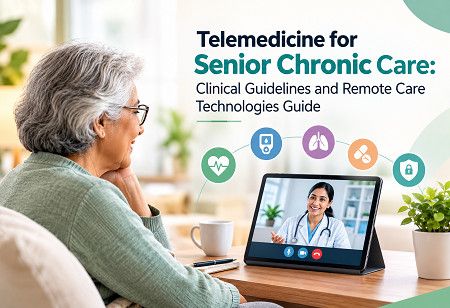
The growing importance of telemedicine for senior chronic care is clear from the rising number of older adults who need ongoing medical attention yet struggle to reach hospitals physically.
According to an Ixlayer survey reported by Fierce Pharma, 94% of pharmaceutical companies are already running or actively exploring direct-to-patient programs that include virtual consultations and home delivery.
This often leads them to fail to reach hospitals physically. Therefore, virtual consultations, remote patient monitoring, and connected devices are crucial in changing this reality.
Telemedicine for senior chronic care matters in a world where growing numbers of older adults need ongoing medical attention without the physical demands of frequent clinic visits.
They deliver regular check-ins, medication reviews, specialist input, and home-based tracking without the travel burden. Rising chronic disease rates, clinician shortages, and the strong preference for aging in place make these tools essential.
This guide details the clinical parameters, biometrics, interface requirements, regulatory standards, and practical barriers that define effective senior telehealth programs.
Also Read: Indian Telemedicine Apps in 2026: Enhancing Rural Health Accessibity
Telemedicine is the clinical interaction; telehealth is the wider digital care ecosystem; RPM is the continuous data-monitoring component; remote elderly care brings these tools together around the needs of older adults.
 Telemedicine is already making a big difference in India. eSanjeevani, the country’s national telemedicine service, has crossed 500 million teleconsultations as per PIB report.
The Union Ministry of Health and Family Welfare stated that eSanjeevani, India’s national telemedicine service, has crossed 500 million teleconsultations.
The ministry noted that this milestone shows how telemedicine is helping the country’s healthcare system reach more people by reducing problems of distance, location, and limited access, especially for those living in rural, remote, and underserved areas.
This large-scale success makes telemedicine a practical option for senior citizens who need regular care for chronic conditions but find frequent hospital visits difficult.
In May 2026, Vedanta Aluminium launched a 24x7 telemedicine facility at Lanjigarh in Odisha’s Kalahandi district, in partnership with Tata 1mg, to serve over 70,000 people across nearly 70 remote villages.
Pranab Kumar Bhattacharyya, CEO of Vedanta Alumina Business, said that Odisha remains central to Vedanta’s growth journey and that the well-being of local communities is at the heart of the company’s work in the state. He added that with the launch of the telemedicine service, the company is enhancing last-mile access to quality healthcare for those who need it the most.
Telemedicine parameters for elderly patients are clinical benchmarks, frequency rules, and safety criteria that help define an effective senior telehealth program.
Providers need to determine whether remote care is clinically appropriate, whether the patient can use the required technology, who should participate in care, and when an in-person assessment is necessary.
1. Patient eligibility criteria: Providers should first determine whether an older adult is suitable for remote care. They should consider the patient's chronic conditions, clinical stability, ability to participate in virtual care, access to a suitable device, and availability of caregiver support. Patients with complex or unstable conditions may require in-person assessment or a hybrid care model.
2. Cognitive assessment protocols: Clinicians should assess memory, attention, communication, and decision-making ability before enrollment. These checks help determine how independently a senior can use telehealth services and follow care instructions. When additional support is needed, caregivers can assist with technology and daily care while keeping the senior involved in decisions to the extent appropriate.
3. Data privacy safeguards: Telehealth platforms must protect both consultation data and information collected through connected devices. Providers should use secure communications, appropriate authentication, encryption, access controls, and clear consent processes. Patients should understand what information is collected, who can access it, and when caregivers can participate.
4. Visit frequency standards: The frequency of virtual consultations should match the patient's condition, treatment plan, and level of risk rather than follow one fixed schedule for every senior. Stable patients may require periodic reviews, while changes in symptoms, medication, or remote readings may require earlier contact. RPM programs should also define how frequently clinicians review transmitted data.
5. Escalation pathways: Providers should establish clear actions for abnormal readings or worsening symptoms. Patient-specific thresholds can trigger a phone call, video consultation, medication review, urgent assessment, or emergency referral depending on the severity of the situation. This ensures that remote monitoring leads to timely clinical action rather than simply generating alerts.
6. Documentation requirements: Clinicians should document remote encounters with the same clinical discipline applied to other forms of care. Records should capture relevant symptoms, assessments, care decisions, consent, patient identification, transmitted data, and follow-up actions.
Together, these six parameters create the clinical foundation for senior telemedicine. They establish who should receive remote care, how often providers should engage, how patient information should remain protected, and what happens when a patient's condition changes.
Telehealth is also making it easier for patients to receive medicines for chronic conditions. For example, Eli Lilly has started offering its new oral GLP-1 drug through telehealth providers and direct home delivery services across the United States.
This allows eligible patients to consult a healthcare professional remotely and receive the medicine at home, reducing the need for in-person clinic visits.
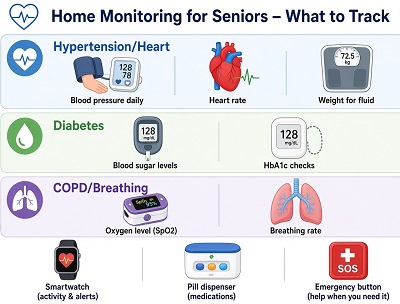 Remote Patient Monitoring (RPM) uses connected medical devices to collect and transmit patients’ health data from their homes to healthcare professionals.
It extends virtual consultations by providing continuous visibility into vital signs and other health indicators between appointments.
Clinicians can review these readings through digital dashboards, identify early signs of deterioration, and intervene before a condition requires hospital admission.
The global RPM market continues to expand as chronic diseases become more prevalent and more seniors prefer aging in place.
Hospitals and clinics remain major users of RPM, while home-based monitoring is growing as healthcare providers extend care beyond traditional clinical settings.
Dr. Jayanta Thakuria, Senior Director – Internal Medicine & Rheumatology at Yatharth Super Speciality Hospital, explains that remote monitoring enables healthcare professionals to track vital signs such as blood pressure, blood sugar, pulse, and oxygen saturation from a patient’s home.
Regular monitoring helps identify abnormal changes early, allowing timely treatment before a condition worsens. He adds that this approach can help older adults with chronic diseases reduce unnecessary emergency room visits, follow prescribed treatment routines, and maintain greater safety and independence.
The essential metrics vary according to each patient’s condition:
Other connected devices such as smartwatches and fitness bands track heart rate, physical activity, and sleep patterns. Personal emergency response systems enable seniors to call for help with a single button press.
Similarly, motion and door sensors can flag falls or prolonged inactivity without using cameras. Smart medication dispensers release scheduled doses and notify caregivers about missed medication, while voice assistants provide reminders and support hands-free emergency calls.
These readings become useful when clinicians interpret them against personalized thresholds and established care plans. When a measurement crosses a defined limit, the RPM platform generates an alert that triggers the appropriate escalation pathway.
Care teams can then assess changes across days or weeks instead of relying on isolated readings during appointments. This continuous oversight supports timely intervention, helps reduce avoidable hospitalizations, and enables seniors to remain safely at home for longer.
Mostly for older adults, telehealth is useful only when they can navigate the platform comfortably and independently. Complicated interfaces can discourage seniors from attending virtual consultations, following care instructions, or using digital health services regularly.
Accessible design is therefore essential to effective telehealth delivery, particularly for seniors with limited dexterity, reduced vision, or low digital literacy. Platforms must minimize technology fatigue and make every interaction simple, clear, and predictable.
Together, these usability and technical features make telehealth easier to navigate, encourage consistent engagement, and support better adherence to chronic care plans.
A virtual consultation may be easy to complete, but running a compliant senior telehealth program involves several checks behind the screen.
Healthcare providers must protect patient information, establish reimbursement eligibility, and track clinical outcomes to ensure remote care remains secure, accountable, and effective.
Three factors shape these requirements:
When privacy safeguards, reimbursement procedures, and outcome tracking work together, healthcare organizations can maintain regulatory compliance while building sustainable senior telehealth programs. Providers of remote senior care must clearly understand two key areas: the financial rules and the legal rules that apply to their services.
On the financial side, they need to know how insurance coverage works for elderly patients, what out-of-pocket costs families typically face, how tax and GST rules affect senior-care products, and how funding or capital can flow into the sector.
On the legal side, they must be familiar with laws such as the Maintenance and Welfare of Parents and Senior Citizens Act, regulations from bodies like the Insurance Regulatory and Development Authority of India (IRDAI), and any guidelines that cover digital or remote healthcare.
Only when providers fully grasp both the money-related rules and the legal requirements can they design remote senior-care programs that stay sustainable, remain compliant, and continue serving elderly people over the long term.
 Even well-designed digital health systems can fall short when older adults struggle to use them or lack confidence in virtual care.
Limited digital literacy, physical difficulties, and concerns about technology can prevent seniors from engaging consistently with telehealth services.
Family caregivers often bridge this gap by setting up devices, resolving connectivity issues, and assisting during virtual consultations.
Their involvement creates a three-way relationship between the senior patient, the caregiver, and the clinician, with each playing a distinct role in healthcare delivery.
Healthcare providers can make this arrangement more effective through practical training during enrollment.
In short, repeated practice sessions help patients and caregivers become familiar with the technology, while large-button devices and simplified interfaces make daily use easier.
When cognitive impairment affects a patient's ability to manage care independently, platforms should provide appropriate caregiver access while preserving the patient's participation and decision-making rights according to their capacity. Clear communication protocols also help caregivers coordinate daily care without overriding patient preferences or disrupting clinical decisions.
Connectivity and affordability present additional challenges, particularly for seniors in rural areas. Cellular-enabled devices can reduce dependence on home Wi-Fi, while hybrid care models combine remote monitoring with scheduled in-person consultations.
Insurance coverage for eligible devices and data plans can also ease financial barriers. To prevent device fatigue, clinicians should select monitoring tools according to individual needs rather than asking patients to manage multiple sensors unnecessarily. Monitoring frequency can then be adjusted as clinical conditions change.
Telemedicine for senior chronic care works best when clinical guidelines, reliable monitoring, accessible technology, regulatory compliance, and caregiver support function as parts of one coordinated system.
When providers address these practical barriers alongside clinical needs, they can improve continuity of care, reduce unnecessary travel, and help older adults manage chronic conditions at home while maintaining greater independence.
What are the key parameters for telemedicine in senior chronic care? The key parameters include patient eligibility, cognitive assessment, data privacy safeguards, visit frequency standards, clear escalation pathways, and proper documentation of every remote encounter.
What vital signs and health metrics should be monitored remotely in elderly patients? Providers should track blood pressure, heart rate, daily weight, blood glucose, oxygen saturation, respiratory rate, and activity or sleep patterns according to each patient’s specific chronic condition.
What are the clinical guidelines for telehealth in older adults with chronic diseases? Clinicians must first check clinical stability and technology readiness, set personalized visit schedules, define alert thresholds, protect patient data, and escalate promptly when readings or symptoms worsen.
How can telemedicine platforms be made accessible and easy to use for seniors? Platforms should use large fonts, high contrast, big buttons, one-touch video access, voice commands, plain language, simple onboarding, and easy caregiver support features.
What are the benefits and challenges of remote patient monitoring for elderly patients? RPM helps detect problems early and reduces hospital visits, yet limited digital skills, device complexity, connectivity issues, and the need for caregiver help remain common challenges.
Fathimanoud is a Correspondent with experience covering the manufacturing and pharmaceutical sectors. She has written several articles on the pharma and manufacturing industries, with a particular focus on pharmaceutical developments and industry updates.

.jpg)


, CDSCO.jpg "Fostering a Quality Culture in the Pharmaceutical Industry")