India Pharma Outlook Team | Friday, 28 August 2026
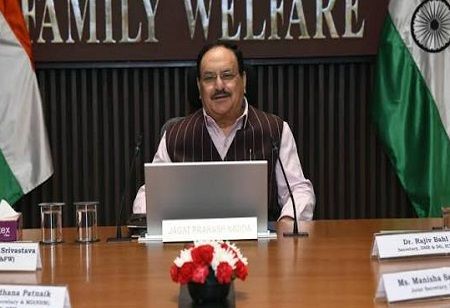
Emergency care capacity in district hospitals will rise by 50 percent under a key Budget initiative that Health Minister J.P. Nadda reviewed on Thursday.
Nadda examined the progress of this emergency care expansion along with other health sector projects.
He stressed timely implementation, inter-ministerial coordination and measurable outcomes.
The review focused on turning budget announcements into concrete programs and stronger healthcare institutions within clear timelines.
The Health Ministry now moves these Budget 2026-27 projects from planning into execution, with emergency care expansion in district hospitals forming a central pillar of the current review.
Nadda reviewed the initiative to establish and strengthen emergency and trauma care centers. Three committees formed after a post-budget webinar examined infrastructure, drugs, diagnostics, quality, human resources, academic expansion, skilling, digital architecture and pre-hospital integration.
Officials completed a comprehensive gap analysis of district hospitals against Indian Public Health Standards. They categorized 613 district hospitals for phased implementation. The first phase targets 160 hospitals for strengthening by March 2027. Nadda called for close monitoring so the first phase advances in a focused and time-bound manner.
Also Read: How Can Indian Pharma Strengthen Quality Amid Rising FDA Scrutiny
Nadda also reviewed plans to strengthen the Allied Health Professionals ecosystem. The goal is to add one lakh Allied Health Professionals over five years across 10 selected disciplines. Consultations involved industry, state governments, institutions, hospitals, implementing agencies and regulatory bodies.
Officials prepared a draft Expenditure Finance Committee note and circulated it to concerned ministries and NITI Aayog. A meeting under the Finance Minister’s chairpersonship on 27 July discussed funding options, including a public-private partnership model.
Parallel to this, an initiative aims to train 1.5 lakh multi-skilled caregivers in the coming year through NSQF-aligned programs. Training covers wellness, yoga and operation of medical and assistive devices. Initial batches have already completed training. The Department of Health and Family Welfare works with the Ministry of Skill Development and Entrepreneurship to scale the effort.
Nadda examined Biopharma SHAKTI, a proposed Rs 500-crore program. It seeks a network of more than 1,000 accredited clinical trial sites through a hub-and-spoke model, stronger data systems, a central facilitation agency and site-accreditation framework.
Consultations with industry, sensitization meetings with medical colleges and clinical-trial training workshops have begun. He also reviewed five regional medical hubs. Priority disease areas include dyslipidaemia, generalized anxiety disorder, cardiovascular diseases, insomnia and osteoarthritis.
ICMR and CCRAS nodal persons are identified for working groups that will develop evidence-based integrative treatment protocols. On the regulatory side, Nadda reviewed steps to strengthen the Central Drugs Standard Control Organization.
An expert committee has submitted its report on workforce structure, positions, pay levels and the mix of permanent and flexible staff. The aim is to meet global standards and approval timeframes through a dedicated scientific review cadre.
Mental healthcare progress also featured in the review. Plans for NIMHANS-II include 1,000 beds. Upgrades to the Central Institute of Psychiatry in Ranchi and Lokopriya Gopinath Bordoloi Regional Institute of Mental Health in Tezpur will add advanced psychiatry, neurology and neurosurgery facilities plus stronger research and training capacity. NIMHANS Bengaluru will mentor both institutions on administrative, academic, research and community frameworks.

.jpg)