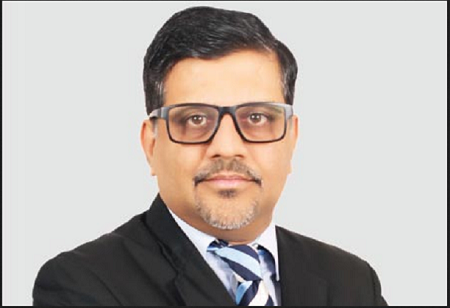
Dr. Birendra Singh, Global Chief Quality Officer, Mankind Pharma Ltd
As FDA scrutiny intensifies and regulatory expectations continue to evolve, Indian pharmaceutical companies are under growing pressure to strengthen quality systems, reinforce global confidence, and demonstrate a culture of continuous compliance beyond inspections.
Dr. Birendra Singh believes the industry's greatest opportunity lies in shifting from a reactive compliance mindset to one where quality becomes a competitive advantage.
Dr. Birendra Singh, Global Chief Quality Officer at Mankind Pharma (NSE Symbol: MANKIND & BSE Code: 543904), has spent over two decades leading quality, compliance, pharmacovigilance, and digital transformation across leading pharmaceutical organizations, including Mankind Pharma, Intas Pharmaceuticals, Zydus, and Panacea Biotec. His experience spans formulations, APIs, biologics, vaccines, regulatory governance, and enterprise-wide quality transformation.
In an exclusive interaction with Thiruamuthan, Assistant Editor at India Pharma Outlook Magazine, Dr. Singh explores how Indian pharmaceutical companies can navigate stricter global regulations, foster sustainable quality, embrace digital transformation, and strengthen their position in the global pharmaceutical market.
Read the full conversation below to gain deeper insights into the evolving landscape of Indian pharmaceutical quality and global regulatory standards.
Over the years, how have you seen pharmaceutical quality evolve from a regulatory requirement into a strategic driver of global competitiveness?
The traditional pharmaceutical quality focused on the availability of procedures, on the testing of the final product that was going out of the factories, as per the regulatory requirements. Having production documents and analytical records of a batch in line with the procedure was the expectation. And the purity of the batch was a symbol of quality.
There is a significant shift in this thinking with evolving guidance documents and regulatory frameworks. Guidance documents from ICH (Q8, Q9, Q10, M7 & so on) have changed the way we look at the quality of the product. The traditional approach was more like a reactive approach where we were waiting for failure of a batch followed by investigation, root cause analysis, CAPA and so forth.
With enablers like evolving guidance and technology, we are more proactive in our approach today, where we perform risk assessment of product manufacturing process, of manufacturing facility, develop product through the concepts of Quality by Design (QbD) and try to build the quality into the process and product.
We look for the trends, emerging patterns from the trends and try to find out the drift that can cause a batch failure and fix that drift even before the batch fails. Pharmacovigilance is improving every day with new knowledge becoming available through the post-marketing surveillance.
There is a high level of awareness among the customers, the patients, and the institutions about the quality of pharmaceutical products, measuring it through their safety and efficacy beyond the certificate of analysis.
Quality is everyone's responsibility. When every employee owns patient safety, compliance becomes a natural outcome rather than a regulatory obligation.
With regulatory scrutiny from agencies such as the US FDA becoming more rigorous, how should Indian pharmaceutical companies strengthen quality beyond inspection readiness?
Regulatory Inspections are routine for any pharmaceutical company. The intent of such an inspection is to ensure patient safety. Therefore, these inspections and the observations from the inspections should be taken in a positive spirit and as an opportunity for continuous improvement. The first step is to build the quality in our product and processes. The processes should be robust to deliver consistent quality. Second is facility maintenance; the equipment, the premises, and the facilities should be maintained periodically and always be kept in tidy condition.
When we say periodically, it does not mean that if we find any issue today, it will be fixed during the next periodic maintenance; instead, it should be done immediately. Third is training, the personnel at each level should be trained adequately and sensitized that Quality is the responsibility of everyone working in the organization.
Then comes the empowerment and employee engagement, which is a broader part of the quality culture of the organization. The personnel should feel engaged and empowered to make quality decisions. If there is the right quality culture in the organization, the operations in such an organization will always be in compliance, and therefore, there will not be the need for any special effort to be inspection-ready, as such an organization will by default be ready for inspection any time.
The US FDA is also now looking beyond Quality & Compliance. It has launched pilot program namely “Quality Management Maturity,” through which it is measuring the quality culture of pharmaceutical companies.
Therefore, going forward having right quality culture in the organization will be the key to inspection readiness, sustainable quality, compliance, and business.
Several leading Indian pharmaceutical companies have faced regulatory observations in recent years. How do such actions influence global confidence in Indian pharma, and what collective measures can strengthen the industry's reputation?
Yes, there are regulatory observations; however, if compared with earlier years, there is a notable decline in regulatory actions, specifically, a decline can be seen in the number of USFDA Form 483s getting converted to WL. And, that signals that there is improvement in quality & compliance level within the pharmaceutical industry in India. The basic level of understanding and systems are in place at almost all pharmaceutical companies.
The observations are now being cited in different areas; they have moved beyond documentation, procedure, and practices. They are now around continuous improvement, around quality culture, around sustainability. Our Drug Control Agency, i.e., CDSCO has taken several initiatives including revision of Schedule M, conducting RBI (Risk Based Inspection) surprise/surveillance CGMP Inspection and taking stricter actions for non-conformities to match the Global Standards.
So, while of course, there are regulatory observations, we could still maintain confidence in the global market with efforts from Regulators and Industry. This confidence can be further strengthened through collaboration within the industry, creating knowledge-sharing platforms, sharing best practices, consistent dialogues between industry and regulators, empowering teams and developing a culture of openness.
Beyond addressing FDA warning letters, what organizational changes are essential to building a sustainable culture of quality excellence?
The first thing is that everyone working in any pharmaceutical organization must understand and accept that “Quality is the responsibility of everyone,” and this should be the basic starting point for everyone joining the organization.
Then comes the training: the candidates joining the organization should be trained well for the assigned job, which is like the right person for the right job. The quality and compliance should not be directed or focused only on getting through the regulatory inspection, or something that should be done just for the inspection. It should be daily affairs, should be done for the organization first and then for the regulatory inspection.
There should be employee engagement initiatives like focused GEMBA, Town-hall and feedback mechanisms so that the shop floor issues, which are known best to the operator can be sent to the top of the hierarchy. Not only feedback, but action should also be taken on the feedback, and the echoes of those actions should be visible on the shop floor. This will make employees feel valued and empowered to speak about any quality concerns in day-to-day operation.
Governance is another important part. Any feedback or signal coming from day-to-day operations should be critically reviewed periodically at various levels of management. Pharmaceutical Quality System (PQS) (ICH Q10) provides excellent guidance and framework for governance.
As global quality expectations continue to rise, what capabilities will distinguish Indian pharmaceutical companies that consistently meet international regulatory standards?
There can be two differentiators, which are talent and technology. India is a country where we are having a huge talent pool. The educational qualifications of this talent pool coupled with objective/focused industrial training can give excellent results.
Pharmaceutical companies can further leverage advanced technology in manufacturing, such as the use of MES, IoT sensors for maintenance, digital QMS systems, LIMS, PAT and AI to improve the quality of pharmaceutical products and improve compliance. These technologies help to reduce errors induced by human intervention and improve the documentation process.
Today’s new talent pool is advanced in leveraging technology to get the work done. They are experts in using AI, computer applications, and finding simple solutions to complex problems.
A personal mantra that he follows: Build quality into every process, empower every individual, and always keep the patient at the center of every decision.
Despite India's emergence as a global pharmaceutical powerhouse, where do you believe the industry's biggest quality gaps remain, and what must change to bridge them?
I see the biggest quality gaps are in the areas of training and technology.
The personnel on the floor are required to be trained adequately to perform their respective jobs. Talent entering the industry from academia has quite a different level of understanding of practical methods of working in industry.
Therefore, there is a gap in training between industry and academia. Our current training system in industry focuses heavily on SOP reading and rarely on practical on-the-job training. The training is focused on what to do, when to do and how to do, but it never addresses the importance of the specific job that the trainee is never being trained to do. So, this brings us to the point of inadequate training in the industry.
Coming to technology, humans can make mistakes to certain levels, and so does the machine. However, the machines are likely to make a few mistakes compared to humans. Therefore, technology plays a key role in ensuring consistent quality and compliance. Although in India, we have technology available, it is not indigenous. We are heavily reliant on imported technologies and machines making its implementation in manufacturing plants a costly affair that cannot be afforded by every pharmaceutical company.
Therefore, what is required to fill these gaps is to bridge the gap between industry and academia, bridge the gap in training methodology being followed in industry and to have indigenous technology that is affordable and can be implemented by every pharmaceutical company.
Given the growing adoption of AI, automation, and digital quality systems, how can organizations ensure technology strengthens quality culture rather than simply improving compliance?
Technology facilitates faster data availability and analytics. However, there is always a human in the loop who makes the decision based on the data presented or generated using technology.
When the quality culture of the organization is at its matured level, the personnel will feel empowered of taking right decision immediately upon observing any abnormalities at any stage of batch manufacturing, which can include stopping production in case of departure or outlier data (even if within specification), triggering investigation, and reporting non-conformities as soon as it is observed.
The humans involved in such decision-making should be adequately trained and empowered for making right decision, which is in favor of the end user, i.e. patient. So, technology acts as an enabler here for making faster decisions by data analytics and for strengthening a quality culture.
In an industry where data integrity remains central to regulatory confidence, what more should organizations do to build quality systems that are resilient, transparent, and inspection-ready?
The simple mantra is to follow “ALCOA+++” principles each time.
Almost all pharmaceutical companies in India have SOPs around data governance. Initiatives are being taken to prevent data integrity by means of recurring training, improving shop-floor practices, putting a second check where necessary, simplifying procedures, documentation, and promoting a speck-up culture.
Another method is Automation and Digitalization. With the software and applications complying with 21 CFR Part 11 and/or EU Annex 11 or any other applicable guideline. These software and applications can record all data on real time basis including its metadata and having audit trail of each action.
This is the best methodology available in current time to ensure data integrity as the audit trail gives a complete picture of who has done, what was done, when it was done. Further, since the data are captured in real time directly by the software/application, it provides accuracy as well.
Dr. Birendra Singh's Five Career Lessons for Future Pharma Quality Leaders:
1. Build a Strong Regulatory Foundation
A deep understanding of global quality standards, GMP guidelines, and regulatory frameworks forms the backbone of a successful career in pharmaceutical quality and regulatory affairs.
2. Embrace Digital Technologies Early
As pharmaceutical operations become increasingly digital, professionals should develop expertise in AI, data integrity, electronic quality systems, and regulatory information management to stay future-ready.
3. Develop Cross-Functional Expertise
Understanding both Quality Assurance and Regulatory Affairs enables professionals to connect manufacturing, compliance, and regulatory submissions while making more informed business decisions.
4. Invest in Continuous Learning
Industry-recognized certifications, specialized training, and ongoing professional development help build technical credibility and prepare professionals for evolving global regulatory expectations.
5. Strengthen Communication and Leadership Skills
Success in pharmaceutical quality extends beyond technical expertise. Strong communication, stakeholder management, collaboration, and problem-solving skills are essential for leading teams and driving a culture of quality.
Looking ahead, what strategic priorities will define the next generation of quality excellence across India's pharmaceutical manufacturing ecosystem?
The Indian Pharmaceutical manufacturing ecosystem or operations has already attained a certain level of excellence. We are the leader in generic drug manufacturing. What is needed next is to innovate and be among the list of innovators companies worldwide.
For achieving excellence in quality, we still have corners to be cleaned to curb the data integrity issues, equipment maintenance issues and equipment cleaning issues. We need to improve our Right First Time (RFT) ratio, reduce the cost of poor quality, and improve the consistency of product quality while maintaining the sustainability of the supply chain.
.jpg)


, CDSCO.jpg "Fostering a Quality Culture in the Pharmaceutical Industry")