India Pharma Outlook Team | Tuesday, 24 March 2026
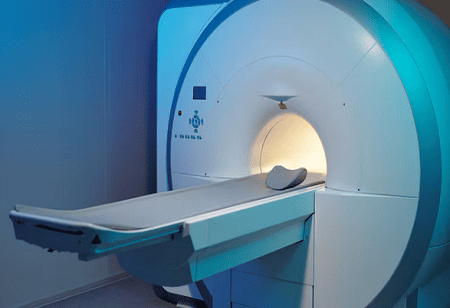
India’s healthcare sector is feeling the heat of the helium supply crisis; as global disruptions tied to tensions in the Middle East and restricted trade through the Strait of Hormuz begin to push up MRI scan cost and delay installations of new machines.
Industry experts say there is no outright shortage yet, but supply disruptions—especially from Qatar, which accounts for nearly one-third of global helium exports—have sharply increased prices. “Prices are now almost double of what they were before this war started,” an industry expert said, pointing to a widening supply-demand gap rather than complete unavailability.
Helium plays a critical role in MRI technology. In its liquid form, it cools superconducting magnets that power MRI machines. These magnets operate at extremely low temperatures, and helium, with a boiling point of minus 269 degrees Celsius, remains the only viable coolant. Despite being abundant in the universe, helium is rare on Earth and is extracted from natural gas through cryogenic distillation.
The impact of the helium supply crisis on MRI machines varies depending on the type of system in use. Newer “helium-free” MRI machines use minimal helium—often under 10 liters—and do not require refilling. However, most facilities in India still rely on traditional systems.
Also Read: Advancing Interventional Radiology in India Through Collaboration
The liquid helium shortage will have some impact on installation of new MRI scanners which require about 1500 litres of liquid helium as the initial fill for the MRI magnets. With shortage of liquid helium due to the war there could be delays in new installations along with increased costs as the liquid helium prices could rise due to shortage,” said Dr. Harsh Mahajan (Padma Shri), Mentor, FICCI Health Sector & Founder and Chairman, Mahajan Imaging & Labs
MRI machines are broadly divided into three types: helium-free, zero boil-off, and non-zero boil-off systems. While helium-free systems are unaffected, zero boil-off machines need limited refilling of around 100–150 liters annually. Older non-zero boil-off systems are the most vulnerable, consuming up to 600 liters of helium each year.
Hospitals and diagnostic centers have started adapting. Many are delaying non-essential helium refills or postponing new MRI installations, hoping prices will stabilize. A senior industry official noted that installing a single MRI machine can require up to 1,500 liters of helium, adding pressure on already strained supply chains.
This strategy, however, has limits. If helium levels drop below 40 percent, the magnet’s stability is at risk, which could lead to machine shutdowns. If disruptions continue, experts warn of rising scan costs, delayed diagnostics, and reduced access to imaging services.
Smaller diagnostic centers are feeling the impact more than larger hospital chains. Bigger players often have service contracts that include helium supply, shielding them from immediate cost spikes. Smaller facilities, especially those using refurbished machines, must source helium independently and are facing higher costs and limited availability.
Despite the concerns, experts say there is no immediate cause for panic. Modern MRI machines, especially zero boil-off systems, are designed to retain helium efficiently. “If three years ago the helium in my machine was at 80 percent level, today it will still be at the 80 percent level,” said Dr Harsh Mahajan.
Key Data & Stats: