
India Pharma Outlook Team | Thursday, 23 April 2026
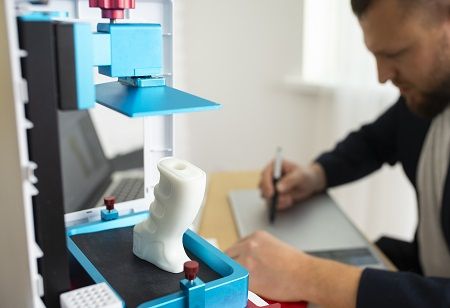
A team at National Institute of Technology Rourkela has developed a new bio-ink for 3D bioprinting, offering fresh potential for pharmaceutical research and tissue engineering.
The bio-ink for 3D bioprinting is engineered to improve both structural integrity and biological compatibility, addressing key limitations seen in existing materials.
In pharmaceutical applications, reliable tissue models are critical for drug testing and disease research. However, many current bio-inks struggle to balance printability with cell support.
The newly developed formulation aims to overcome this by delivering better shape fidelity while maintaining a cell-friendly environment. This ensures that printed structures remain stable without compromising cell growth and function.
Also Read: The Future of MedTech in India: Meeting Tier-2 and Tier-3 Needs
The bio-ink is made using a blend of natural polymers and proteins, including alginate, gelatin, chitosan, and bovine serum albumin. This composition allows for improved mechanical strength and enhanced cell viability. The research team has secured a patent for the innovation, underlining its potential for translational use in pharma and biomedical sectors.
For the pharmaceutical industry, this bio-ink for 3D bioprinting could support the development of more accurate tissue models used in preclinical drug screening. It may reduce dependence on traditional testing methods and help improve the predictability of drug responses. The technology also holds promise for studying complex diseases in controlled lab environments.
As 3D bioprinting continues to evolve, advancements like this bring the industry closer to creating functional human tissues. Such progress could reshape drug discovery workflows and accelerate the development of safer, more effective therapies.
.jpg)