India Pharma Outlook Team | Thursday, 17 September 2026
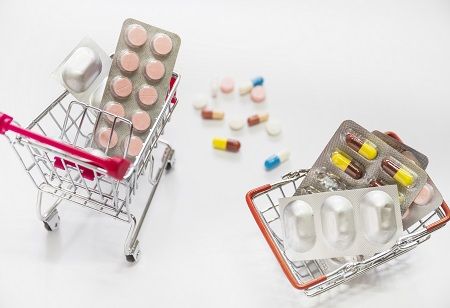
India’s ‘Pharmacy of the World’ tag now faces scrutiny as a fake drug crackdown demand reaches the Supreme Court.
A public interest litigation lands at the top court and shines a light on organized networks that push counterfeit and adulterated medicines.
It challenges the systems that allow fake drugs to keep circulating despite decades-old laws. For a country that supplies medicines across continents, the filing puts domestic enforcement under the microscope.
Lawyer Ashwini Upadhyay filed the PIL on Tuesday. It names the Union ministries of Health and Family Welfare, Law and Justice, and Women and Child Development, every state and union territory, and the Law Commission as parties.
The plea seeks a comprehensive national framework to curb the manufacture and sale of counterfeit and adulterated medicines, including vaccines and cough syrups.
The filing zeroes in on speed and uniformity. It asks the Centre and states to finish investigations into fake medicine cases within three months and complete trials within one year. It also pushes for clear standard operating procedures on search, seizure and sampling, time-bound forensic tests on seized stocks, and mandatory digital recording plus videography of every investigative step.
Here is a quick snapshot of the core questions:
The petition states that no standard investigation procedure, time-bound trial or sentencing policy currently exists for cases of adulterated and spurious drugs. It notes that the Drugs and Cosmetics Act has been in force since 1940, yet the sale and manufacturing of fake medicines, syrups, injections, and vaccines continue to rise.
Also Read: How Biologics and Complex Therapies Are Reshaping CDMO Strategy
The PIL points to concrete enforcement weaknesses. It highlights the absence of uniform investigation procedures, dedicated mechanisms for speedy trials, and effective financial investigations. The petition argues these gaps have hampered action against organized counterfeit medicine networks.
It cites reported incidents such as alleged fake cancer drugs supplied to hospitals in Bengaluru, seizures of counterfeit medicines, and cough syrup-related deaths as examples that show the need for coordinated and time-bound enforcement.
The circulation of fake medicines, the plea says, poses a serious threat to public health and implicates citizens’ constitutional rights, including the right to life and health under Article 21. By placing these points before the Supreme Court, the petition turns a long-running concern into a formal demand for systemic repair.
For a nation that markets itself as the Pharmacy of the World, the case forces a closer look at whether enforcement keeps pace with production scale.
The filing does not invent new scandals. It simply gathers existing reports and asks the top court to close the procedural holes that let counterfeit networks operate. How the Centre, states, and Law Commission respond will decide whether the Pharmacy of the World label strengthens or carries new questions.