India Pharma Outlook Team | Tuesday, 02 June 2026
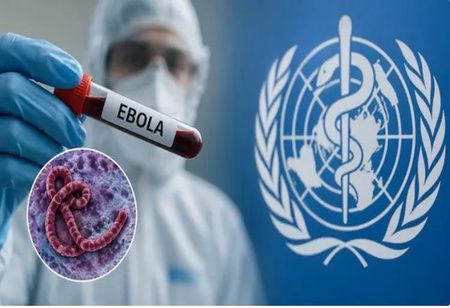
Serum Institute of India (SII) has been tasked with manufacturing clinical trial doses of an experimental Ebola vaccine developed by the University of Oxford, following fresh funding support from the Coalition for Epidemic Preparedness Innovations (CEPI).
The initiative comes at a critical time as global health agencies accelerate efforts to contain a rapidly spreading Ebola outbreak in Africa.
CEPI has committed up to $8.6 million to support preclinical development and early-stage manufacturing of the vaccine candidate, which will be produced at SII’s facilities in Pune. The move builds on global efforts to strengthen pandemic preparedness amid rising concerns over the Bundibugyo Ebola virus outbreak in parts of Africa.
The funding also reinforces SII’s position as a key global vaccine manufacturing partner, especially in rapid-response epidemic situations.
The investment comes as health authorities in the Democratic Republic of the Congo (DRC) and Uganda struggle to contain a major outbreak of the Bundibugyo Ebola virus, which has been classified as a Public Health Emergency of International Concern by the World Health Organization.
According to CEPI, there are currently no licensed vaccines for this Ebola strain, and no candidates have reached advanced clinical stages, making the Oxford program one of the most critical global efforts in progress.
The outbreak has already resulted in hundreds of suspected cases and deaths, marking one of the largest filovirus outbreaks in recent years. CEPI has also launched a broader $60 million+ program to accelerate multiple vaccine candidates, including a Moderna-led initiative receiving up to $50 million in support.
The Oxford candidate is based on the ChAdOx1 platform, the same technology used in the Oxford-AstraZeneca Covid-19 vaccine. The funding will support the development of a Master Virus Seed stock and preparation for Phase 1 clinical trials.
Also Read: Moderna & CEPI Accelerate Bundibugyo Ebola Vaccine Development
Serum Institute of India will play a critical role in producing early clinical doses due to its large-scale manufacturing capability and experience in rapid vaccine deployment. The collaboration strengthens its long-standing partnership with Oxford University and global health agencies.
SII previously became one of the world’s largest manufacturers of the Oxford-AstraZeneca Covid-19 vaccine, demonstrating its capacity to scale production under urgent global demand.
CEO Adar Poonawalla said the company aims to leverage its infrastructure to ensure speed, scale, and affordable access for affected regions if the vaccine proves successful.
Experts say the partnership highlights a growing reliance on Indian manufacturers for global health security, particularly during epidemic outbreaks where rapid production is essential.
The collaboration between CEPI, Oxford, and SII underscores a shift in global health strategy, moving toward distributed vaccine manufacturing networks instead of centralized production.
With no approved treatment for the current Ebola strain, early-stage vaccine acceleration is seen as critical to preventing further spread. The multi-candidate approach, involving different vaccine platforms, aims to improve the probability of success.
If successful, the program could strengthen global preparedness frameworks for future outbreaks and reinforce India’s role as a core vaccine production hub.
Serum Institute of India (SII), based in Pune, is one of the world’s largest vaccine manufacturers. It produces vaccines for diseases like polio, measles, and COVID-19, supplying to over 170 countries and playing a key role in global immunization programs.
.jpg)