
India Pharma Outlook Team | Tuesday, 26 May 2026

With over 10 crore people living with diabetes in India, diabetic neuropathy remains a commonly observed complication, with nearly one in four individuals estimated to experience some form of nerve damage. Painful diabetic peripheral neuropathy (DPN), along with postherpetic neuralgia (PHN), causes nerve pain in the hands and feet that feels like tingling, numbness and burning sensations, disrupting sleep, limiting mobility and making everyday activities uncomfortable.
To counter this pain, individuals often seek generic muscle pain relief solutions which fail to provide targeted relief against nerve pain. However, solutions containing natural ingredients like Capsaicin (an active compound derived from chili peppers) can help soothe irritated nerves, providing targeted symptomatic relief against nerve pain.
To validate this scientifically, a comprehensive systematic review was led by Dr. Viswanathan Mohan, Dr. Mangesh Tiwaskar, Dr. Muthukumaran Jayapaul, Dr. Sarath Menon R, and Dr. Abhay Nene, in partnership with Procter & Gamble Health India under the leadership of Dr. Sonali Gokhalay and her team lead, Dr. Vaibhavi Wakchoure, published in the Journal of the Association of Physicians of India (JAPI), evaluated 22 clinical studies involving more than 1,800 patients to assess the efficacy and safety of topical capsaicin 0.075 percent in neuropathic pain.
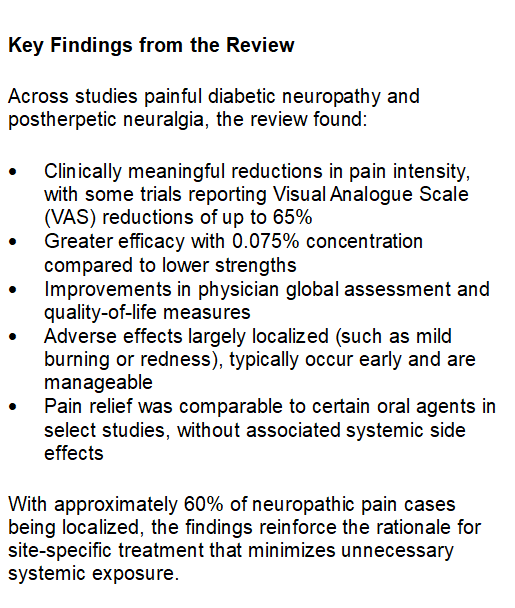
The review consolidates evidence supporting a localized, mechanism-specific approach to manage nerve-driven pain. The key findings of the review highlight the efficacy of 0.075 percent capsaicin in providing relief against neuropathic pain.
Also Read: Sun Pharma launches drive to fight diabetic retinopathy
Neuropathic pain arises from damaged or dysfunctional nerves that carry signals between brain and body, common symptoms being burning, tingling, numbness in the hands and feet, electric shock-like sensations, sharp shooting pain or sensitivity to touch. Because it is driven by damaged or irritated nerve fibers, conventional painkillers may not always provide adequate relief as nerve pain is deep rooted. Hence, authors highlight the importance of targeted solutions, designed to provide symptomatic relief from the underlying mechanism of nerve pain.
Dr. Sonali Gokhalay, Leader for Medical & Technical Affairs and Product Research - P&G Health India, said, “Neuropathic pain is fundamentally different from general pain as it originates from dysfunctional nerve signaling and therefore requires a mechanism-specific approach. This review strengthens the evidence base for topical capsaicin 0.075 percent as a clinically validated option for localized neuropathic pain. The evidence reinforces that targeted and localized therapy can deliver meaningful pain relief while minimizing unnecessary systemic exposure. As diabetes-related neuropathy becomes more common in clinical practice, aligning treatment to the underlying pathophysiology is critical”.
Topical capsaicin works directly on the site of pain. It provides satisfactory pain relief, reduced sensitivity to heat and mechanical stimulus that persists for a prolonged period. By acting locally, it avoids unnecessary systemic exposure and reduces concerns related to sedation, systemic toxicity and drug–drug interactions that may be associated with some oral therapies.
Dr. Vishwanathan Mohan, Chairman, Dr. Mohan’s Diabetes Specialties Center & Madras Diabetes Research Foundation, Chennai, said, “Neuropathic pain presents differently from general pain and often requires a different strategy. In real-world practice, many patients describe burning, tingling or electric shock-like sensations that do not respond adequately to conventional topical analgesics. The consolidated evidence presented in this review on capsaicin strengthens confidence in localized topical therapy as a rational and evidence-based choice, particularly when pain is well defined.”
Topical capsaicin may be particularly suitable for patients who are not able to tolerate oral therapies but are concerned about systemic side effects or require combination therapy.
These findings are particularly relevant as new formats like roll-on creams with 0.075 percent capsaicin are available in the market that enable controlled and mess-free targeted application. Research indicates that this updated treatment is effective and easier to use. The aim is to enhance the overall patient experience and encourage people to stay consistent with their treatment.
The authors conclude that topical capsaicin 0.075 percent is a validated, evidence-based effective option for localized neuropathic pain and should not be viewed solely as adjunctive therapy. Early recognition and mechanism-led treatment may help improve patient comfort, sleep and overall daily functioning.
Reported adverse effects across the reviewed studies were largely localized, typically occurring early in therapy and generally manageable, with low discontinuation rates.
.jpg)