
India Pharma Outlook Team | Thursday, 16 July 2026
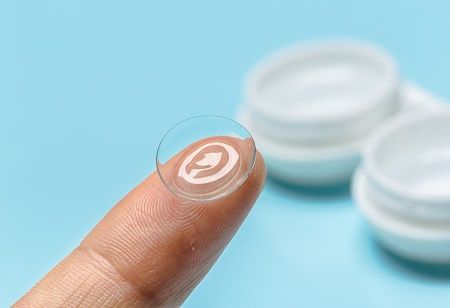
The idea of a 20-minute contact lens could change how people receive vision correction.
Researchers have developed 3D printed contact lenses that can be customized for each eye in about 20 minutes.
The new method could reduce long waiting times for patients who need special lenses. The technology is still in its early stages. However, it has shown promising results in laboratory tests.
The 20-minute contact lens is designed to match the exact shape of a person's eye. This could improve comfort and provide better vision than many traditional options. Researchers believe the technology may one day allow eye clinics to scan, print, and fit a custom lens during a single visit.
The research team from the University of Waterloo in Canada developed a new way to print custom lenses. The lenses are made using a newly designed hydrophilic silicone material. This material attracts water and is suitable for contact lens use.
Traditional silicone is difficult to use in 3D printing. The team solved this problem by creating a printable material that keeps the properties needed for safe and comfortable lenses.
The lenses are printed layer by layer. This process leaves tiny surface marks. To fix this, researchers added an ultra-thin coating. The coating smooths the surface without changing the lens shape. It also keeps the lens clear for better vision.
The new printing method offers several possible benefits.
The technology could especially help people with conditions such as keratoconus. These patients often need rigid gas-permeable lenses. Traditional custom lenses can take weeks or even months to manufacture. The new method could reduce that waiting period.
Researchers also believe custom printing may improve the overall fit of rigid lenses. A better fit could lead to greater comfort during daily wear.
Also Read: How Digital Maturity is Powering Pharma's GMP Evolution
The technology is not ready for public use. The current results come from laboratory experiments only. Human clinical trials will be needed before doctors can prescribe these lenses.
Researchers must prove the lenses are safe, durable, and effective during regular use. Regulatory approvals will also be required before commercial production begins.
Even so, the early findings have created excitement in the eye care industry. If future studies confirm the results, custom contact lenses could become much faster to produce. Patients may no longer need to wait weeks for specialized fittings.
The research shows how 3D printing could reshape eye care. While more testing remains, the technology offers a glimpse into a future where personalized vision correction becomes quicker and more accessible.
.jpg)