Zeenat Parween, Correspondent, India Pharma Outlook
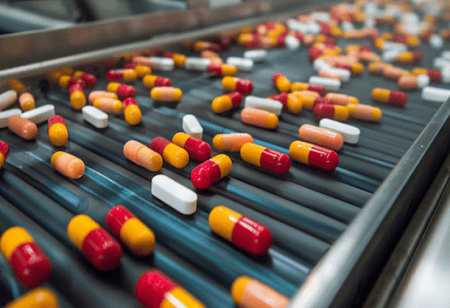
Complex Generics and Biosimilars Market Growth is not a secret covered in technical reports anymore. It dominates the front cover of the Rise of Biosimilars, and it is driving the most important Pharmaceutical Industry Trends in 2026.
With blockbuster biologics losing patent protection and healthcare costs on the rise, more complicated generic medicines and biosimilars are emerging as a strategic concern in the eyes of global manufacturers. It cannot be described as an incremental change. It signifies a structural transformation.
Simple generics was at one time the story of cost saving. However, price erosion and intense competition have narrowed margins all over the world. That is why most companies are resorting to complex generic drug development such as inhalers, long acting injectables, depot formulations, liposomal drugs, and drug device combinations. Such products are more difficult to imitate, and the number of players is also limited.
As per IQVIA analysis, complex generics currently represent an increasing proportion of pipeline attention among generic drug manufacturers, particularly in the U.S. market where competition in oral solids has become intensified.
Companies like Teva Pharmaceutical Industries have publicly highlighted the development of their complex generics portfolios to counter the pricing pressure in traditional generics. The inhaler franchise and specialty portfolio of Teva demonstrates that firms can combine generics with more valuable products.
Similarly, Sun Pharmaceutical Industries has also made substantial investments into the specialty and complex formulations to diversify beyond commoditized segments. This move is an indication that margins and expertise are what counts most.
Kiran Mazumdar-Shaw, Executive Chairperson, Biocon Group - “Biocon is in a very unique position globally as a biosimilars leader… key strategic collaborations and a strong portfolio in insulin and GLP-1 products place us to accelerate growth.”
Also Read: The Future of MedTech in India: Meeting Tier-2 and Tier-3 Needs
Biologics dominate modern treatment across oncology, immunology, and rare diseases. These therapies are powerful. They are also expensive. The Biologics vs Biosimilars debate is not about efficacy. It is about affordability and sustainability.
As of 2024, more than 45 biosimilars have been approved by the U.S. Food and Drug Administration. Europe, under the European Medicines Agency, has approved even more and has over 15 years of biosimilar market experience.
The impact is measurable. IQVIA reports that biosimilars have generated more than USD 50 billion in cumulative savings in the U.S. since 2015. These savings expand access to critical therapies, particularly in oncology and autoimmune diseases. This is where the Rise of Biosimilars becomes more than a market trend. It becomes a healthcare policy tool.
While discussing Lupin’s plan to expand complex generics in the U.S. and Europe with a pipeline of several hundred products, emphasizing the shift toward higher-value portfolios rather than traditional crowded generics categories, Nilesh Gupta, Managing Director, Lupin said, “In the U.S., the key imperative… is to move into complex generics and to build the specialty business through our own portfolio and mergers and acquisitions.”
Between 2025 and 2028, multiple high-revenue biologics are scheduled to lose exclusivity. These products collectively account for tens of billions in annual sales.
Patent expirations and generic drugs have always gone hand in hand. But in biologics, the dynamic is more complex. Development costs are higher. Regulatory standards are tighter. Manufacturing is intricate. Still, opportunity is massive.
For example, Amgen has built a substantial biosimilars portfolio targeting leading biologics in oncology and inflammation. At the same time, Pfizer has expanded its biosimilar presence globally, viewing the segment as a long-term revenue stabilizer.
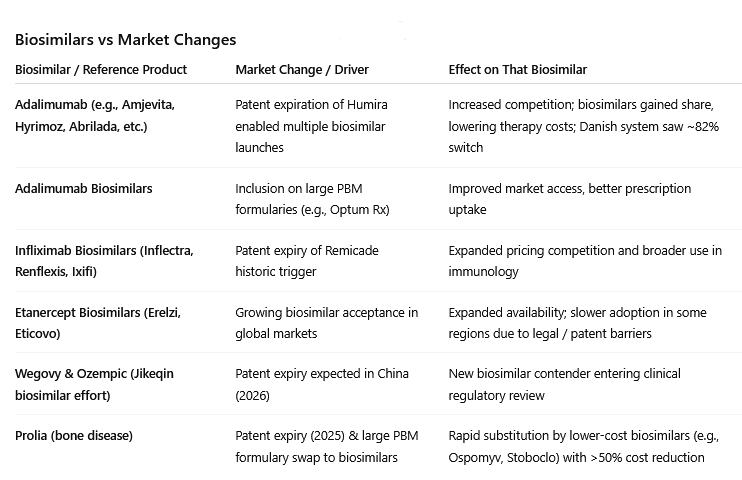
Cancer care remains one of the costliest segments in global healthcare. Oncology biosimilars are under development to be equivalent to monoclonal antibodies which treat breast cancer, colorectal cancer, lymphoma, and more.
Dr. Sharvil P. Patel, Managing Director, Zydus Lifesciences said, “With Tishtha, we are expanding access to immuno-oncology through a patient-centric therapy. … We remain committed to improving patient access to high-quality biosimilar immunotherapies.”
Companies like Celltrion have built global reputations through oncology biosimilars, particularly in Europe and the U.S. Celltrion’s early entry into monoclonal antibody biosimilars helped accelerate adoption in several markets.
Meanwhile, Biocon Biologics has expanded aggressively into insulin and oncology biosimilars, including acquisitions to strengthen its global footprint. Oncology biosimilars are not only expanding the global market for biosimilars. They are reshaping pricing benchmarks in cancer care.
Umang Vohra, MD & Global CEO, Cipla said, “The latest USFDA guidance is a significant positive for the industry as it sharply lowers development costs and accelerates timelines for biosimilars.”
Also Read: How Digital Maturity is Powering Pharma's GMP Evolution
Regulatory science has matured. The FDA increasingly relies on advanced analytical comparability and totality-of-evidence frameworks. In some cases, regulators are exploring ways to streamline the biosimilar approval process when robust structural and functional similarity is established. Europe continues to lead in biosimilar adoption. The OECD has noted that countries with strong biosimilar policies have moderated biologics spending growth over time.
The role of regulatory agencies in biosimilars is critical. Their clarity reduces uncertainty. Their flexibility encourages innovation in biosimilar drug development. Still, standards remain strict — and for good reason. Patient safety is non-negotiable.
Growth projections are strong. But challenges persist. Development costs can range from USD 100 million to USD 250 million per biosimilar candidate. Manufacturing facilities require advanced biologics infrastructure. Regulatory filings demand deep scientific documentation.
Commercial dynamics are equally complex. In the U.S., rebate structures can sometimes slow biosimilar uptake. Physicians may hesitate to switch stable patients. Education remains essential. That is why only well-capitalized, technically strong companies can succeed at scale.
As we look at emerging biosimilars in 2026, several patterns stand out:
Sandoz, now operating independently, has doubled down on biosimilars as a core growth pillar. The company positions itself as a pure-play leader in generics and biosimilars globally. This reflects a broader shift in trends in biopharmaceuticals and generics: specialization is replacing scale alone.
By 2026, the industry will look different. Companies that once relied heavily on small-molecule generics are building biologics capabilities. Innovators are entering biosimilars. Manufacturing is becoming more technology-driven.
The global market for biosimilars is expanding not just in value, but in geographic spread. Asia-Pacific is strengthening its position as both a production hub and consumption market. Complex generic drugs and biosimilars are converging into a hybrid model of affordability plus technical sophistication.
The rise of complex generics and biosimilars is not a temporary cycle. It is a long-term restructuring of pharmaceutical economics. Patent expirations will continue to unlock opportunity. Regulatory pathways will become more refined. Scientific tools will reduce development uncertainty.
Companies like Dr. Reddy’s, Teva, Biocon Biologics, Sandoz, and Celltrion are not reacting to a trend. They are building around it. By 2026 and beyond, the real question is no longer whether biosimilars will grow. It is who will lead — and who will adapt fast enough to stay relevant. The balance between innovation and affordability is being rewritten. And complex generics and biosimilars are holding the pen.
1. What is the difference between biologics and biosimilars?
Biologics are original medicines made from living cells and are often used to treat serious diseases like cancer and autoimmune disorders. Biosimilars are highly similar versions of these biologics that match them in safety, strength, and effectiveness. They are approved only after strict testing and regulatory review. The main difference is cost — biosimilars are usually more affordable, which improves patient access.
2. Why is the biosimilars market growing rapidly?
The market is expanding because many blockbuster biologic drugs are losing patent protection. This allows other manufacturers to introduce lower-cost biosimilar versions. Governments and insurers are actively encouraging their use to control rising healthcare costs. As awareness and trust grow among doctors and patients, adoption continues to increase worldwide.
3. What makes complex generics different from traditional generic drugs?
Complex generics are more difficult to develop than standard generics because they may involve complicated formulations, delivery systems, or active ingredients. Examples include inhalers, long-acting injectables, and drug-device combination products. These drugs require advanced manufacturing capabilities and detailed regulatory approval processes. Despite the challenges, they play a key role in expanding affordable treatment options after patents expire.
.jpg)



, CDSCO.jpg "Fostering a Quality Culture in the Pharmaceutical Industry")