
Acadicell is creating an environment where collaboration accelerates discovery while preparing technologies for future clinical translation
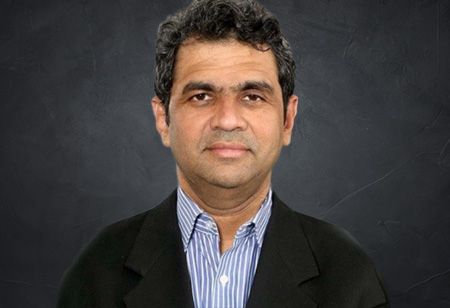
Dr Raghu Babu, Director


The he future of healthcare lies not only in treating disease but in restoring damaged tissues and improving the body's ability to heal itself. Advances in regenerative medicine, from stem cell technologies and extracellular vesicles to tissue engineering and regenerative biomaterials, are creating unprecedented opportunities to transform patient care.
Yet scientific progress alone is not enough. The true challenge lies in translating laboratory discoveries into clinically relevant, scalable, and ethically developed healthcare solutions that can make a meaningful difference in patients' lives.
Acadicell Innovations was founded to address this very challenge. What began as an initiative to provide hands-on stem cell education and research opportunities has evolved into an innovation-driven biotechnology company focused on advancing regenerative medicine through translational research.
By integrating education, scientific discovery, product development, and strategic collaboration, the company has built an ecosystem that nurtures promising ideas beyond academic research.
Today, Acadicell is developing next-generation regenerative platforms spanning stem cell technologies, exosome-based therapeutics, hematopoietic stem cell expansion, and amniotic membrane-derived regenerative products.
Transforming Academic Research into Healthcare Innovation
Acadicell's journey is rooted in education, but its ambitions have always extended far beyond the classroom. The company began by offering students and young researchers practical exposure to stem cell science through laboratory training, research projects, and scientific mentorship. This environment encouraged participants to move beyond theoretical knowledge and engage with real-world scientific challenges.
As these projects evolved, Acadicell identified an important opportunity. Many student-led research initiatives demonstrated potential not only as academic studies but also as solutions to unmet clinical needs. Supported by government-funded innovation and translational research programs, several concepts progressed beyond proof-of-concept, inspiring the company to expand from academic training into product-focused biotechnology innovation.
Rather than separating research from application, Acadicell developed an ecosystem where scientific discovery, entrepreneurship, and healthcare innovation reinforce one another. Every promising idea is assessed through multiple perspectives: scientific validity, clinical relevance, scalability, manufacturability, and regulatory readiness, ensuring that research is designed with practical impact in mind from the outset.
This integrated model continues to define the organization today. By connecting researchers, clinicians, academic institutions, industry experts, and innovation partners, Acadicell is creating an environment where collaboration accelerates discovery while preparing technologies for future clinical translation.
“The problem we were most determined to solve was the gap between academic research and practical healthcare innovations. We wanted to create a platform where scientific discoveries could be translated into products and technologies that benefit patients while simultaneously nurturing the next generation of researchers and entrepreneurs in the life sciences sector”, shares Dr Raghu Babu, Director.
Acadicell is creating an environment where collaboration accelerates discovery while preparing technologies for future clinical translationDr Raghu Babu, Director
Engineering Next-Gen Regenerative Solutions
Acadicell's ability to translate research into healthcare solutions is supported by advanced scientific infrastructure and a diversified regenerative medicine portfolio. The company has established specialized laboratory capabilities spanning stem cell culture, molecular biology, cytogenetics, flow cytometry, cell characterization, and a Class 10000 clean-room facility, creating an environment that supports rigorous research, quality validation, and process standardization.
This infrastructure enables Acadicell to pursue multiple regenerative technologies simultaneously while maintaining the reproducibility and quality required for future clinical development.
Among its primary research areas are umbilical cord-derived mesenchymal stem cells (UC-MSCs), recognized for their regenerative and immunomodulatory potential, and small extracellular vesicles (sEVs) or exosomes, which represent a promising generation of cell-free therapeutics capable of promoting tissue repair and modulating inflammation.
The company is also advancing hematopoietic stem cell expansion technologies to improve cord blood transplantation outcomes and amniotic membrane-derived regenerative products, including wound healing and corneal applications that harness the membrane's natural anti-inflammatory and regenerative properties.
Together, these platforms reflect Acadicell's broader vision of combining complementary regenerative technologies to develop patient-centric solutions that are scientifically robust, scalable, and clinically meaningful.
“The future of regenerative medicine lies in combining stem cell science, cell-free therapies, advanced biomaterials, and precision biotechnology”, adds Dr. Raghu Babu.
Designing Innovation for Clinical Translation
For regenerative medicine to achieve widespread clinical impact, scientific innovation must be supported by robust development pathways. Acadicell addresses this by embedding translational thinking into every stage of its innovation process.
Rather than evaluating research solely on scientific merit, the company considers manufacturability, quality systems, regulatory compliance, reproducibility, and clinical relevance from the outset, ensuring that promising discoveries are developed with long-term adoption in mind.
Government-funded innovation programs have played a pivotal role in advancing this journey, enabling Acadicell to validate technologies and move research beyond the laboratory. At the same time, strategic collaborations with academic institutions, clinicians, research organizations, industry partners, and regulatory experts bring together the multidisciplinary expertise needed to accelerate product development.
While Acadicell contribute scientific knowledge, clinicians provide insights into unmet medical needs, and industry partners help strengthen manufacturing readiness and commercialization strategies.
This collaborative approach is particularly valuable in emerging fields such as stem cell-derived products, exosome therapeutics, hematopoietic stem cell technologies, and amniotic membrane-based regenerative solutions, where scientific excellence must be matched by regulatory rigor and scalable production.
“At Acadicell, we view commercialization not as the final step of research, but as a carefully planned journey that begins from the earliest stages of innovation”, states Dr Raghu Babu.
By integrating research, regulation, collaboration, and commercialization into a single development framework, Acadicell is creating regenerative technologies designed not just to demonstrate scientific promise but to reach the patients who need them.
Future Defined by Scientific Integrity
As regenerative medicine continues to evolve, trust will remain as important as innovation. Acadicell has therefore built its culture around scientific integrity, ethical responsibility, and continuous learning. The company follows evidence-based methodologies, rigorous validation processes, and established regulatory and ethical guidelines throughout product development.
Equally important is its commitment to responsible scientific communication, ensuring that the opportunities and limitations of emerging regenerative technologies are presented with transparency. Ethical sourcing of biological materials, informed consent procedures, and patient safety remain central to this approach, reinforcing credibility in a rapidly advancing field.
This culture extends beyond research. Acadicell continues to invest in mentoring young scientists, encouraging multidisciplinary collaboration, and fostering an environment where curiosity, innovation, and knowledge-sharing drive continuous improvement.
By empowering researchers to think beyond experiments and focus on real-world healthcare impact, the company is nurturing the next generation of innovators alongside the technologies they develop.
Looking ahead, Acadicell also sees an opportunity to contribute to India's emergence as a global biotechnology hub. With strong scientific talent, expanded innovation support, and growing clinical capabilities, the country is well-positioned to accelerate regenerative medicine.
Acadicell aims to play a meaningful role in this ecosystem by developing globally competitive technologies while strengthening the bridge between academic research, industrial innovation, and patient care.
“Ultimately, our vision is to help shape a future where regenerative medicine becomes more accessible, reliable, and integrated into mainstream healthcare, where scientific innovation translates into hope and better outcomes for patients worldwide”, concludes Dr Raghu Babu.
By combining scientific excellence with ethical leadership, collaborative innovation, and a clear translational vision, Acadicell is helping shape a future where regenerative medicine moves beyond possibility to practical, accessible healthcare solutions.
Powering Regenerative Innovation
.jpg)


, CDSCO.jpg "Fostering a Quality Culture in the Pharmaceutical Industry")