

Over time, Sripath intends to evolve this approach from conventional wound care towards what it describes as ‘innovative accelerated repair’, eventually encompassing internal wounds as well
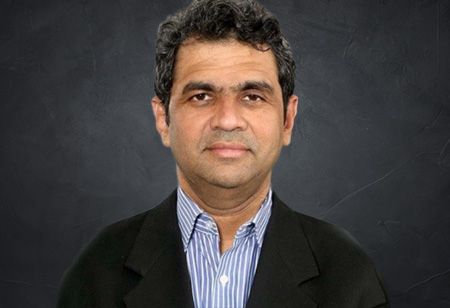
Dr. Krishna Prasad Adluri, Founder & Managing Director

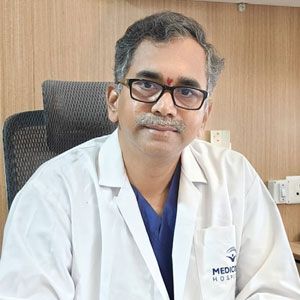
Wound care is increasingly moving beyond conventional dressings towards solutions designed to address the underlying barriers that delay healing. This shift is particularly relevant in India, where diabetic foot ulcers, chronic wounds, burns and trauma-related injuries create a substantial clinical burden.
For wound-care product manufacturers, the opportunity therefore extends beyond managing a wound to developing technologies that can control infection, address biofilm, minimize tissue damage and accelerate repair.
Established in 2021, Sripath Medical Systems is approaching this challenge through an unusual convergence of medicine, pharmaceutical science and engineering. The Hyderabad-based medical technology company develops innovative solutions for chronic and emergency wounds, guided by a simple belief: every wound deserves to heal— and heal fast.
Its first commercial product, ZioHeal, is based on a zeolite-iodine complex and has been developed to address challenges such as cytotoxicity and biofilm formation in wound management. With its initial manufacturing infrastructure established and commercialization underway, Sripath is simultaneously developing a wider pipeline spanning chronic wounds, burns, trauma and, eventually, internal wound repair.
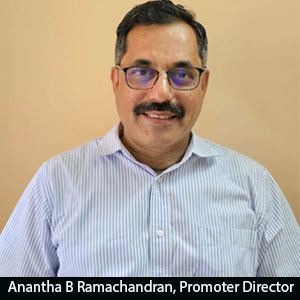
Behind this journey are Dr. Krishna Prasad Adluri, Founder and Managing Director, an accomplished cardiovascular surgeon who has performed around 15,000 heart surgeries, and Anantha B Ramachandran, Promoter Director, a chemical engineer from IIT Delhi with over three decades of process-engineering experience at HPCL and QatarEnergy.
Where Surgery Meets Engineering
Sripath's origins lie in Dr. Krishna Prasad's desire to extend his impact beyond the patients he could personally operate on each day. Having built cardiac surgery units across multiple cities, he envisioned creating medical technologies capable of reaching significantly larger patient populations.
That vision resonated strongly with Ramachandran, who had returned to India after an extensive career in oil and gas and was exploring opportunities in areas such as renewable energy and energy optimization.
What initially appeared to be a dramatic shift from refining to healthcare soon revealed considerable common ground. Concepts involving zeolites, biopolymers, diffusion, chemical reactions, pH and viscosity were familiar territory for a chemical engineer; only the end purpose had changed.
Over time, Sripath intends to evolve this approach from conventional wound care towards what it describes as ‘innovative accelerated repair’, eventually encompassing internal wounds as wellDr. Krishna Prasad Adluri, Founder & Managing Director
The collaboration subsequently developed into what the company describes as a ‘Triveni Sangam’ of medicine, engineering and pharma. Clinical experience helps identify the problem, engineering evaluates and develops possible solutions, while pharmaceutical expertise supports manufacturing, quality, regulatory processes and execution.
“ZioHeal reflects this model. Developed using zeolite-iodine complex technology, the product is intended to support the healing of ulcerous wounds, including diabetic foot ulcers. Sripath is also conducting foot-care and diabetic-foot awareness initiatives to encourage earlier intervention before wounds progress into more complex conditions”, speaks Dr. Krishna Prasad Adluri, Founder and Managing Director.
Building Systems Before Scaling
Ramachandran's engineering background has been equally important in building the organization itself. Much of Sripath's infrastructure had to be developed from the ground up, encompassing site selection, clean-room construction, commissioning and operating processes. His experience taking large industrial projects from concept to commissioning consequently became relevant in an entirely different environment.
There was, however, one fundamental adjustment. Large organizations typically operate through established workflows, specialized departments and layers of support. A start-up has few such buffers. Sripath therefore began introducing structured workflows, timelines, cross-functional meetings and clear ownership even while its team remained small.
Regulation, too, is viewed less as an obstacle and more as an enabling framework. Drawing parallels with HAZOP studies, inspections and engineering standards in refining, Sripath involves production, QA/QC and regulatory professionals from the early stages of R&D. Once proof of concept and product design are established, defined procedures help translate innovation into a consistent, safe and manufacturable product.
“The same collaborative philosophy extends beyond the organization. Surgeons, clinicians, academic institutions, laboratories, suppliers and regulatory professionals are treated as part of Sripath's wider ecosystem. The company also conducts CME and awareness programmes around emerging wound-care technologies, creating channels for clinical feedback alongside product education”, shares Dr. Krishna Prasad Adluri.
From Wound Care to Accelerated Repair
Sripath is now transitioning from product development towards commercialization and scale. Approximately ?10 crore has been committed to the venture to date, supporting its facility, team and initial product development. ZioHeal has received approval for commercial production and entered the market, while around a dozen products are at different stages of development, testing and regulatory approval.
Its ambitions extend beyond surface wound management. In chronic wounds, the company is focusing on challenges such as cytotoxicity and biofilm formation; in emergency care, its development efforts are directed towards blood loss and infection. Over time, Sripath intends to evolve this approach from conventional wound care towards what it describes as “innovative accelerated repair,” eventually encompassing internal wounds as well.
Over the next two years, the company envisages its cumulative investment requirement roughly doubling, alongside an expansion from its present team of around a dozen people to approximately 100. Over a five-year horizon, the objective is to build a comprehensive portfolio of differentiated wound-care and repair technologies while strengthening manufacturing capabilities, market reach and opportunities for international expansion.
Underlying that growth is a deliberately measured philosophy: “Clarity before Capital. Governance before Scale Up. Sustainability before Speed.” For Sripath, the larger opportunity is not simply to manufacture another wound-care product, but to demonstrate what becomes possible when surgeons, engineers and pharmaceutical professionals approach healing as one shared problem. Its motto, “Healing with Innovative Technologies,” succinctly captures where it intends to take that convergence next.
.jpg)

, CDSCO.jpg "Fostering a Quality Culture in the Pharmaceutical Industry")