India Pharma Outlook Team | Monday, 16 November 2026
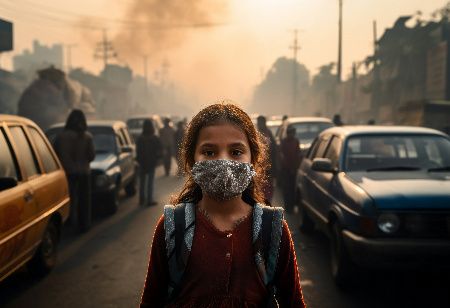
Delhi air pollution health risks are back in focus after a Centre for Science and Environment (CSE) analysis found that average PM2.5 levels in the week before Diwali reached 236 µg/cubic meter, the highest for the period in three years.
The reading was 97 percent above 2025 levels and 32 percent higher than in 2024.
The findings point to a high pollution baseline before the festival, with transport remaining the largest local source.
The data adds urgency to concerns about prolonged exposure, which experts say can affect more than respiratory health, including the heart, brain and kidneys, and may raise long-term disease risks.
Against this backdrop, Dr Harsh Mahajan, Founder and Chairman of Mahajan Imaging & Labs and Mentor at FICCI Health, has warned that prolonged exposure can affect not only the lungs but also cardiovascular and kidney health.
His remarks underline the need for sustained pollution control and preventive healthcare.
Also Read: Powering India's Manufacturing and Preventive Healthcare Ecosystem
CSE's November 11 analysis found that vehicular transport remained the largest contributor among Delhi's local pollution sources, accounting for 52 percent, followed by residential activities at 13 percent and peripheral industries at 11 percent.
The health implications extend beyond respiratory conditions. A study published in The Lancet Planetary Health found that every 10 µg/cubic meters increase in annual PM2.5 exposure was associated with an 8.6 percent increase in annual mortality in India.
Another study published in Kidney International Reports in September 2026 examined 12,271 adults across Delhi and Chennai. It found an association between long-term PM2.5 exposure and declining kidney function.
Dr Harsh Mahajan, highlighted that prolonged PM2.5 exposure is linked to cardiovascular diseases, stroke and impaired kidney health.
He emphasized that pollution-related health complications can develop gradually, making early identification and preventive healthcare important, particularly for people with existing health conditions.
Dr Mahajan also stressed that individual health assessments cannot replace cleaner air, calling for sustained pollution reduction and a stronger public-health response.
The growing Delhi air pollution health risks highlight the need to combine pollution control with greater awareness of long-term health consequences.
Access to timely medical advice and clinically appropriate assessments can help identify emerging health concerns.
However, addressing the underlying problem requires year-round emission reduction, stronger public-health interventions and improved air-quality management.