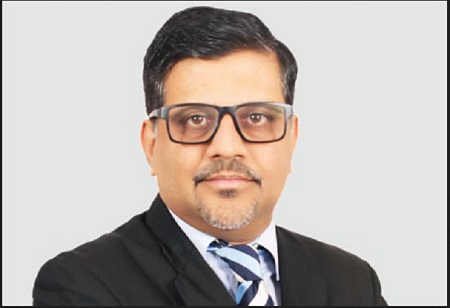
Ayumu Okada, President and CEO, OMRON Healthcare & Junta Tsujinaga, President and CEO, OMRON Corporation
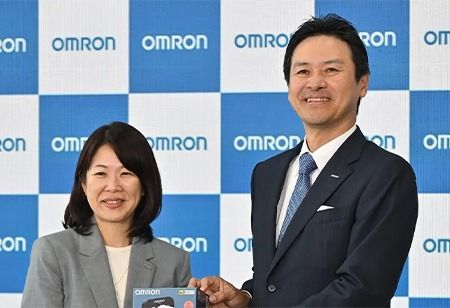
During a conference, Ayumu Okada, President and CEO, OMRON Healthcare Co., Ltd., and Junta Tsujinaga, President and CEO, OMRON Corporation, discussed India's growing role as a global manufacturing and innovation hub, the opportunities for industrial automation, and the need to strengthen preventive healthcare. She highlights how digital health solutions, home blood pressure monitoring, and medical technologies can improve early detection of cardiovascular diseases and make preventive care more accessible. She also shares insights on the importance of clinical evidence, regulatory standards, and greater awareness in integrating home blood pressure monitoring into India's healthcare system.
Ayumu Okada has served as President and CEO of OMRON HEALTHCARE Co., Ltd. since 2023 and is also a Managing Executive Officer of OMRON Corporation. She joined OMRON HEALTHCARE in 2007 and has held senior leadership positions across medical product planning, global business strategy, data services, and corporate management. She was appointed Executive Officer in 2021 and Managing Executive Officer in 2023.
Junta Tsujinaga has served as President and CEO of OMRON Corporation since April 2023. He joined the company in 1989 and has held several senior leadership positions across its Industrial Automation business. He was appointed Executive Officer in 2017 and Managing Executive Officer in 2019. In 2021, he became Company President of OMRON's Industrial Automation Company before taking over as President and CEO of OMRON Corporation in 2023.
India is emerging as a global manufacturing hub. What opportunities do you see for the country's industrial sector, and how can automation support this transformation?
India is facing historic opportunities, geopolitical change, strong government industry policy, and rapidly expanding domestic demand. In particular, advanced industries supported by government initiatives are expected to expand rapidly. India is no longer only a large market. It's becoming a global hub for manufacturing and innovation.
Semiconductors, EVs, batteries, and electronics are driving this transformation. India will play a bigger role in the global supply chain and in the future of technology. With our automation technology and global expertise, we help manufacturing improve quality, productivity, and sustainability.
Our message is very simple. From Make in India to Innovate in India. Together, we will help create world-class manufacturing in India.
India faces significant healthcare challenges, including hypertension. How can technology and digital health help strengthen preventive healthcare?
India is experiencing rapid economic growth. At the same time, it faces serious health challenges. One of the most urgent challenges is hypertension. High blood pressure can lead to heart disease, stroke, kidney disease, and other serious conditions.
It affects not only individuals and families, but also healthcare costs and the vitality of society. People need to monitor their health regularly, identify risks early, and take action before illness develops. Through blood pressure monitors, ECG, and our collaboration with Tricog, Omron will help make preventive care more accessible across India.
We will continue to build a data-based foundation that protects the health of people in India. Health data collected at home, in communities, and at medical institutions can be connected to healthcare services.
The key words are preventive medicine through digital health and longer, healthy lives. Everyone can live long, healthy, and fulfilling lives regardless of where they live or their income.
What changes do you expect in India's manufacturing and healthcare landscape as the country continues to grow?
India is no longer only a large market. It's becoming a global hub for manufacturing and innovation. India will play a bigger role in the global supply chain and in the future of technology.
At the same time, India is experiencing rapid economic growth, and healthcare is an important part of the country's future. People need to monitor their health regularly, identify risks early, and take action before illness develops.
Through automation technology, we can help manufacturing improve quality, productivity, and sustainability. Through digital health, we can help make preventive care more accessible across India.
India is witnessing a shift in its healthcare priorities, with cardiovascular diseases emerging as a major concern. What are the key challenges, and why is preventive healthcare becoming increasingly important?
As India's economy continues to grow, people's lives and lifestyles are changing. In the past, infectious diseases were a major health concern in India, but today, according to WHO data, cardiovascular diseases are the leading cause of death in India, followed by respiratory diseases.
What makes cardiovascular diseases particularly challenging is that they often develop over many years. Risk factors such as high blood pressure can go unnoticed for a long time, even as the risk of serious illness increases. That is why prevention is so important.
High blood pressure is often called the silent killer. It often develops without noticeable symptoms, yet it can lead to serious conditions such as stroke, heart failure, and kidney disease. An estimated 300 million people in India are living with high blood pressure today, and that number is expected to grow. That is why it is so important to take action before symptoms appear.
Also Read: India's Role in Shaping the Future of Oncology and Immunology
High blood pressure often goes undetected. How can regular home blood pressure monitoring help people identify risks early and manage their health better?
The first step in managing high blood pressure is to know your own blood pressure. However, because blood pressure can fluctuate significantly throughout the day, a single measurement may not give us the full picture.
What makes this even more challenging is that some types of high blood pressure are particularly difficult to detect. For example, with masked hypertension, blood pressure may be normal at the doctor's office, but high at home. There is also morning hypertension, when blood pressure rises in the morning.
That is why we believe it's so important to measure blood pressure regularly at home and share the results with doctors. By doing so, people can better understand blood pressure and identify potential risks before serious health problems develop.
For more than 50 years, Omron Healthcare has worked to bring blood pressure monitoring into people's homes. Since launching our first home blood pressure monitor in 1973, our goal has always been to make it possible for people to manage their health at home.
So far, we have delivered more than 400 million blood pressure monitors worldwide. Our monitors are used in more than 130 countries and regions.
How can medical devices, digital health solutions, and public awareness initiatives make preventive healthcare more accessible?
Alongside home blood pressure monitoring, we are also working to detect atrial fibrillation early, which is a heart rhythm condition that increases the risk of stroke.
We have developed devices that make it easy to record an ECG at home. We also have technologies that can detect possible atrial fibrillation during a blood pressure measurement.
Alongside providing blood pressure monitors, we also want to help people understand why measuring blood pressure at home is so important.
One way we do this is through health camps held in public spaces and pharmacies, where people can have their blood pressure measured and learn more about their health. So far, more than 25,000 people have taken part in these events.
We also work with the next generation of doctors by offering lectures to medical students on the importance of home blood pressure monitoring. So far, 2,600 students have taken part in these lectures. We also take part in India's family adoption program, through which medical students can share health information and explain why regular blood pressure checks at home matter.
Through all these activities, we are working towards the same goal of making home blood pressure monitoring part of everyday life for more people across India.
What is needed to establish home blood pressure monitoring as a reliable part of clinical practice in India?
To make home blood pressure monitoring a more common part of everyday healthcare, we need clinical evidence demonstrating its value in medical practice.
In India, 90 experts from the Indian Society came together to develop the country's first guidelines for measuring blood pressure at home.
The guidelines are based on data from around 1,900 cases collected at 18 medical facilities across 12 states. Omron Healthcare supported this work by providing blood pressure monitors and helping with clinical research.
These guidelines provide a foundation for using home blood pressure readings to help guide treatment for high blood pressure.
For home blood pressure readings to be used in clinical practice, doctors need to be confident in their accuracy. This is why blood pressure monitors, as medical devices, must meet the regulatory requirements of each country.
Home blood pressure monitors are approved as medical devices in 97 countries, and India is no exception. Building on this trust, we aim to further expand home blood pressure monitoring across India by providing accurate and reliable products.




, CDSCO.jpg "Fostering a Quality Culture in the Pharmaceutical Industry")