India Pharma Outlook Team | Thursday, 24 September 2026
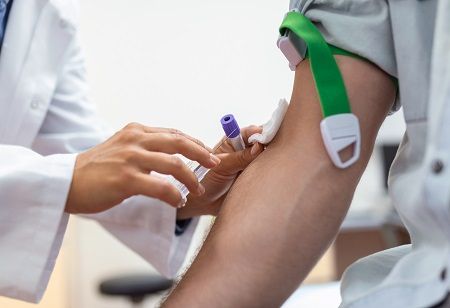
A U.S. FDA advisory panel has voted in favour of GRAIL's Galleri, a multi-cancer early detection (MCED) blood test.
The recommendation is advisory, and the trial evidence behind it remains actively debated.
The FDA panel backed the test on safety and overall benefit-risk, while its effectiveness vote was much closer.
For a healthcare system facing a rapidly rising cancer burden, the vote may mark a regulatory milestone for liquid biopsy, the field that reads cancer signals from cell-free DNA in blood.
Its real significance lies beyond one company: whether healthcare systems are shifting from cancer-specific screening to multi-cancer detection, and whether countries such as India can turn earlier detection into better cancer outcomes at population scale.
On 23 September, an FDA advisory panel voted 10–0 that GRAIL's Galleri is safe, 6–4 that it is effective, and 7–2 with one abstention that its benefits outweigh its risks for adults aged 50 and older.
The vote is advisory: the FDA holds the final say on the premarket approval (PMA) application, expected in the coming months.
Galleri is a multi-cancer early detection (MCED) blood test. Using next-generation sequencing, it reads cancer-associated DNA methylation patterns in cell-free DNA shed into the bloodstream.
The workflow:
It is designed to supplement, not replace, recommended screenings.
GRAIL CEO Josh Ofman said Galleri was developed to make national cancer screening more effective and efficient by adding multi-cancer detection. A favorable decision would be a regulatory milestone for liquid biopsy diagnostics, not simply another FDA ruling.
Also Read: How Portfolio Strategy Drives Profitability in Pharma Markets
The NHS-Galleri randomized controlled trial enrolled more than 142,000 asymptomatic adults in England. Its primary endpoint, fewer stage III/IV cancers across 12 pre specified cancer types, was not met (incidence rate ratio 1.03).
Chief investigator Prof Charles Swanton confirmed the endpoint was missed, while, GRAIL-reported secondary findings were more encouraging:
Test performance turns on sensitivity, specificity and positive predictive value.
The crucial distinction is between detecting cancer earlier and proving that earlier detection improves survival.
The Head of the Division of Genetics and Epidemiology at The Institute of Cancer Research, Richard Houlston, while calling some secondary findings encouraging, said it is speculation to assume the extra stage III cancers were caught before reaching stage IV.
The WHO Global Status Report on Cancer 2026 estimates 20.6 million new cases and close to 10 million deaths annually, with cases projected to reach nearly 35 million a year by 2050 without urgent action; driving demand for earlier detection.
Liquid biopsy is steering diagnostics from tissue-only approaches toward blood-based molecular testing, with MCED its most ambitious form.
Galleri could become a regulatory benchmark for other MCED developers, built on:
An FDA decision could influence investor interest, pharmaceutical and diagnostic partnerships, and competing tests.
Exact Sciences launched Cancerguard in 2025, and Guardant Health's Shield MCD received FDA Breakthrough Device designation the same year.
Yet approval would not show that all liquid-biopsy tests improve survival, or should become population-wide screening tools.
WHO Director-General Tedros Adhanom Ghebreyesus has argued that survival chances should not depend on birthplace or income, a reminder that access matters as much as innovation.
Also Read: How Innovative Drug Formulations are Enhancing Treatment Outcomes
IARC's GLOBOCAN 2024 estimates for India show:
Minister of State for Health Prataprao Jadhav told the Rajya Sabha that screening for oral, breast and cervical cancers now targets everyone aged 30 and above.
WHO's 2026 report highlights inequities in prevention, diagnosis and treatment, noting fewer than one in three countries include cancer care in universal health coverage packages.
This scale implies a real need for accessible, scalable early-detection technology. But a cancer signal is only the start. A positive result still requires a blood test, imaging, biopsy and pathology, specialist diagnosis, then treatment.
The meaningful question is therefore not whether India is a large market for Galleri, but whether its health system can convert liquid-biopsy advances into earlier diagnosis and treatment at population scale.
The answer will show whether the shift toward multi-cancer detection can improve outcomes, not merely detection.
.jpg)