India Pharma Outlook Team | Thursday, 13 August 2026
Indian pharma is gaining a stronger foothold in Nigeria as bilateral economic ties expand and companies deepen their presence across Africa.
India-Nigeria trade reached about USD 9 billion in FY2025-26, up from USD 7.13 billion a year earlier, highlighting the scale of the relationship.
More than 200 Indian companies now operate in Nigeria across pharmaceuticals, manufacturing, healthcare, power and other sectors.
The relationship is also shifting from finished-product exports toward local production. This gives Indian pharma companies a platform to expand medicine supplies, manufacturing capabilities and healthcare partnerships in Africa’s important pharmaceutical markets.
The latest trade figures underline the expanding role of Indian pharma within the broader India-Nigeria relationship. Indian pharmaceutical companies have established a significant presence in Nigeria, where India remains one of the major suppliers of medicines. The Indian High Commissioner to Nigeria, Abhishek Singh, highlighted India’s strength in pharmaceutical manufacturing and its position as a major exporter of pharmaceutical products to Nigeria.
The relationship now extends beyond medicine shipments. Indian businesses increasingly establish production facilities inside Nigeria, creating a pathway toward local manufacturing and stronger domestic supply. This shift can give Indian pharma companies greater access to Nigeria while supporting the country’s efforts to expand local pharmaceutical production.
Also Read: Building Resilient QMS in Global Pharma Manufacturing
India-Nigeria trade climbed to around USD 9 billion during FY2025-26, compared with USD 7.13 billion in FY2024-25. The increase reflects a broader expansion in commercial ties across healthcare, agriculture, energy, technology, defense and manufacturing.
More than 200 Indian companies currently operate in Nigeria, with investments covering pharmaceuticals, manufacturing, power, construction, consumer goods, healthcare and services. These businesses have also created employment for nearly 100,000 Nigerians, according to Singh.
For Indian pharma, this broader commercial relationship creates additional opportunities to combine medicine exports with manufacturing, healthcare services and technical capabilities.
Indian companies have invested around USD 4 billion in pharmaceutical manufacturing in Nigeria, according to reports surrounding the latest bilateral trade discussions. The investment strengthens the manufacturing dimension of India’s pharmaceutical presence rather than limiting the relationship to exports.
Nigeria continues to face a substantial medicine supply gap and relies heavily on imported pharmaceuticals. Recent sector data also shows that Nigeria’s pharmaceutical production has expanded, with the number of pharmaceutical firms increasing from 115 in 2018 to 186 in 2024. This environment creates opportunities for Indian pharma companies with established capabilities in generic medicines, manufacturing and supply-chain management.
The pharmaceutical relationship forms part of a wider healthcare partnership between India and Nigeria. Singh identified affordable medicines among the areas where India can share capabilities aligned with Nigeria’s development priorities. India has also extended USD 395 million in concessional lines of credit to Nigeria and provides technical training through the Indian Technical and Economic Cooperation programme.
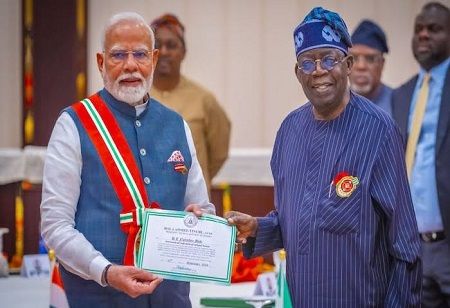
The partnership gained further momentum through high-level engagement, including Nigerian President Bola Ahmed Tinubu’s 2023 visit to India and Prime Minister Narendra Modi’s 2024 state visit to Nigeria. Both engagements included discussions covering healthcare, trade and investment.
The expansion of India-Nigeria trade allows Indian pharma companies to build a deeper presence in a major African healthcare market. The combination of medicine exports, local manufacturing, investment and healthcare cooperation could strengthen India’s position across Nigeria and the wider African pharmaceutical ecosystem.
With bilateral trade approaching USD 10 billion, the latest developments show how Indian pharma can increasingly move from being a medicine supplier to becoming a long-term healthcare and manufacturing partner in emerging markets.
.jpg)