
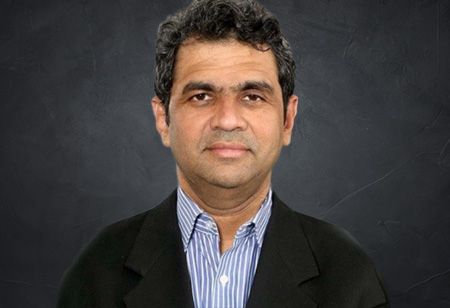
Manoj Chitnis, VP (Corporate Quality Head), J. B. Chemicals & Pharmaceuticals Limited

In an exclusive conversation with Thiruamuthan, Assistant Editor at India Pharma Outlook, Manoj Chitnis, VP (Corporate Quality Head), J. B. Chemicals & Pharmaceuticals Limited, discusses the foundational pillars of a truly resilient and inspection-ready quality management system, the human dimension of quality culture, deviation management and CAPA effectiveness, the role of digitalization in compliance visibility, and the guiding principles that have shaped his leadership journey.
Manoj Chitnis has served the pharmaceutical industry across formulation and API manufacturing for more than 31 years, working at both plant and corporate levels across diverse functions including Production, QC, QMS, External Manufacturing, Validation and Qualification, and Vendor Development and Qualification - an experience base that gives him a distinct edge in decision-making.
A lead auditor who has audited formulation, API, intermediates, excipients, packaging material, and sterilization facilities globally, he is recognized for establishing and maintaining QMS in compliance with cGXP standards, managing regulatory audits successfully, and mastering continuous improvement with cost-effective management. His contributions have been honored with the MD's Award at Abbott (I) Ltd. and the "Topmost Quality Leader" title at the World Quality Congress, Mumbai (July 7, 2022), and he remains a frequent speaker on QMS topics across industry forums.
In global pharma manufacturing environments, what are the most critical elements required to build a truly resilient and inspection-ready quality management system?
Quality is a term which is an integral part of management, and before we go into the discussion, I would like to set up context around how we define quality. There are three elements that come into the picture.
The first is specifications. This applies to every product in every market, not just pharma. When you buy a phone, the first thing you look at is its specifications - screen size, storage, memory, and other features.
The second is performance - how the product actually performs. For a phone, that's screen time, display quality, call reception, data retrieval and multitasking capability.
Similarly, a pharmaceutical product needs to comply with pre-defined specifications and its performance is checked through clinical trials, dissolution testing, and other indicative tests, and once the product is in the market, performance shows up through adverse event reports or lack-of-effect complaints.
The third, and perhaps least discussed but still important, is customer expectation. I drive a Maruti and extremely happy with performance and service — whenever I think of buying a new car, I look first for available brands of Maruti, because I trust the brand.
That's customer preference at work.
In pharma, this mostly applies to delivery systems - for example, a sustained-release or extended-release tablet that reduces dosing frequency for a diabetic patient, improving comfort and reducing the risk of a missed dose.
So quality is defined by specification, performance, and customer expectation - and these become the critical inputs to deliver quality consistently.
"Quality doesn't come by testing. Quality has to be built."
Specifications have to be built into the product right from the development stage - through due diligence, incompatibility studies, sometimes reverse engineering (since much of our work is generic drug manufacturing), and identification of critical process parameters and critical quality attributes.
Once we're reasonably confident that the product is stable based on the limited knowledge gained during development, we move to technology transfer - and that is exactly why tech transfer is so critical. Analytical method validation is equally important here; if the method itself isn't validated, it poses a risk during commercial release testing.
Wherever feasible, at least one trial batch should be run before the exhibit batch, because trial runs reveal how critical process parameters behave in practice - insight that's hard to get purely on paper. Once the exhibit batch is complete and the data set is in place, you submit. At that point, you're compliant with specification - but the data set is still limited, since you've only manufactured a handful of batches.
As commercial manufacturing scales, you build a real pool of data - captured in the Product Quality Review - which reveals trends over time and lets you refine specifications accordingly. The same logic applies to performance: once the product is in the market, complaint and adverse-event data, especially if patterns emerge from a particular region, help you pinpoint and correct what's going wrong.
In any process, there are five elements that go in - what I call the 5M concept: Man, Material, Machine, Method, and Milieu (environment - temperature, humidity, and similar factors). When all five elements are governed by robust systems - the right method, clear direction to operators and analysts, the right material, trained people, the right environment, and the right machine - the process outcome becomes consistent.
Next-generation QMS is not about changing fundamentals, but about deepening rigor, integrating risk-based thinking, and continuously refining systems for greater assurance
Regulatory expectations continue to evolve across markets. Given this, how are organizations ensuring consistent QMS standards while managing multi-country compliance requirements?
It's fairly straightforward in approach. When you work across regulatory scenarios, you have to look closely at the requirements of each market and build a checklist of what's needed. Different markets have different requirements, so you have to build your documentation with respect to those requirements.
This means sitting with your regulatory team - and not only the regulatory team, because business and marketing functions sometimes carry their own requirements too, along with customer needs. So it becomes a process of evaluation based on the resources available. Once that checklist is ready, you can move forward with a single, unified system that addresses all of it.
Also Read: How Digital Maturity is Powering Pharma's GMP Evolution
As manufacturing networks expand across geographies, what challenges arise in maintaining uniform quality culture and operational discipline across sites?
Quality culture is a practice followed by a group of people - and unless it's deeply ingrained, it doesn't become a culture; it has to be in your blood. To imbibe quality culture, a leader has to walk the talk. You can have the fanciest SOP in the world, but if practices on the ground are different, they won't match, and people will continue doing what they've always done day to day — and during an audit, that mismatch becomes a citation risk, in either direction.
Quality culture is ultimately executed and owned by people. So you have to work with the psychology of the people you're leading. When I was at a plant, I made it a practice to interact with everyone on the shop floor at least once a month - to understand their pain points, and where we could innovate. I also designated every Tuesday for new joiners, setting aside at least an hour to set expectations and, indirectly, to signal that I am approachable - that they could come to me anytime, with professional or even personal concerns on the job.
When you connect with people not as a designation or a superior but genuinely, they connect back the same way, because they understand what you actually believe in delivering. That's what it means to build a team believing in a culture (quality) - and when you do, people fall in line.
Let me share an example. In plant operations, balances used in production had to be calibrated every morning across a weight range - say a 100 kg-capacity balance calibrated with three reference weights spanning the full range. During one of the discussions, an operator raised a concern about carrying heavy reference weights on a trolley around the plant daily as a pain point. We worked on it and found a resolution to calibrate daily with just one minimum weight, and once a month, do the full range calibration. When you solve pain points like this through process improvement, people align with you because they see that compliance can be achieved while the way you achieve it can flex.
So if you want to genuinely build quality culture: walk the talk as a leader, and build a real connection with your people. That's what earns you followers who will actually follow the SOPs and processes laid out in the manual.
Also Read: Transforming API & Pharma Manufacturing with Next-Gen EHS Technologies
Deviation management and CAPA effectiveness often define QMS strength. How are companies improving root cause analysis and ensuring sustainable corrective actions?
A deviation is, by definition, a departure from the standard process. If you're seeing too many deviations, that's a signal - either your system or your process isn't right, and you're correcting it again and again rather than defining it correctly the first time. So a high deviation count can create a poor impression.
That said, you should never shy away from filing a legitimate deviation, whether planned or unplanned, and writing a CAPA against it. How you record and justify it matters, but how you rectify it through CAPA matters more.
CAPA isn't only "corrective action and preventive action" - it starts with correction, then moves to corrective action, which mitigates recurrence of the issue, and finally preventive action, which avoids occurrence altogether. Preventive action is, in many ways, the most important piece, since correction and corrective action follow a defined sequence, while preventive action comes from a separate evaluation aimed at stopping the issue from happening at all.
Once a CAPA is assigned, checking its effectiveness is critical - because a CAPA might just be an SOP revision or a practice change, but whether the people executing it are actually adapting and whether you're getting the intended outcome needs verification. There can be different checkpoints or evaluation metrics for declaring a CAPA effective or not. If a CAPA proves ineffective, you need to re-evaluate - was the root cause wrong, or was it only a probable root cause rather than the exact one? CAPA failure, or CAPA-effectiveness failure, is itself another evaluation loop that traces back to the investigation stage.
As digitalization is increasingly influencing quality systems, how are technologies like QMS platforms, data analytics, and automation enhancing compliance and visibility?
Systems or platforms that give you visibility can be manual or software-driven - software simply eases the effort; manually, you'd have to do more work, but the visibility achieved can be similar in both cases. That said, electronic platforms generally work better than manual systems, because they reduce the need for supervisory interference and give you proactive alerts.
When you're trending data - even manually, plotting in Excel and drawing conclusions - you get similar visibility, but interpretation varies by person. The individual analyzing the data needs real training; it needs to be "in the blood" so they can spot a minute deviation or variation in a trend and course-correct before it recurs.
Across complaints, deviations, and change control - really, throughout the QMS - we work against timelines and feedback loops. The most important part is assigning action items and tracking them against timelines, and that's where software-driven systems genuinely outperform manual tracking - you can monitor every action item in one place and work systematically toward your targets.
Considering audit readiness remains a constant priority, how are organizations moving from reactive compliance to a more proactive and continuous quality assurance approach?
For continued QA and audit readiness, the first thing that matters is having the right SOPs - your batch records, analytical processes, and operational SOPs all need to be relevant and accurate. If they're not, that becomes your first citation risk. A quality person's job is to walk the floor, check actual practices, and confirm the SOPs genuinely reflect what's being done.
The second part is practicing exactly as per the process - for example, if a cleaning SOP has ten steps but the operator is only doing nine because the tenth isn't actually practiced, that mismatch between SOP and practice becomes a real problem. Matching SOPs to practice is essential, and that requires constant supervisory control - which really means quality oversight. Everything happening on the plant floor, even the smallest change, needs to be visible to the quality department and evaluated through a compliance lens.
One practice I've followed consistently: keep quality managers entirely free of any assignment-based burden when they're on the floor. Their only job there is to support and observe - whether that's helping a team member draft a document, advising someone from maintenance, or simply watching what's happening. A shift supervisor in QC, for instance, can't do hands-on analysis and deliver quality supervisory oversight at the same time - not without compromising one or the other.
Quality oversight isn't only the QA department's job, either - quality is the responsibility of everyone working within the premises. Once people imbibe that culture, oversight becomes distributed, and that's where you get early signals of what's going wrong - which the quality department can then either accommodate into practice (if compliant) or correct (if not). That's how audit readiness is built, day by day.
Looking ahead, what will define next-generation QMS in global pharma manufacturing - predictive quality, digital integration, or stronger quality culture across the organization?
In my view, the core values of any QMS remain the same - what changes is the level of detail and sophistication we bring to it over time. It's like learning to ride a bicycle or drive a car: you start slow as a beginner, then master the nitty-gritty and become an expert.
Take change control as an example. It used to be simple - state the reason for change, get comments and define an action item. Over time, more was added: classifying the criticality of the change, escalating critical changes to senior management, conducting formal risk assessments, and - critically - monitoring and evaluating the change after implementation rather than considering the job done once it's rolled out.
That's evolution - much like how clothing styles evolve over decades. "Next generation" is really about continuous refinement of the system: the core stays the same, but you add the depth and rigor needed so that every step you take, you can confidently justify and demonstrate that product quality wasn't impacted.
What guiding principles or personal mantra have shaped your approach to leading teams and navigating complex decision-making in your career?
I think of myself, first and foremost, as a professional - and being a professional means serving the purpose, the deliverable, rather than any one master or organization. That principle has guided me from the very start of my career.
Let me share an example. Early in my career, in production, right after I graduated, I worked on resolving a discoloration issue affecting a product's shelf life. I managed to address it only partially before I moved on to another company. At the new company, I had access to R&D - so after my shift, I'd go sit in the library, study the issue further, and eventually found the resolution. I wrote back to my former employer with the fix, even though I no longer worked there.
It's not that I wasn't with the company anymore - the issue still needed solving, and that's what mattered.
Being a professional means living up to that cause, regardless of where you currently sit. The company appreciated it, implemented the fix, and the product performed well in the market afterward. That gave me real satisfaction - and as I said earlier, it's exactly how you build a legacy: through the good things people remember you for, long after you've moved on.
.jpg)



, CDSCO.jpg "Fostering a Quality Culture in the Pharmaceutical Industry")