India Pharma Outlook Team | Thursday, 30 July 2026
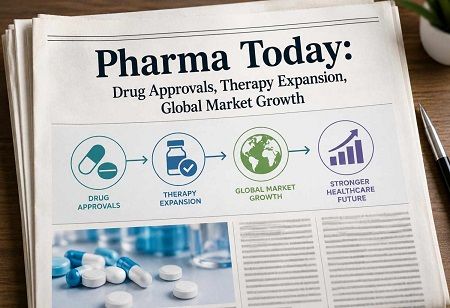
Today’s news highlights drug approvals, therapy expansion, and global market growth shaping the pharmaceutical industry.
The latest developments show strong momentum in regulatory clearances, international expansion, and innovation-driven strategies.
Companies such as Sun Pharma, Gland Pharma, AstraZeneca, and Biocon continue to strengthen their global footprint through key approvals across Brazil, the US, India, and Canada.
At the same time, strategic collaborations and evolving CDMO models signal a shift toward advanced therapies and AI-led growth.
Policy updates from global health bodies further reinforce treatment standardization. These developments reflect a data-backed transformation across the pharma industry, driven by approvals, partnerships, and therapy expansion strategies.
Sun Pharma received marketing approval for semaglutide in Brazil, marking a major step in its global expansion strategy. The approval allows the company to enter the fast-growing metabolic disorder treatment market in Latin America.
“The approval of semaglutide in Brazil expands access to an evidence-based treatment option for people living with inadequately controlled type 2 diabetes. It reflects the strength of our development and manufacturing capabilities and our commitment to delivering high-quality medicines across global markets,” said Aalok Shanghvi, Chief Operating Officer, Sun Pharma.
This drug approval strengthens Sun Pharma’s position in global market growth, particularly in the high-demand GLP-1 segment used for diabetes and obesity management. Brazil represents one of the largest pharmaceutical markets in Latin America, and this therapy expansion aligns with rising demand for chronic disease treatments.
Also Read: Scaling Perfusion Technology from Lab Success to Manufacturing Reality
Gland Pharma received USFDA approval for its generic Sugammadex injection, used to reverse neuromuscular blockade during surgeries. The approval strengthens its injectable portfolio in the US market.
This drug approval reinforces Gland Pharma’s strategy to scale global market growth through complex injectables. Sugammadex remains a critical hospital-use drug, and entry into this segment supports therapy expansion in perioperative care.
CDSCO approved expanded use of AstraZeneca’s cancer drug Enhertu in India. The decision broadens treatment access for patients with specific cancer indications, reinforcing oncology therapy expansion.
This therapy expansion reflects the growing importance of targeted biologics in oncology, where drug approvals directly improve survival outcomes. Enhertu, already a global blockbuster, continues to drive global market growth through label expansions across geographies
MRG Group entered a strategic collaboration with Arica Pharmaceutical to enhance its pharmaceutical capabilities and market reach. The partnership focuses on strengthening product development and distribution.
This collaboration supports therapy expansion and global market growth by enabling scale efficiencies and portfolio diversification. The partnership also indicates a growing reliance on collaborative models to complement traditional drug approvals.
Biocon received approval from Health Canada for its Yesintek autoinjector pen, marking its entry into another regulated market. The device supports biologic drug delivery and strengthens Biocon’s global biosimilars strategy.
The drug approval underscores Biocon’s push toward global market growth through advanced drug-device combinations. The Yesintek autoinjector enhances patient convenience and adherence, supporting therapy expansion in biologics delivery.
Syngene reported a 16 per cent decline in Q1 FY27 revenue to Rs 736 crore but sharpened its focus on CDMO services and AI-led growth strategies. In contrast, RPG Life Sciences reported revenue growth to Rs 1,957 crore in Q1 FY27, supported by strong domestic and international performance. Both companies continue to align their strategies with therapy expansion and innovation-led growth.
The World Health Organization updated its kala-azar treatment guidelines, recommending shorter and safer regimens. The revision aims to improve patient compliance and treatment outcomes in endemic regions.
This policy update supports therapy expansion by standardizing treatment protocols and improving access to care in high-burden regions. While not a direct drug approval, such global health decisions influence market dynamics and accelerate adoption of optimized therapies.
Overall, the latest developments indicate a clear shift toward therapy expansion and global market penetration, supported by regulatory approvals and innovation-led strategies. While companies like Sun Pharma, Biocon, and Gland Pharma strengthen their presence in regulated markets, firms such as Syngene and RPG Life Sciences reflect a strategic pivot toward CDMO models and AI-driven growth. Combined with evolving treatment guidelines from WHO, these trends signal a more integrated, access-focused, and globally aligned pharmaceutical ecosystem.
.jpg)