India Pharma Outlook Team | Monday, 17 August 2026
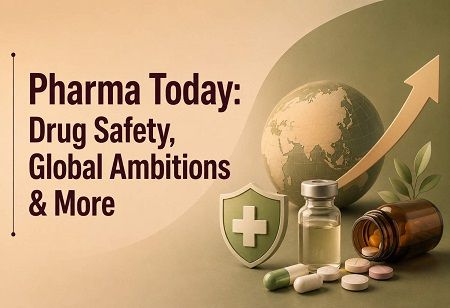
The latest pharma updates spotlight key developments in drug safety, regulatory compliance, clinical practice, disease preparedness and global ambitions.
Shilpa Medicare recalled more than 27,000 chemotherapy vials in the US, while Dr Reddy’s Laboratories reported four FDA observations at its Hyderabad facility.
Separately, Union Minister Jitendra Singh urged clinicians to strengthen evidence-based rheumatology practice, and Congo’s Ebola outbreak crossed a historic death toll.
Prime Minister Narendra Modi also called for one or two Indian pharmaceutical companies to enter the global top five.
These developments underline the sector’s focus on quality, clinical judgement, outbreak response and international competitiveness.
Shilpa Medicare has initiated a voluntary nationwide recall of 27,923 vials of Pemetri RTU, a ready-to-use injectable form of the chemotherapy drug pemetrexed, in the US. The recall covers 9,489 50 mL vials of the 50 mg strength and 18,434 10 mL vials of the 10 mg strength.
Zydus Lifesciences manufactured both affected batches, while New Jersey-based Amneal Pharmaceuticals handled distribution. Pemetri RTU forms part of a first-line treatment combination with pembrolizumab, marketed as Keytruda, and platinum chemotherapy for non-small cell lung cancer (NSCLC). The recall therefore places drug safety and quality controls at the center of attention for Indian pharma companies supplying the US market.
Also Read: How Can Indian Pharma Strengthen Quality Amid Rising FDA Scrutiny
Dr Reddy’s Laboratories reported four observations from the US FDA following an inspection of its FTO-3 formulations manufacturing facility in Bachupally, Hyderabad. FDA inspectors conducted the inspection and issued a Form 483 containing four observations.
Dr Reddy’s has not disclosed the nature of the observations or their financial impact. The company said it will address the observations within the stipulated timeline.
An FDA Form 483 records conditions that inspectors believe may violate provisions of the Federal Food, Drug, and Cosmetic Act or related regulations. The observations do not themselves represent a final regulatory action, but they require the company to respond and address potential compliance gaps.
Union Minister of State for Science & Technology and Earth Sciences Dr Jitendra Singh has called for stronger clinically guided medical practice while launching Rheumatology Essentials: A New Frontier for Aspiring Clinicians.
Dr Singh said this approach can reduce inappropriate medication, prevent diagnostic delays and help patients reach specialist care at the right time. He also stressed that diagnostic investigations should support rather than replace clinical judgments, particularly as doctors gain greater access to immunological tests, MRI scans and other advanced diagnostic technologies.
Prof. Anand N. Malaviya and Dr Prashant Kaushik authored the book. Dr Singh credited Prof Malaviya with helping establish rheumatology as a recognized specialty in India through teaching. The book provides clinicians with a practical framework to distinguish inflammatory rheumatic diseases, mechanical-structural disorders and nociplastic pain syndromes.
The Ebola outbreak in the Democratic Republic of Congo (DRC) has become the deadliest in the country’s history after government data recorded 2,325 deaths and 4,945 confirmed cases as of August 16. Health authorities detected 101 new confirmed cases during the preceding 24 hours.
The current outbreak, Congo’s 17th, surpassed the previous record set by the 2018–2020 outbreaks, which caused 2,299 deaths. The outbreak stems from the Bundibugyo species of Ebola, for which authorities have no approved vaccines or treatments.
Congo formally declared the outbreak on May 15. Weak health infrastructure, community resistance and instability have complicated surveillance, case detection and response efforts.
The case fatality ratio has climbed from about 20 per cent in early June to 46 per cent, meaning nearly one in two confirmed cases have died. A small number of experimental vaccines and therapies remain under evaluation, while global health authorities assess whether existing Ebola treatments could provide protection.
Prime Minister Narendra Modi has called for one or two Indian pharmaceutical companies to feature among the global top five, highlighting the gap between India’s manufacturing scale and the international ranking of its individual companies. India currently ranks third globally by pharmaceutical volume and 11th by value.
Official data shows that India has more than 3,000 pharmaceutical companies and 10,500 manufacturing units. India also supplies around 20 per cent of the world’s generic medicines and manufactures nearly 60,000 generic brands across 60 therapeutic categories.
India ranked 11th globally in pharmaceutical exports by value in 2024–25, shipping medicines to 191 countries. Around 50 per cent of these exports go to highly regulated markets such as the US and Europe. Pharmaceutical exports reached USD 30.5 billion in 2024–25, almost 16 times the USD 1.9 billion recorded in 2000–01.
Sun Pharmaceutical Industries offers one example of the sector’s global expansion. The company announced plans in April to acquire US-based Organon & Co. at an enterprise valuation of USD 11.75 billion. Following successful completion, Sun Pharma expects the combined business to generate USD 12.4 billion in revenue and place the company among the top 25 global pharmaceutical companies.
.jpg)