India Pharma Outlook Team | Wednesday, 07 October 2026
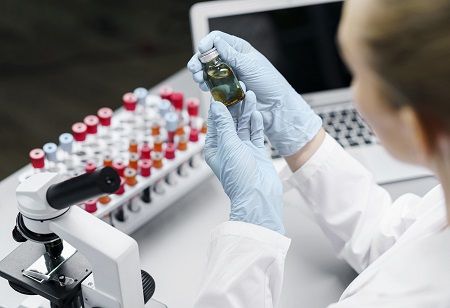
Complex injectables in Indian pharma are becoming an increasingly important part of the industry's move toward higher-value drug development.
Sai Parenterals' acquisition of a 60 percent stake in Hyderabad-based Prathyak Laboratories for Rs 15 crore provides a recent example of this shift.
The deal gives Sai Parenterals access to 28 research scientists and a development pipeline of 150 SKUs covering 86 molecules, including lyophilised, liposomal and nano-based complex injectables and oncology products.
Rather than treating the transaction simply as an acquisition, it offers a window into how Indian pharma is strengthening formulation R&D, moving into technically demanding products and seeking greater integration between drug development and manufacturing.
Complex injectables require greater formulation expertise, specialized manufacturing and more demanding development processes than conventional generic products.
Industry discussions have highlighted injectables and other complex formulations as areas where development requires greater investment, technical expertise and cross-functional capabilities.
Sai Parenterals' move illustrates this direction. Prathyak's capabilities include lyophilised, liposomal and nano-based formulations, giving the company access to technologies that can support a more differentiated injectable portfolio.
Its 86-molecule development pipeline also provides a starting point for building products rather than developing an R&D organization entirely from scratch.
Also Read: How Regulatory Readiness Can Shape Pharma's Global Growth
The transaction also points to a broader change in Indian pharma: R&D capability itself is becoming an asset that companies can acquire and integrate.
Sai Parenterals had originally planned to establish a greenfield R&D center using Rs 18.02 crore from its IPO proceeds. Instead, the Rs 15 crore acquisition provides an operating platform, an established scientific team and an existing pipeline.
This can potentially reduce the time required to move from formulation development to commercial manufacturing.
For pharma companies competing in complex generics, specialized formulation capabilities can therefore become a differentiator rather than simply a support function.
Sai Parenterals is not an isolated example. Granules India plans to invest about Rs 2,000 crore over the next three to four years across complex generics, oncology, peptide CDMO, R&D infrastructure and manufacturing.
The company has also reported a significant increase in the contribution of complex generics to its business.
This reflects a wider attempt to move from volume-led generic manufacturing toward products with greater technical complexity and potentially higher value.
NITI Aayog's latest trade analysis similarly identifies growing activity in complex generics, injectables, biosimilars and speciality formulations as evidence of India's movement up the pharmaceutical value chain.
ICRA expects India's CRDMO industry to expand at around 15 percent annually over the next decade, although India's share of global innovator-focused CRDMO activity remains relatively small at 2-3 percent.
That leaves room for Indian companies to build capabilities in complex formulation development, specialized manufacturing and contract development. Sai Parenterals' acquisition shows one route: acquire an established scientific platform and connect it with manufacturing capacity.
For the Indian pharma ecosystem, the emerging trend is therefore not simply more drugs being manufactured, but greater emphasis on what kinds of drugs companies can develop, formulate and manufacture competitively.
Complex injectables, oncology products, complex generics and specialized R&D could increasingly become part of that transition.
.jpg)