India Pharma Outlook Team | Monday, 21 September 2026
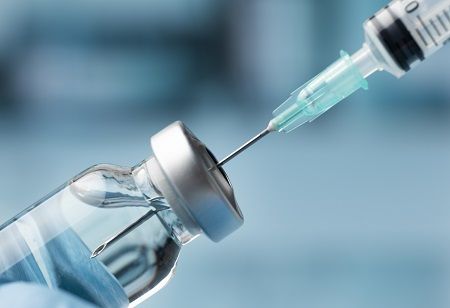
Congo has begun vaccinating frontline health workers against Ebola, but the pharmaceutical story lies in what is in the vial.
The vaccine being deployed was never designed for the virus driving this outbreak.
Frontline healthcare workers are receiving Ervebo even as questions remain over its effectiveness against the Bundibugyo virus, the strain driving the current outbreak.
At the same time, a 20,000-worker study is generating real-world evidence, while dedicated Bundibugyo vaccine candidates are moving into human trials.
That turns a public-health response into a live test of how fast the industry can move from pathogen to product, the response offers a closer look at how vaccine R&D, clinical development and manufacturing capacity are converging during an active outbreak.
Ervebo is licensed and recommended for outbreaks of Ebola virus disease, formerly called Zaire ebolavirus. The current epidemic is caused by Bundibugyo virus, and WHO says no approved therapeutics or vaccines exist against it.
It is not known whether Ervebo protects humans against Bundibugyo, although early laboratory and animal data suggest some protection. One review adds that cross-reactive antibodies appear, but at substantially lower levels than those against Zaire antigens.
That uncertainty shapes the allocation. Of 70,000 doses released from the global stockpile, 20,000 are for a Phase 3 clinical trial and 50,000 for frontline health workers.
For regulators and R&D teams, the lesson is that with no strain-specific option, an off-label deployment must generate evidence while it protects people. MSF calls Ervebo an interim measure, justified by its established safety profile and approvals from the FDA, EMA and WHO.
Also Read: Transforming API & Pharma Manufacturing with Next-Gen EHS Technologies
The key source of evidence is BRAVO, launched on 19 September in Bunia by MSF and Epicentre. It will follow 20,000 frontline workers in Ituri and North Kivu for nine to 12 months - three months of vaccination and at least six months of follow-up.
Frontline workers are a logical cohort. They face particularly high exposure and are essential to the response. High exposure should also let meaningful signals emerge faster than in a low-risk population.
The study will generate real-world data on potential effectiveness in the current outbreak. That matters because animal and laboratory evidence is only suggestive and human data is missing.
MSF's epidemiologist put it plainly: "even partial protection could reduce severe illness and deaths, but the benefit must be demonstrated". WHO expects the results to inform policy-makers on future use of Ervebo.
Ervebo is a stopgap, not the destination. Oxford's ChAdOx1 BDBV entered a Phase I trial in 50 healthy adults aged 18–55 to assess safety and immune response. Oxford noted that the milestone came only 57 days after WHO declared a public health emergency of international concern.
The manufacturing speed is equally notable. Serum Institute of India (SII) made and stockpiled about 620,000 doses in two weeks and supplied 4,000 investigational doses for the trial, backed by CEPI's USD 8.6 million program.
Moderna followed with a Phase 1 trial of its mRNA candidate, mRNA-1469, enrolling roughly 80 adults in Canada. It is one of four candidates in CEPI's parallel portfolio, alongside two rVSV-based vaccines and Oxford's.
Dr Vasee Moorthy, acting lead of the R&D Blueprint at the World Health Organization (WHO), said both Oxford and Moderna expected Phase 1 results in September. Either candidate could then be added to the Phase 3 trial if the data support its use.
Both leading candidates run on platforms already proven in COVID-19. Oxford's uses the same viral vector platform as its COVID-19 vaccine, and Moderna's uses its COVID-era mRNA platform. That is the case for platform technologies: change the antigen, keep the process.
SII's role in CEPI's vaccine manufacturing facility network shows how pre-arranged capacity can be activated on demand. But readiness is hard to sustain between outbreaks, when demand is nil and the commercial case is thin.
CEPI expects late-stage trials to generate data for emergency use authorization or licensure, and one review reports that an rVSV candidate was estimated to need seven to nine months to produce.
WHO adds that vaccines, once available, would complement but not substitute for core public health interventions. For India, the question is whether its vaccine manufacturing base can become a standing node in the global rapid-response system, not just a one-off surge supplier.
.jpg)