
India Pharma Outlook Team | Thursday, 04 June 2026
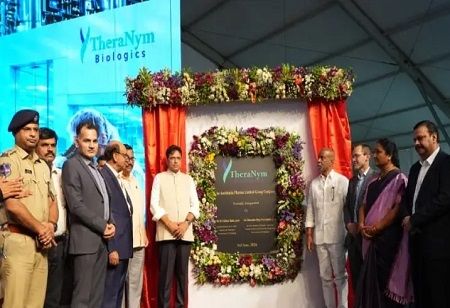
Aurobindo Pharma has inaugurated TheraNym Biologics, a dedicated biologics contract manufacturing organization (CMO) facility at Borapatla near Hyderabad, Telangana. The facility marks the company’s entry into the expanding biologics contract manufacturing segment and reflects India's growing focus on high-value pharmaceutical production.
The inauguration was attended by Telangana Minister for IT, Industries & Commerce and Legislative Affairs Shri D. Sridhar Babu and Minister for Science and Technology Shri Damodar Raja Narasimha. Before the event, Aurobindo Pharma executives and representatives from MSD met Telangana Chief Minister Shri Anumula Revanth Reddy and acknowledged the state government's support for the investment.
TheraNym has been equipped with 15 KL bioreactors, downstream processing systems, aseptic fill-finish capabilities, and quality control laboratories designed to meet international regulatory requirements. The facility is expected to serve both domestic and export markets, subject to regulatory approvals and customer demand. Reports indicate the project represents an investment of around ?1,200 crore and is among the larger dedicated biologics manufacturing facilities established in India.
The launch comes at a time when biologics are becoming one of the fastest-growing segments of the global pharmaceutical industry. Unlike traditional generic medicines, biologics require sophisticated manufacturing infrastructure, highly skilled talent, and stringent quality systems. Industry analysts note that these factors have created high entry barriers but also significant long-term opportunities.
India's biologics contract manufacturing market generated approximately US$915.8 million in revenue in 2024 and is projected to reach US$1.65 billion by 2030, reflecting strong growth potential.
Also Read: India's Innovative Therapies Set Global Standard at Low Cost
China has rapidly expanded its biologics ecosystem through large-scale investments in research, manufacturing infrastructure, and talent development. Recent industry reports show Chinese companies securing a significant share of global biologics projects, strengthening their position in biotech supply chains.
For India to compete effectively, industry experts emphasize the need for faster regulatory approvals, dedicated biopharma manufacturing parks, stronger supply-chain capabilities, and continued investment in advanced manufacturing technologies. Recent government initiatives such as the ?10,000-crore Biopharma Shakti programme are intended to support this transition and position India as a global biopharmaceutical manufacturing hub.
Also Read: TheraNym Biologics Launches Rs 1,200 Cr Telangana Biologics Hub
Dr Satakarni Makkapati, CEO of Biologics and Director at Aurobindo Pharma, said the facility represents a major step in advancing India’s capabilities in biologics manufacturing. He noted that TheraNym has been designed to meet the quality, compliance, and operational requirements of leading global pharmaceutical companies while expanding access to biologic therapies worldwide.
MSD Executive Vice President and President of Manufacturing Division Dr Dave Maraldo said the partnership reflects a shared commitment to ensuring reliable and compliant production of biologic medicines for patients across global markets.
Aurobindo Pharma Vice Chairman and Managing Director Nithyananda Reddy highlighted the role played by the Telangana Government in supporting the project through infrastructure development, policy initiatives, and industry engagement. He added that TheraNym complements the company’s biologics ambitions, building on its biosimilars platform and expanding its footprint in complex pharmaceutical manufacturing.
As global pharmaceutical companies diversify supply chains and seek alternatives for advanced manufacturing, investments such as TheraNym may strengthen India's position in biologics contract manufacturing. However, sustained investment in infrastructure, regulation, and innovation will be essential if the country aims to challenge China’s leadership in the sector.
.jpg)


