
India Pharma Outlook Team | Monday, 02 March 2026
WHO has announced key updates to the influenza vaccine for the 2026-2027 northern hemisphere season, responding directly to the rapid global rise of a new A(H3N2) variant known as subclade K.
Released on February 27, 2026, after a four-day expert review of worldwide surveillance data, these changes aim to improve match and protection against the strains now driving most flu cases.
The standout driver behind this update is subclade K, which first appeared in sequence data around August 2025 and quickly became the majority A(H3N2) virus in many regions. It triggered earlier or more prolonged flu seasons in several countries, with detections surging across more than 34 nations. Unlike previous variants, subclade K shows notable genetic drifts in its hemagglutinin protein, making it antigenically different from strains in prior vaccines.
Also Read: Advancing Interventional Radiology in India Through Collaboration
This shift prompted WHO to revise all three components of the vaccine—H1N1, H3N2, and B/Victoria—for the first time in recent cycles. Influenza A viruses dominated recent activity, while B viruses remained low and confined to the B/Victoria lineage (no B/Yamagata detections since 2020).
"Season after season, constantly evolving influenza viruses circulate globally, showing us how connected our world is. Shared risks require shared action," said Dr Tedros Adhanom Ghebreyesus, WHO director-general. "WHO’s recommendations for influenza vaccine composition rest on the diligent, year-round work of the Global Influenza Surveillance and Response System (GISRS) and partners. Thanks to GISRS, next season’s vaccines have been updated to counter the latest strains of influenza viruses, in turn better protecting communities."
The new recommendations specify:
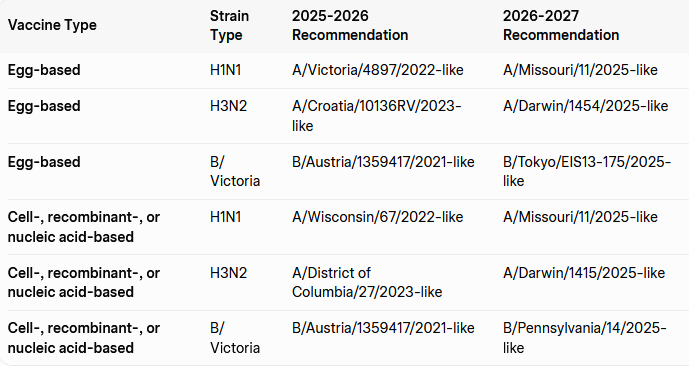
These picks reflect real-time genomic tracking through GISRS, the world's longest-running global disease surveillance network since 1952. Manufacturers worldwide now use these guidelines to produce and license updated shots, targeting better prevention of severe illness.
Experts also flagged ongoing zoonotic risks, noting 25 human infections with animal-origin influenza reported since September 2025 across six countries—mostly from direct animal contact or contaminated settings, with no evidence of sustained human spread. In response, they recommended creating a new candidate vaccine virus for an A(H9N2) avian strain to speed pandemic preparedness if needed.
Seasonal flu continues to hit hard globally, with roughly one billion cases each year, 3–5 million severe illnesses, and 290,000–650,000 respiratory deaths. The swift adaptation to subclade K underscores how quickly viruses evolve and why annual updates remain essential for staying ahead of outbreaks. Vaccination campaigns for the upcoming season will lean on these targeted changes to cut hospitalizations and protect vulnerable groups.