India Pharma Outlook Team | Monday, 21 September 2026
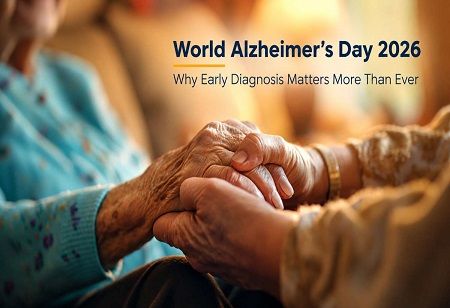
Alzheimer’s is a distinct neurological disease requiring diagnosis, care, and research.
The focus in 2026 is becoming even more practical. Alzheimer’s disease International has chosen “The Earlier You Know, The More You Can Do” as its 2026 theme, highlighting the value of timely diagnosis.
In India, the arrival of new disease-modifying therapies makes that message increasingly relevant, while access to diagnosis, biomarker testing, monitoring and treatment remains a challenge.
Observed every year on September 21, World Alzheimer’s Day forms part of World Alzheimer’s Month, a global campaign focused on dementia awareness, stigma reduction and action.
Alzheimer’s Disease International (ADI) brings together more than 100 Alzheimer’s and dementia associations globally and maintains official relations with the World Health Organization (WHO). Its long-term vision is “prevention, care and inclusion today, and cure tomorrow.”
World Alzheimer’s Day also contributes to the objectives of the WHO’s Global Plan of Action on the Public Health Response to Dementia (2017–2031). The plan was adopted by all 194 WHO Member States in May 2017.
Also Read: 10 Health Habits Doctors Swear By but Rarely Talk About
Early diagnosis has moved from asking whether a person has dementia to identifying its cause and whether progression can be slowed. Alzheimer’s disease is not normal ageing. It accounts for 60–70 percent of dementia cases.
According to the WHO fact sheet, more than 57 million people live with dementia worldwide, and nearly 10 million new cases occur each year. Timely assessment can detect treatable conditions, establish a baseline, support planning and, for a limited group of eligible patients, open the door to new therapies.
Dr. Sonia Lal Gupta, Sr. Consultant – Neurology and Joint Managing Director – Metro Group of Hospitals, said, “It is very important to assess the development of the disease early enough because it helps us know the progress of the disease and organize the care at the right time. The problem is that many patients get to the doctor’s office only after some symptoms of the disease have started to impact their everyday life… Dementia is not the problem of one person, but the problem of the whole family. That is why it is very important to provide holistic care for all members of the family.”
Symptoms:
Thyroid disorders, vitamin B12 deficiency, depression, and medication side-effects can produce similar symptoms. A proper work-up that includes medical history, cognitive testing, blood investigations and, when indicated, imaging helps separate these reversible causes from progressive disease.
Eisai launched Leqembi (lecanemab) in India at Rs 21,682 per vial. The total cost depends on the patient’s body weight and dosing schedule. The drug is given by intravenous infusion every two weeks for 18 months and is indicated for early Alzheimer’s disease (mild cognitive impairment or mild dementia).
“Access and awareness remain critical barriers in Alzheimer’s disease care in India. Our support programs are aimed at helping eligible patients initiate and continue therapy,” said Takuya Kijima, MD, Eisai India.
Eli Lilly launched donanemab in India in mid-May 2026 under the brand name Lormalzi (350 mg/20 mL intravenous vial). The drug is administered once every four weeks and is approved for mild cognitive impairment or mild dementia due to Alzheimer’s.
“One-third of patients in early symptomatic stages of Alzheimer's progress to more advanced clinical stages within one year. Addressing this challenge, the drug delays disease progression by targeting the amyloid pathology,” said Rahul Kapur, Senior Director, Medical, Eli Lilly and Company (India).
Both medicines require confirmed amyloid pathology before initiation and regular MRI monitoring because of the risk of amyloid-related imaging abnormalities (ARIA). The benefit is modest: the therapies slow, but do not stop or reverse, cognitive and functional decline.
The country’s care system still lacks widespread early diagnosis pathways, biomarker testing capacity, infusion infrastructure, and clear reimbursement. These gaps, noted in coverage of the launches, restrict near-term uptake even though the products are now commercially available.
Also Read: Why Global Pharma is Moving to India: The 2026 India CDMO Boom and Market Outlook
WHO’s updated risk reduction guidelines state that up to 45 percent of dementia risk is linked to modifiable factors. Such as physical inactivity, tobacco use, harmful alcohol consumption, social isolation, hypertension, diabetes, obesity, hearing loss, and air pollution. Addressing these factors across the life course can help prevent or delay a substantial share of cases.
Sudden confusion, rapid deterioration, new weakness, difficulty speaking, seizures, severe headache, or loss of consciousness require immediate medical attention. These symptoms may indicate an acute medical problem rather than progressive dementia and should not wait for elective evaluation.
.jpg)