The Rise of Complex Generics and Biosimilars: 2026 & Beyond

Zeenat Parween, Correspondent, India Pharma Outlook

 Complex Generics, India Pharma Outlook

Complex Generics and Biosimilars Market Growth is not a secret covered in technical reports anymore. It dominates the front cover of the Rise of Biosimilars, and it is driving the most important Pharmaceutical Industry Trends in 2026.

With blockbuster biologics losing patent protection and healthcare costs on the rise, more complicated generic medicines and biosimilars are emerging as a strategic concern in the eyes of global manufacturers. It cannot be described as an incremental change. It signifies a structural transformation.

Why Complex Generics Are Becoming Strategic Assets

Simple generics was at one time the story of cost saving. However, price erosion and intense competition have narrowed margins all over the world. That is why most companies are resorting to complex generic drug development such as inhalers, long acting injectables, depot formulations, liposomal drugs, and drug device combinations. Such products are more difficult to imitate, and the number of players is also limited.

As per IQVIA analysis, complex generics currently represent an increasing proportion of pipeline attention among generic drug manufacturers, particularly in the U.S. market where competition in oral solids has become intensified.

Companies like Teva Pharmaceutical Industries have publicly highlighted the development of their complex generics portfolios to counter the pricing pressure in traditional generics. The inhaler franchise and specialty portfolio of Teva demonstrates that firms can combine generics with more valuable products.

Similarly, Sun Pharmaceutical Industries has also made substantial investments into the specialty and complex formulations to diversify beyond commoditized segments. This move is an indication that margins and expertise are what counts most.

Kiran Mazumdar-Shaw, Executive Chairperson, Biocon Group - “Biocon is in a very unique position globally as a biosimilars leader… key strategic collaborations and a strong portfolio in insulin and GLP-1 products place us to accelerate growth.”

Also Read: The Future of MedTech in India: Meeting Tier-2 and Tier-3 Needs

Biologics vs Biosimilars: The Economics of Access

Biologics dominate modern treatment across oncology, immunology, and rare diseases. These therapies are powerful. They are also expensive. The Biologics vs Biosimilars debate is not about efficacy. It is about affordability and sustainability.

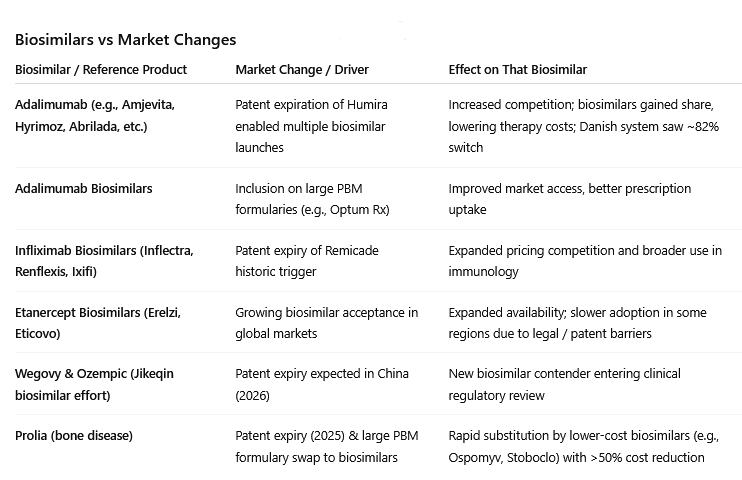
As of 2024, more than 45 biosimilars have been approved by the U.S. Food and Drug Administration. Europe, under the European Medicines Agency, has approved even more and has over 15 years of biosimilar market experience.

The impact is measurable. IQVIA reports that biosimilars have generated more than USD 50 billion in cumulative savings in the U.S. since 2015. These savings expand access to critical therapies, particularly in oncology and autoimmune diseases. This is where the Rise of Biosimilars becomes more than a market trend. It becomes a healthcare policy tool.

While discussing Lupin’s plan to expand complex generics in the U.S. and Europe with a pipeline of several hundred products, emphasizing the shift toward higher-value portfolios rather than traditional crowded generics categories, Nilesh Gupta, Managing Director, Lupin said, “In the U.S., the key imperative… is to move into complex generics and to build the specialty business through our own portfolio and mergers and acquisitions.”

Patent Expirations and the New Competitive Cycle

Between 2025 and 2028, multiple high-revenue biologics are scheduled to lose exclusivity. These products collectively account for tens of billions in annual sales.

Patent expirations and generic drugs have always gone hand in hand. But in biologics, the dynamic is more complex. Development costs are higher. Regulatory standards are tighter. Manufacturing is intricate. Still, opportunity is massive.

For example, Amgen has built a substantial biosimilars portfolio targeting leading biologics in oncology and inflammation. At the same time, Pfizer has expanded its biosimilar presence globally, viewing the segment as a long-term revenue stabilizer.


Biosimilars for Oncology: Where Growth Is Fastest

Cancer care remains one of the costliest segments in global healthcare. Oncology biosimilars are under development to be equivalent to monoclonal antibodies which treat breast cancer, colorectal cancer, lymphoma, and more.

Dr. Sharvil P. Patel, Managing Director, Zydus Lifesciences said, “With Tishtha, we are expanding access to immuno-oncology through a patient-centric therapy. … We remain committed to improving patient access to high-quality biosimilar immunotherapies.”

Companies like Celltrion have built global reputations through oncology biosimilars, particularly in Europe and the U.S. Celltrion’s early entry into monoclonal antibody biosimilars helped accelerate adoption in several markets.

Meanwhile, Biocon Biologics has expanded aggressively into insulin and oncology biosimilars, including acquisitions to strengthen its global footprint. Oncology biosimilars are not only expanding the global market for biosimilars. They are reshaping pricing benchmarks in cancer care.

Umang Vohra, MD & Global CEO, Cipla said, “The latest USFDA guidance is a significant positive for the industry as it sharply lowers development costs and accelerates timelines for biosimilars.”

Also Read: How Digital Maturity is Powering Pharma's GMP Evolution

The Regulatory Landscape for Biosimilars Is Evolving

Regulatory science has matured. The FDA increasingly relies on advanced analytical comparability and totality-of-evidence frameworks. In some cases, regulators are exploring ways to streamline the biosimilar approval process when robust structural and functional similarity is established. Europe continues to lead in biosimilar adoption. The OECD has noted that countries with strong biosimilar policies have moderated biologics spending growth over time.

The role of regulatory agencies in biosimilars is critical. Their clarity reduces uncertainty. Their flexibility encourages innovation in biosimilar drug development. Still, standards remain strict — and for good reason. Patient safety is non-negotiable.

Market Challenges for Biosimilars Remain Real

Growth projections are strong. But challenges persist. Development costs can range from USD 100 million to USD 250 million per biosimilar candidate. Manufacturing facilities require advanced biologics infrastructure. Regulatory filings demand deep scientific documentation.

Commercial dynamics are equally complex. In the U.S., rebate structures can sometimes slow biosimilar uptake. Physicians may hesitate to switch stable patients. Education remains essential. That is why only well-capitalized, technically strong companies can succeed at scale.

Emerging Biosimilars in 2026 and Beyond

As we look at emerging biosimilars in 2026, several patterns stand out:

  • More entrants targeting high-value biologics in immunology and oncology
  • Greater cross-border partnerships between Western and Asian manufacturers
  • Expansion of biosimilar pipelines among traditional generic drug manufacturers

Sandoz, now operating independently, has doubled down on biosimilars as a core growth pillar. The company positions itself as a pure-play leader in generics and biosimilars globally. This reflects a broader shift in trends in biopharmaceuticals and generics: specialization is replacing scale alone.

Complex Generics and the Broader Pharmaceutical Industry Trends 2026

By 2026, the industry will look different. Companies that once relied heavily on small-molecule generics are building biologics capabilities. Innovators are entering biosimilars. Manufacturing is becoming more technology-driven.

The global market for biosimilars is expanding not just in value, but in geographic spread. Asia-Pacific is strengthening its position as both a production hub and consumption market. Complex generic drugs and biosimilars are converging into a hybrid model of affordability plus technical sophistication.

Final Outlook

The rise of complex generics and biosimilars is not a temporary cycle. It is a long-term restructuring of pharmaceutical economics. Patent expirations will continue to unlock opportunity. Regulatory pathways will become more refined. Scientific tools will reduce development uncertainty.

Companies like Dr. Reddy’s, Teva, Biocon Biologics, Sandoz, and Celltrion are not reacting to a trend. They are building around it. By 2026 and beyond, the real question is no longer whether biosimilars will grow. It is who will lead — and who will adapt fast enough to stay relevant. The balance between innovation and affordability is being rewritten. And complex generics and biosimilars are holding the pen.

FAQs

1. What is the difference between biologics and biosimilars?

Biologics are original medicines made from living cells and are often used to treat serious diseases like cancer and autoimmune disorders. Biosimilars are highly similar versions of these biologics that match them in safety, strength, and effectiveness. They are approved only after strict testing and regulatory review. The main difference is cost — biosimilars are usually more affordable, which improves patient access.

2. Why is the biosimilars market growing rapidly?

The market is expanding because many blockbuster biologic drugs are losing patent protection. This allows other manufacturers to introduce lower-cost biosimilar versions. Governments and insurers are actively encouraging their use to control rising healthcare costs. As awareness and trust grow among doctors and patients, adoption continues to increase worldwide.

3. What makes complex generics different from traditional generic drugs?

Complex generics are more difficult to develop than standard generics because they may involve complicated formulations, delivery systems, or active ingredients. Examples include inhalers, long-acting injectables, and drug-device combination products. These drugs require advanced manufacturing capabilities and detailed regulatory approval processes. Despite the challenges, they play a key role in expanding affordable treatment options after patents expire.

on the deck

Most Viewed

Addressing Antimicrobial Resistance (AMR) Through Collaborative Efforts Fostering a Quality Culture in the Pharmaceutical Industry Advancements in Computer-Aided Drug Design for Pharmaceutical Research Why India is Gaining Popularity for Clinical Trials The Future of Kidney Transplants in India Usage of Conversational AI in the Health Insurance Sector Strategies for India to Reduce Its API Dependence on China Business Impact of USFDA Approvals on Indian Pharma Companies Innovative Strategies for Expanding Access to Life Saving Healthcare Solutions Badhal Village Crisis: How Rapid Diagnostics Could Have Saved Lives Why India is a Hotspot for Biotech Startups? Why Adapting Flexibility in IP Rights will Drive Generics Market Meeting the Challenges of High-Potency API (HPAPI) Production Impact of Human Factors Engineering on Medical Device Safety The Future of Pharma: Embracing Continuous Manufacturing The Role of Orphan Drugs in Treating Rare Diseases Emerging Technologies Shaping the Future of Drug Formulation Strategies for Optimizing Pharmaceutical Supply Chain Efficiency The Future of Medicine: Harnessing the Power of RNA-based Therapeutics AI in Medicine: Unmasking the Myths and Embracing the Transformative Reality Cycle Pharma Acquires Banner Life Sciences WHO's First-ever Global Summit on Traditional Medicine Starts in Gujarat The Importance of Data Integrity in Pharmaceutical Quality Control DCGI in Talks with Stakeholders to Develop a Standardised Web Platform to Assure Drug Quality and Patient Safety Glenmark Pharmaceuticals secures ANDA Nod for 0.03 per cent Tacrolimus Ointment Streamlining Laboratory Operations with a Modern LIMS Healthtech Start-up Suraksha QR Ropes In Actor Murali Sharma as its Brand Ambassador Unlocking the Potential of Pharmacogenomics: Enhancing Drug Safety and Efficacy The Impact of Pharmaceutical Testing on Drug Development India has Identified Three Health Priorities to Strengthen Global Health Infrastructure, says WHO National Health Authority launches 100 Microsites Project to Speed Up Digital Health Adoption India Should Partner with Australia to avail PBS for the Selection, Listing, and Pricing processes of exported drugs, says Sudarshan Jain Zydus Lifesciences India More than Doubles Profit Due to Increased Sales in the US India Triples Organ Donations over Past Decade says Union health minister Mansukh Mandaviya Advent Therapeutics Awarded $3 Million NIH Grant For Novel Neonatal Lung Therapy Three Pharma Marketing Strategies That Drive Sales Novartis Targets India's Rare Disease Market with 17 Clinical Programs UK Health Regulator approves GSK's Vaccine for the common respiratory virus RSV WHO Urges Increased Use Of Recommended Malaria-Fighting Tools Karnataka Budget Offered a Significant Boost to Health & Lifesciences Start-ups with Focus on Infrastructure & Innovation Three High Potential Moonshot Project Areas in Pharma CCI approves Bharat Biotech International-Eastman Exports deal How Biotech is Revolutionizing the Fight Against Cancer LifeCell and HaystackAnalytics ink strategic pact to scale-up TB whole genome sequencing pan-India Mankind Pharma IPO To Open On April 25 With A Price Fixed At Rs 1,026-1,080 Per Share US CDC Approves Second Omicron-Updated COVID Booster For Adults Three Trends that will Impact Pharmaceutical Industry in 2023 ModeX Therapeutics Commences Phase I EBV Vaccine Trial with Merck Designing Impactful Leadership and Talent Management Programs with Strategies for Success Novo Nordisk and Valo Health Partner to develop novel Treatments FOPE Calls for Extended Deadline for Schedule M Compliance Telix Pharma To Acquire ImaginAb to Boost Therapeutics and Innovation Roche Secures US FDA Approval for its Ultra-Sensitive ISH test Rappta Therapeutics and SpringWorks Partner on Molecular Glue Targeting PP2A Taro Pharma To Acquire entire stake in Antibe Therapeutics Innovent Biologics Secures Breakthrough Therapy Designation for IBI343 Emcure Pharma Launches Largest R&D Centre in Ahmedabad Zydus Bags USFDA Nod for Phase II(b) Trial to Optimize Usnoflast Dosage US FDA Approves Amgen's Lumakras-Vectibix Combo for KRAS G12C-Mutated mCRC Glenmark Pharma Unveils generic anticoagulant injectable emulsion Strides Pharma Bags USFDA Nod for OTC Acetaminophen-Ibuprofen Combo Tablets US FDA Lifts Hold on Sanofi's Trial to Make Cialis Available Over-the-Counter Hoth Therapeutics Expands Intellectual Property with New Patents Jaguar Health Starts POC Trial of Crofelemer for Rare Pediatric Disease MVID Pharma and Healthcare Sector Eyes Union Budget 2025 for Innovation Boost How Innovative Drug Formulations are Enhancing Treatment Outcomes Apollo and Mayapada Healthcare Unite to Boost Indonesia's Healthcare Novo Nordisk Reports Positive Phase 1b/2a Results for Amycretin Govt to Extend Schedule M Compliance Deadline for Drug Manufacturers to Dec Lupin Secures US FDA Nod for Ipratropium Bromide Nasal Solution ANDA Granules Pharmaceuticals Secures USFDA Nod for Key Generic Drug Bajaj Healthcare Bags DCGI Nod to Manufacture Pimavanserin API & Formulation Union Budget 2025: Healthcare Gets 9.78% Boost, Allocation Nears 1 Lakh Crore Metropolis & Roche Launch Self-Sampling HPV Test for Cervical Cancer Sigachi Industries Invests $1M in Hyderabad R&D Hub for API Innovation Pharma Testing Market Surges with Rising Demand for Biologics ISTH Releases Clinical Practice Guideline For Haemophilia Treatment Sanofi and Biovac Lead Polio Vaccine Manufacturing Capabilities Sun Pharma and Takeda Ink Pact To Market Gastrointestinal Drug Takeda and Ascentage Pharma Ink Option Agreement For Olverembatinib Enhancing Compliance through Effective Pharmaceutical Regulatory Affairs Strategies India poised to become a Global Hub for Clinical Trials: Exec SCHOTT Pharma Unveils Next-Gen Polymer Syringes for Enhanced Safety GSK's Jemperli Gains EU Nod for First-Line Treatment of Endometrial Cancer Union Health Secretary Urges Stronger Drug Regulations for Quality Control Telangana Govt Inks Landmark Deals to Propel Life Sciences and Job Growth R&D in Indian Pharma: Breakthroughs and Innovations in 2024 Dr. Reddy's Partners with Shanghai Henlius to Develop Cancer Drug Uniphar Expands Global Footprint with Three New Facilities 74th Indian Pharmaceutical Congress 2025 Opens Registrations AGC Pharma Expands HPAPI Capabilities in Barcelona to Meet Growing Demand The Future of Genomic Sequencing: Trends That Will Define the Next Decade Lexaria Bioscience Ethics Review Board Nod to Commence New GLP-1 Study Amitabh Kant Urges India to Focus on Innovation at BioAsia 2025 Government Enhances Research & Integration Initiatives in Unani Medicine Blind & Deaf individuals face Major Barriers to access Medicines: Report C-CAMP and PariSante Campus launched Indo-French Life Sciences Hub Jaguar Health Begins Pediatric Trial for Crofelemer in Short Bowel Syndrome Algiax Pharma Reports Promising Phase 2a Results for AP-325 Govt Bans 34 Antimicrobials for Use in Animals Pharmaceutical Procurement Strategies: How to Optimize Costs Personalized Medicine: Get Tailored Treatment Plans for You Now How to Bridge the Healthcare Gap in Emerging Markets with MedTech The Evolution of In-Vitro Diagnostics: Trends and Future Prospects Needle-Free Injection System: A Game Changer in Less Pain Vaccination How Global Capability Centers are Shaping the Future of Biometrics Building a Successful Pharma Brand in India: The Role of Scientific Communication Unlocking India's Innovation Potential in Pharma The Future of Green Chemistry in API Production Top 10 Pharmaceutical Recruitment Consultants - 2024 | Pharma Outlook Blockchain for Secure Pharmaceutical Supply Chains - 2025 & Beyond Mass Spectrometry in Biomarker Discovery for Early Disease Detection Iconovo and Lonza Team up to Advance Intranasal Biologic with ICOone Nasal Fetal Imaging to Cardiac Diagnosis: The Expanding Role of Ultrasound Balancing Innovation and Affordability in Medical Solutions for India Changing Landscape for LTBI and Syndromic Testing Methodologies How Advanced Training Methods can Enhance Patient Care Balancing Cost Efficiency and Compliance in Pharmaceutical Manufacturing LUB Urges Govt to Scrap Mandatory Lab Testing for Cough Syrup Exports Role of Optical Imaging in Early Cancer Detection and Treatment Hoth Therapeutics Unveils Promising Data for KIT-Targeting Therapy Pharmexcil Engages ASEAN Nations to Boost Pharma Trade Ties Fortis Partners with Teleflex for South Asia UroLift Training Anti-Infectives: How New Research is Shaping Infection Control Building Bridges for Sustainable Growth through Strategic Alliances in Ethical Pharmaceuticals Quality as the Cornerstone of Lab Solutions FDA Approves Roch's NSCLC Diagnostic Linked to Emrelis How Early Detection is Transforming Cancer Treatment in India Ensuring Data Privacy in Pharma World Enhancing Clinical Trial Supply Chain Resilience to Address Global Disruptions in India Cost-Effectiveness of Minimally Invasive Surgery in Outpatient Settings How Organic Synthesis is Accelerating Drug Discovery in Pharma Strategic finance for pharmaceutical innovation and stability Top 10 Teleradiology Service Providers - 2024 | Pharma Outlook Importance of Investing in R&D and Quality for Competitive Advantage in Eye Care Top 10 In Vitro Diagnostics Companies - 2024 | Pharma Outlook Phytopharmaceuticals: Driving Global Herbal Medicine Innovation Gender Gap in Healthcare: Why Women's Health Needs More Research Impact of Modern Technology on the Indian Life Sciences Sector Why Global Pharma Expects CDMOs to Be Ready for Joint Inspections The Role of Customizable Stent Grafts for Treating Complex Anatomies Nutraceuticals vs Pharmaceuticals: Complementary or Alternative in Chronic Disease Management? Top 10 Pharma CDMO Companies In India – 2023 | Pharma Outlook Leaping Towards Global Compliance with Revised Schedule M Meril Concludes TechVentory, Boosts AI-Driven Healthcare Supply Chains 10 Pharma Sector Revolutions in India Standardizing Medicine Labeling and Embracing Digital Transformation Creating a patient-centric healthcare ecosystem for all Biomanufacturing of Enzymes: A Sustainable Approach to Industrial Biotechnology Integrating CSR into HR Practices to Enhance Brand Reputation in Pharma Merck Launches Phase 3 Trial for Promising Dengue Vaccine V181 Breakthrough: Eye-Opening Healthcare Strategies Doctors Swear By on Doctor's Day 2025 Bristol Myers Squibb Reports Strong Phase 3 Results for Deucravacitinib trail Alcon Launches Innovative Daily Lenses Designed for Long-lasting Comfort Apisolex Excipient by Lubrizol Backs Phase I Drug Success FDA Approves Enflonsia to Prevent RSV in Infants with One Dose Biosimilars in India 2025 Market Trends, Growth Forecast & Opportunities How Regulations Are Shaping India's Medical Device Landscape Bharat Biotech Partners with GSK for Shigella Vaccine Development Eli Lilly Obesity Drug Shows 11.5% Weight Loss in 12 Weeks Laborate Pharmaceuticals: Illuminating Pathways Of Quality, Affordability Innovation In Healthcare Sun Pharma Bags CDSCO Approval to Produce Fexuprazan Hydrochloride Tablets The Fusion of Biology, Medicine, Health, and AI Glenmark Gets DCGI Nod to Launch Oncology Drug BRUKINSA in India Kyndryl Partners with Dr Reddys to Automate Global IT Operations How Robotic Assisted Surgery Is Redefining Precision in Kidney Transplants Top 10 Women Disruptors in Asia Pharmaceutical Industry

Editor's Guest

Related Articles


© 2026 India Pharma Outlook. All Rights Reserved.