
Fathimanoud, Correspondent, India Pharma Outlook
GLP-1 Drugs are transforming diabetes treatment and obesity treatment by delivering clinically proven improvements in glycaemic control and weight management.
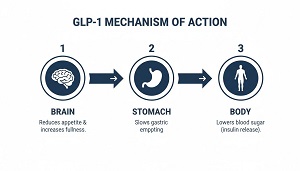
These therapies mimic glucagon-like peptide-1, a hormone that regulates insulin secretion, appetite, and gastric emptying.
Research from Mayo Clinic, Cochrane, and multiple peer-reviewed studies confirms that GLP-1 drugs reduce HbA1c levels while supporting sustained weight control.
Over the past 20 years, these drugs have evolved from niche therapies into frontline diabetes medication options.
Recent studies also highlight cardiovascular and metabolic benefits, reinforcing their importance in modern treatment protocols.
"The double-digit weight reduction seen after 42 weeks of petrelintide treatment, along with rates of adverse events generally at or below the rates observed with placebo, highlight the potential of this novel amylin agonist as a future first-choice therapy for chronic weight management,” said David Kendall, Chief Medical Officer of Zealand Pharma.
As innovation accelerates, GLP-1 drugs are reshaping how clinicians approach chronic metabolic diseases. Ongoing research continues to explore their long-term impact, including potential benefits in cardiovascular health, liver disease, and overall metabolic resilience. This positions GLP-1 drugs not just as treatment options, but as a cornerstone of modern therapeutic innovation in chronic disease care.
 Semaglutide leads the GLP-1 drugs segment with strong clinical evidence supporting both diabetes treatment and obesity treatment outcomes.
Studies referenced across clinical literature show that semaglutide delivers up to 15 per cent body weight reduction, making it one of the most effective weight management therapies available.
It improves insulin secretion while reducing glucagon levels, which stabilizes blood glucose efficiently. Research also highlights that semaglutide slows gastric emptying and reduces appetite signals in the brain, contributing to sustained weight control.
Data-backed findings from endocrinology sources confirm significant HbA1c reduction alongside cardiovascular benefits, positioning semaglutide as a leading diabetes medication in global treatment protocols.
“Patient response to generic semaglutide is still evolving, as these products have not yet been fully integrated into routine clinical practice, largely due to availability constraints,” says Dr. D. Nageshwar Reddy, a gastroenterologist and Founder-Chairman, AIG Hospitals.
 Liraglutide remains a foundational GLP-1 drug therapy with consistent performance in diabetes treatment and weight management.
Clinical studies demonstrate steady HbA1c reduction combined with moderate weight loss, making it suitable for long-term metabolic control. It enhances insulin secretion in response to meals and reduces appetite effectively.
Evidence from long-term trials shows that liraglutide also contributes to improved cardiovascular outcomes, which strengthens its relevance in chronic disease management.
Its once-daily dosing structure supports adherence, ensuring patients maintain consistent weight control and glycaemic stability over extended treatment periods.
“We have carefully studied the pharmacological properties of these formulations and with Sitagliptin 100, Pioglitazone 15 and Metamorfin 1000/500, we found the right blend for our triple-active combination. This is going to better serve anti-diabetic patients who require better treatment without necessarily swallowing multiple drugs,” Sanjeev Jain, Jt. Managing Director, Akums Drugs & Pharmaceuticals.
Dulaglutide stands out among GLP-1 drugs due to its once-weekly dosing and strong efficacy in diabetes treatment. Clinical trials confirm that dulaglutide significantly reduces HbA1c levels while delivering gradual but sustained weight management benefits. This makes it a preferred option for patients seeking simplified treatment regimens.
Research also indicates that dulaglutide reduces major cardiovascular risks, especially in high-risk populations. Its ability to combine convenience with metabolic improvements positions it as a reliable diabetes medication, supporting both glucose control and long-term obesity treatment strategies.
Also Read: 10 AI Innovations Transforming Drug Discovery in 2026
 Exenatide played a pioneering role in the development of GLP-1 medication and established the foundation for incretin-based diabetes treatment.
Early clinical studies demonstrated its ability to enhance insulin secretion while suppressing glucagon, leading to improved glycaemic control.
Although newer GLP-1 drugs offer more advanced outcomes, exenatide continues to support moderate weight management and glucose regulation.
It remains relevant in specific patient groups, especially those in early stages of disease progression, contributing to effective weight control and metabolic balance.
Tirzepatide represents a next-generation advancement in GLP-1 drugs by combining GLP-1 and GIP receptor activity. Clinical data show that this dual mechanism delivers superior weight management outcomes compared to traditional therapies, with significant reductions in both body weight and HbA1c levels.
Studies also indicate enhanced metabolic efficiency, as tirzepatide improves insulin sensitivity while reducing appetite. This dual-action approach positions it as a breakthrough diabetes medication, redefining expectations for obesity treatment and long-term metabolic disease management.
 Lixisenatide focuses on controlling post-meal glucose spikes, making it an effective GLP-1 drug option for targeted diabetes treatment.
It slows gastric emptying significantly, which reduces glucose absorption after meals and stabilizes blood sugar levels. Clinical insights show that lixisenatide supports moderate weight management and improves overall glycaemic control.
While its weight loss effects remain less pronounced compared to newer drugs, it continues to contribute to consistent weight control in structured treatment plans.
Albiglutide offers long-acting GLP-1 drug therapy with sustained glycaemic benefits in diabetes treatment. It delivers stable insulin regulation over extended periods, reducing fluctuations in blood glucose levels.
Although its impact on weight management remains moderate, studies confirm its effectiveness in improving metabolic parameters. Its longer half-life enhances patient convenience, supporting adherence and consistent weight control outcomes in chronic care settings.
Efpeglenatide represents an emerging GLP-1 drug therapy with promising clinical results in both diabetes treatment and obesity treatment. Research highlights improved glucose control combined with meaningful weight reduction outcomes.
Its extended action profile allows less frequent dosing, improving patient compliance. Clinical studies also suggest cardiovascular benefits, reinforcing its role as a next-generation diabetes medication with strong potential in weight management strategies.
 Danuglipron introduces oral delivery innovation within GLP-1 Drugs, eliminating the need for injections in diabetes treatment.
Early clinical trials indicate effective glucose control and measurable weight loss outcomes. This oral format improves accessibility and patient acceptance, which can accelerate adoption across broader populations.
Its role in simplifying weight management and enhancing treatment adherence makes it a significant advancement in modern obesity treatment.
This positions danuglipron as a scalable and patient-friendly solution in the evolving landscape of next-generation metabolic therapies.
Orforglipron is another oral GLP-1 drug candidate that demonstrates strong potential in diabetes treatment and weight management. Clinical research shows significant reductions in blood glucose levels along with notable weight loss.
Its non-peptide structure enables easier administration while maintaining efficacy comparable to injectable therapies. This innovation supports scalable weight control solutions and represents the future direction of diabetes medication development.
Drug | HbA1c Reduction | Weight Loss | Dosing Type | Key Advantage |
Semaglutide | High | Very High | Weekly | Best weight loss |
Liraglutide | Moderate | Moderate | Daily | Proven safety |
Dulaglutide | High | Moderate | Weekly | Convenience |
Tirzepatide | Very High | Very High | Weekly | Dual mechanism |
Exenatide | Moderate | Moderate | Daily/Weekly | Early adopter |
Lixisenatide | Moderate | Low | Daily | Post-meal control |
Albiglutide | Moderate | Low | Weekly | Long-acting |
Efpeglenatide | High | Moderate | Weekly | Emerging therapy |
Danuglipron | Moderate | Moderate | Oral | No injection |
Orforglipron | High | High | Oral | Next-gen oral |
Also Read: How Agentic AI Is Revolutionizing Autonomous DMTA Loops?
GLP-1 drugs have redefined diabetes treatment by combining glycaemic control with effective weight management, a dual benefit that traditional therapies rarely achieved. Clinical evidence from multiple research bodies confirms their ability to improve metabolic health outcomes while reducing long-term complications.
Category | Avg Weight Loss |
Traditional therapies | 2–5per cent |
GLP-1 Drugs | 5–15per cent |
Dual agonists | 15per cent + |
 The evolution of GLP-1 drugs from injectable therapies to advanced dual agonists and oral formulations reflects rapid innovation in obesity treatment and diabetes medication development.
This shift is not only improving patient adherence but also expanding accessibility across diverse populations. As research continues to validate their long-term safety and efficacy, GLP-1 drugs will remain central to future weight control strategies.
Their growing role in preventive healthcare and chronic disease management signals a transformative shift toward more integrated and patient-centric treatment models.
However, while GLP-1 drugs offer promising outcomes in weight control and diabetes medication protocols, patients must approach these therapies with caution.
Individuals should always consult qualified healthcare professionals before starting any GLP-1 drugs for diabetes treatment or obesity treatment. Proper diagnosis, dosage, and monitoring are critical, as these medications may not be suitable for everyone and can have side effects or interactions with other treatments. Thorough research and medical guidance ensure safe and effective use tailored to individual health conditions.
Agentic AI bridges DMTA gaps by accelerating data-driven insights that enable faster development and optimization of GLP-1 drugs for diabetes treatment and weight management.
Autonomous systems ensure reliability in GLP-1 drug development by maintaining consistent monitoring, controlled processes, and adherence to safety protocols during diabetes medication research.
Regulatory traceability is maintained through structured clinical validation, documented trial data, and evidence-backed outcomes that support GLP-1 drugs in obesity treatment and diabetes treatment.






, CDSCO.jpg "Fostering a Quality Culture in the Pharmaceutical Industry")