
Fathimanoud, Correspondent, India Pharma Outlook
Agentic AI and Autonomous DMTA Loops transform how industries approach innovation, experimentation, and product development across sectors.
Organizations deploy Agentic AI to automate decision-making across R&D workflows, enabling faster, more efficient development cycles globally.
Autonomous DMTA loops integrate AI-driven R&D, intelligent laboratory automation, and digital twins, reducing development timelines by up to 40 percent.
Companies in pharmaceuticals, semiconductors, and manufacturing use these systems to accelerate discovery and optimize complex industrial processes.
Agentic AI enables autonomous experimentation and closed-loop optimization, reshaping scientific AI and smart manufacturing across industries.
 Agentic AI refers to advanced systems that independently plan, decide, and execute tasks to achieve defined goals with minimal human input. These systems interpret context, evaluate options, and adapt actions dynamically in real-time environments.
Agentic AI systems execute multi-step workflows by breaking complex objectives into actionable steps. They adapt decisions using real-time data and feedback while integrating seamlessly with external tools, APIs, and enterprise systems to complete processes end-to-end.
Traditional AI systems operate within predefined boundaries and focus on specific tasks such as prediction, classification, or rule-based automation. In contrast, Agentic AI introduces goal-driven autonomy, allowing systems to manage entire workflows instead of isolated functions.
Agentic AI anticipates actions rather than simply responding to inputs. It combines reasoning, memory, and learning to enable adaptive execution and supports full workflow automation rather than limiting intelligence to discrete tasks.
Autonomous AI agents form the foundation of Agentic AI systems by enabling independent decision-making and adaptive execution across multi-stage workflows. These agents continuously interact with their environment and refine behavior through feedback loops.
Also Read: AI in Drug Discovery and Development: From Lab to Commercial Market
 Loop1.jpg) The DMTA loop structures innovation into a continuous and repeatable cycle that enables systematic experimentation and consistent improvement.
The DMTA loop structures innovation into a continuous and repeatable cycle that enables systematic experimentation and consistent improvement.
It connects design, execution, and analysis into an integrated workflow that accelerates discovery and enhances decision-making across R&D environments.
The DMTA process consists of four interconnected stages that enable continuous iteration and improvement across product development and scientific research workflows.
The following points describe the core stages that form the foundation of the DMTA cycle and enable structured innovation:
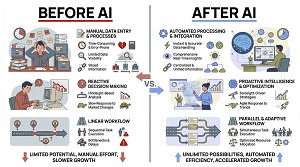 Traditional DMTA workflows depend heavily on manual processes, while autonomous systems integrate AI to improve speed, accuracy, and scalability.
This transition enables organizations to move from fragmented operations to fully connected and intelligent workflows.
The following points outline the key differences between traditional and autonomous DMTA workflows in practical applications:
DMTA plays a central role in modern innovation by connecting design, experimentation, and analysis into a unified and continuous improvement loop. Organizations use this framework to accelerate development cycles, improve accuracy, and enhance overall research productivity.
The following points highlight the key benefits that make DMTA essential for modern R&D and innovation strategies:
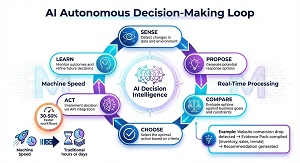 Agentic AI enables autonomous DMTA loops by introducing real-time decision-making, adaptive learning, and continuous optimization across all workflow stages.
These systems coordinate design, execution, and analysis while reducing human intervention and improving operational efficiency.
This capability is important because it transforms static workflows into dynamic, self-improving systems that continuously enhance performance and outcomes.
Agentic AI enables systems to make real-time decisions that optimize experimentation, resource allocation, and production processes. These decisions rely on continuous data analysis, predictive modeling, and adaptive learning mechanisms.
The following points describe the decision-making capabilities that enable AI systems to operate independently:
 Multiple AI agents collaborate across the DMTA loop, with each agent specializing in specific functions within the workflow. This distributed intelligence improves efficiency, coordination, and precision across complex processes.
The following points outline the roles different AI agents play within a collaborative DMTA system:
Together, these specialized agents create a closed-loop system that continuously learns, optimizes workflows, and accelerates innovation with minimal human intervention.
“We can accelerate the impact of that knowledge by combining it with advanced AI to help customers improve critical steps in drug discovery, from target identification to biomarker research and hypothesis generation,” said Nitin Sood, Senior Vice President and Head of Product Portfolio & Innovation at QIAGEN.
Also Read: 10 AI Innovations Transforming Drug Discovery in 2026
Agentic AI systems continuously improve by learning from iteration within the DMTA loop using structured feedback mechanisms. This ensures that every cycle becomes more efficient, accurate, and optimized over time. This capability is critical because it enables long-term performance improvement and supports closed-loop optimization across workflows.
The following points highlight the learning mechanisms that drive continuous improvement in AI-driven systems:
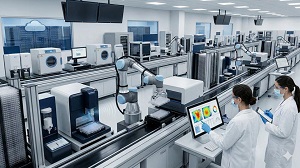 Autonomous systems optimize processes continuously by analyzing data, adjusting parameters, and improving outcomes without manual intervention. This enables high-speed experimentation and scalable production across R&D and smart manufacturing environments. It also drives efficiency gains, improves output quality, and enables continuous operation at scale.
The following points describe the optimization capabilities that enhance performance in real-world applications:
Autonomous DMTA systems rely on a combination of advanced technologies that enable intelligence, automation, and continuous optimization across workflows. These technologies work together to support decision-making, execution, simulation, and real-time data processing in complex R&D environments.
Large Language Models enable reasoning, communication, and contextual understanding within Agentic AI systems across DMTA workflows. They facilitate interaction between humans and machines while supporting complex analytical and decision-making processes.
The following points describe the core capabilities LLMs provide within autonomous systems:
Machine learning enables predictive modeling, while reinforcement learning allows systems to optimize decisions through continuous interaction and feedback.
The following points outline the learning capabilities that drive intelligent system behavior and optimization:
Also Read: Scaling Perfusion Technology from Lab Success to Manufacturing Reality
Robotics and automation systems execute physical tasks within DMTA loops, ensuring precision, consistency, and scalability across experiments. They reduce manual intervention while increasing operational efficiency.
The following points highlight the execution capabilities enabled by robotics and automation technologies:
Digital twins create virtual representations of physical systems, enabling simulation, testing, and optimization before real-world implementation. They integrate real-time data with predictive models to improve decision-making and reduce risks.
“Combining our next-generation scientific intelligence platform and industry-leading scientific applications together with Siemens' Digital Twin and AI capabilities, we’ll drive a new wave of innovation in life sciences R&D. Together, we'll accelerate innovation cycles for our customers and help scientists make breakthrough discoveries faster than ever before shaping the future of scientific innovation,” said Thomas Swalla, CEO of Dotmatics, leading of Life Sciences R&D software Solutions.
The following points describe the simulation and optimization capabilities enabled by digital twin technology:
IoT sensors and edge computing enable real-time data collection and processing across distributed systems within DMTA workflows. These technologies enhance responsiveness, connectivity, and system intelligence.
The following points outline the data and processing capabilities that support real-time system performance:
Agentic AI enables autonomous DMTA loops across industries by accelerating innovation, improving efficiency, and enhancing decision-making. Organizations adopt these systems to optimize workflows, reduce timelines, and improve product quality at scale.
"We believe every enterprise will become an AI-native enterprise. Success will belong not to those who simply adopt AI, but to those who integrate it into the fabric of their business”, said Prasad Puranik, Chief Executive Officer, Comprinno Technologies.
 Agentic AI accelerates drug discovery by automating the DMTA loop and enabling continuous experimentation in laboratory environments. This reduces development time and improves the identification of viable compounds.
The following points highlight the key applications of AI in pharmaceutical research workflows:
AI-driven systems optimize semiconductor production by improving process control, yield, and operational efficiency across fabrication workflows.
Justin Marcucci, President of Apexon, said, “While enterprises have largely begun to solve for AI strategy, the overwhelming gap that remains is scaled AI delivery: getting from a compelling use case to a system that runs in production, integrates with live data, adapts to the realities of the business, and compounds in value over time.”
The following points describe the impact of AI on semiconductor manufacturing processes:
Agentic AI enables rapid discovery of new materials through high-throughput experimentation and continuous data-driven optimization. This accelerates innovation and improves research accuracy.
The following points outline the applications of AI in materials science and research environments:
AI systems streamline AI for product development by automating design and manufacturing workflows while improving performance and efficiency.
The following points highlight the role of AI in electronics design and production processes:
Agentic AI transforms engineering workflows by enabling rapid simulation, testing, and optimization across design and production stages. This improves performance and reduces development complexity.
The following points describe the applications of AI in engineering design and testing environments:
AI systems optimize chemical processes by improving efficiency, reducing costs, and enabling real-time adjustments across production environments. This enhances reliability and operational performance.
The following points outline the impact of AI on chemical manufacturing and optimization processes:
Also Read: How AI Can Power Target Identification and Disease Mapping
 Autonomous DMTA (Design–Make–Test–Analyze) loops represent a shift from linear experimentation to continuous, AI-driven innovation cycles.
These systems integrate machine learning, automation, and real-time analytics to accelerate R&D productivity.
Industries such as pharmaceuticals, chemicals, and advanced manufacturing report measurable gains. This includes 30–50 per cent faster development cycles and 20–30 per cent cost reductions.
Organizations adopt DMTA loops not only to improve speed but also to enhance decision accuracy and scalability across global operations.
Autonomous DMTA loops compress traditional development timelines by enabling continuous experimentation and parallel processing of tasks. AI models analyze results instantly and trigger the next iteration without manual intervention, which eliminates delays between stages. This capability allows organizations to respond quickly to market demands and scientific challenges, especially in high-stakes sectors like drug discovery and materials science.
“BMS has made a deliberate bet on AI, and we are beginning to see it pay off in our pipeline and operations. We're committed to translating AI into real outcomes for patients, which requires infrastructure built to match that ambition,” said Greg Meyers, Chief Digital and Technology Officer at Bristol Myers Squibb.
Cost efficiency emerges as a direct outcome of automation and optimization. Autonomous systems reduce redundant experiments and improve the allocation of resources such as materials, labor, and computational power. Companies that deploy DMTA loops at scale report significant savings, particularly in industries where physical experimentation carries high costs.
AI-driven insights improve experimental design by predicting outcomes before execution. This reduces trial-and-error approaches and increases the probability of success in each cycle. As a result, organizations achieve more reliable outcomes while reducing time spent on unsuccessful trials.
Continuous optimization ensures consistent product quality across iterations. AI systems monitor performance data and refine parameters to maintain high standards. This leads to better-performing products and reduces variability in manufacturing processes.
Autonomous DMTA systems learn from every cycle, which allows them to improve over time. Organizations scale their R&D operations without proportional increases in cost or complexity. Autonomous DMTA loops also deliver measurable improvements across speed, cost, and quality, which position them as a core driver of next-generation innovation.
Digital twins act as virtual replicas of physical systems, enabling organizations to simulate, test, and optimize processes before real-world execution. These models integrate real-time data with predictive analytics, which allows companies to experiment in a risk-free environment. Industry studies indicate that digital twins can reduce physical testing costs by up to 50 per cent and shorten validation cycles significantly.
Digital twins enable organizations to simulate multiple scenarios simultaneously, which reduces reliance on costly physical prototypes. Engineers test design variations and operational conditions in a controlled virtual environment. This approach accelerates innovation while maintaining accuracy and reliability.
Predictive capabilities allow organizations to forecast outcomes and identify inefficiencies early in the process. AI models analyze historical and real-time data to optimize decisions proactively.
Therefore, this will in turn:
Digital twins validate designs and processes before implementation, which reduces risks in production and deployment. Early-stage validation ensures compliance with industry standards, which will also:
Human-AI collaboration forms the foundation of autonomous R&D systems. While AI handles execution, humans provide strategic direction, domain expertise, and ethical oversight. This collaboration ensures that innovation remains both efficient and aligned with real-world requirements.
Scientists guide AI systems by defining objectives, interpreting results, and validating outcomes. Their expertise ensures that experiments remain relevant and scientifically accurate.
AI systems process vast datasets and generate insights that would take humans significantly longer to produce. This enhances productivity and enables faster decision-making, which will also:
“AI agents and generative tools will help our teams around the world reimagine processes at scale and bring scientific breakthroughs to patients faster,” said Dave Williams, chief information and digital officer, Merck.
Human oversight ensures transparency, accountability, and compliance with regulatory frameworks. Organizations implement governance structures to monitor AI performance and decision-making. This collaboration creates a balanced innovation model where AI enhances efficiency while humans ensure accuracy and responsibility.
Despite its advantages, implementing Agentic AI in DMTA loops presents several challenges. Organizations must address technical, financial, and operational barriers to achieve successful deployment.
AI systems depend on high-quality, structured data. Poor data integration reduces model accuracy and limits system effectiveness. Organizations must invest in unified data infrastructures. Complex AI models often lack transparency, which creates challenges in understanding decision-making processes. Explainable AI becomes critical, especially in regulated industries.
Industries must comply with strict regulations, which will also slow the adoption. At the same time, cybersecurity risks increase as systems become more interconnected. This will be effective with:
Also Read: Pharmaceutical 4.0: Redefines Compliance, Automation & AI
High infrastructure costs and the need for workforce upskilling remain significant barriers. Organizations must also redesign workflows to integrate AI effectively.
Ethical considerations play a critical role in AI-driven DMTA systems. Organizations must ensure fairness, transparency, and accountability in their operations.
Organizations must design AI systems that promote fairness and reduce bias. Responsible development practices improve trust and sustainability. Transparent systems enable better decision-making and accountability. Strong data protection measures ensure compliance with privacy regulations. This protects sensitive information and reduces risks of data breaches.
Continuous monitoring helps identify and reduce bias in AI decision-making, which ensures equitable outcomes across applications. Ethical governance frameworks ensure that AI adoption remains sustainable and aligned with societal expectations.
Successful deployment of DMTA systems requires a structured approach that balances technology, people, and processes. Organizations must begin with strong data foundations, followed by pilot projects that validate system performance.
Integration with existing workflows ensures minimal disruption, while cross-functional collaboration improves implementation outcomes. Continuous monitoring and governance frameworks help maintain performance and compliance over time.
 Agentic AI and Autonomous DMTA (Design–Make–Test–Analyze) systems continue to evolve rapidly, driving the next phase of industrial and scientific transformation.
These technologies enable fully autonomous decision-making, continuous optimization, and seamless system-wide coordination. This evolution accelerates innovation cycles, reduces human dependency, and enhances precision across complex workflows.
Agentic AI transforms the traditional DMTA cycle into an autonomous, continuously improving innovation engine by enabling real-time decision-making and adaptive learning. By integrating AI, robotics, digital twins, and human expertise, organizations accelerate discovery, optimize manufacturing, and build scalable, resilient R&D ecosystems that support faster, data-driven innovation across industries.
AI is transforming drug discovery by replacing slow, costly trial-and-error methods with faster, data-driven approaches. Technologies like generative AI, virtual screening, and predictive analytics reduce timelines by up to 50% while improving success rates. From target identification to clinical trials, AI enhances precision, lowers costs, and enables personalized treatments, reshaping pharmaceutical innovation and accelerating drug development.
Agentic AI in manufacturing refers to autonomous systems that optimize production, experimentation, and workflows through real-time decision-making and continuous learning.
A DMTA loop is a continuous innovation cycle that connects design, production, testing, and analysis to enable systematic experimentation and improvement.
Agentic AI improves product development by automating workflows, accelerating experimentation cycles, and enabling real-time optimization across stages.
Industries such as pharmaceuticals, semiconductors, manufacturing, aerospace, and materials research benefit most from autonomous DMTA loops.
Technologies like machine learning, reinforcement learning, robotics, digital twins, IoT sensors, and large language models enable autonomous experimentation.
Agentic AI cannot replace human researchers but enhances their work by handling execution while humans provide strategy, expertise, and oversight.
The biggest challenges include data quality issues, lack of explainability, regulatory constraints, cybersecurity risks, and high infrastructure costs.
Digital twins support AI-driven DMTA by enabling virtual testing, predictive simulation, and risk reduction before real-world implementation.





, CDSCO.jpg "Fostering a Quality Culture in the Pharmaceutical Industry")