
Anna Elzabeth Tom, Correspondent, India Pharma Outlook
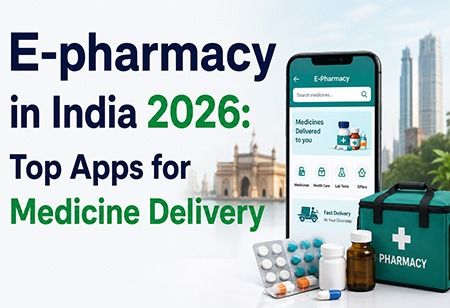
India’s healthcare landscape is undergoing a significant transformation with e-pharmacy at the centre. For millions of Indians, a smartphone and a few taps have replaced the trip to their neighborhood chemist and, in many cases, the doctor's clinic too.
Telemedicine has made it possible for patients to consult physicians from their homes, receive digital prescriptions, and purchase them instantly through e-pharmacy and home medicine delivery platforms.
E-pharmacy services, once considered a convenience for city dwellers, have now become a necessity. As per Modor Intelligence reports, the global e-pharmacy market is at USD 104.73 billion in 2025, and is expected to reach USD 310.38 billion by 2031. This reflects how e-pharmacy is moving from a consumer preference to a revolutionary healthcare structure.
Pradeep Dadha, CEO and founder of Netmeds comments on e-pharmacy as, “Revolutionary paradigm shifts like e-pharmacy specifically, and e-medicine in general, tend to go through stages of customer acceptance... The pandemic has accelerated the speed to widespread acceptance. What was once conceived as a convenience has now been recognized as lifeline of last resort.”
India’s e-pharmacy and home medicine delivery journey had a very quiet beginning. In 2013, 1mg was launched as Healthkart Plus, helping customers to check drug compositions and compare prices. Netmeds followed in 2015 with an information-first approach.
The first transactional model was introduced by PharmEasy in 2014. The app started online delivery by partnering with licensed pharmacies to fulfill delivery orders without holding its own inventory. By 2016, e-pharmacy operations had spread across Mumbai, Delhi, Bengaluru, and Hyderabad.
The second phase of the e-pharmacy revolution, from 2017 to 2020, was marked by aggressive fundraising and geographical expansion. PharmEasy raised over USD 220 million, while 1mg secured over USD 165 million. With that funding, e-pharmacy platforms pushed into tier-2 and tier-3 cities.
The apps began to expand beyond medicine delivery and entered the home diagnostics service, where patients could book blood tests and health screenings from the comfort of their homes. The platforms started embedding teleconsultation, now creating a complete healthcare ecosystem, where the patients could consult a doctor, receive a digital prescription, and complete home medicine delivery all within the app. Services offered at significantly lower prices deepened the customer loyalty and improved the margins simultaneously.
The event that transformed the e-pharmacy revolution in India was the COVID-19 pandemic. When the national lockdown arrived in March 2020, physical pharmacies became inaccessible overnight.
Millions of patients with chronic health conditions faced severe issues sourcing their monthly prescriptions. This problem was immediately resolved by the e-pharmacy platforms. The platforms saw a significant spike in new user registration by an estimated 200 to 300 percent across major platforms.
Currently, India’s e-pharmacy sector is owned by India’s largest corporate houses. Tata Digital acquired 1mg for an estimated price of USD 325 to 350 million. Reliance Retail bought Netmeds in 2020 for Rs 620 Crore. Apollo Hospitals started its own e-pharmacy platform, Apollo 24/7.
According to IMARC reports, the Indian e-pharmacy market is valued at USD 3.71 billion in 2025 and is projected to reach USD 14.08 billion by 2034, growing at a compound annual growth rate of 15.98% from 2026 to 2034.
Also Read: The Future of MedTech in India: Meeting Tier-2 and Tier-3 Needs
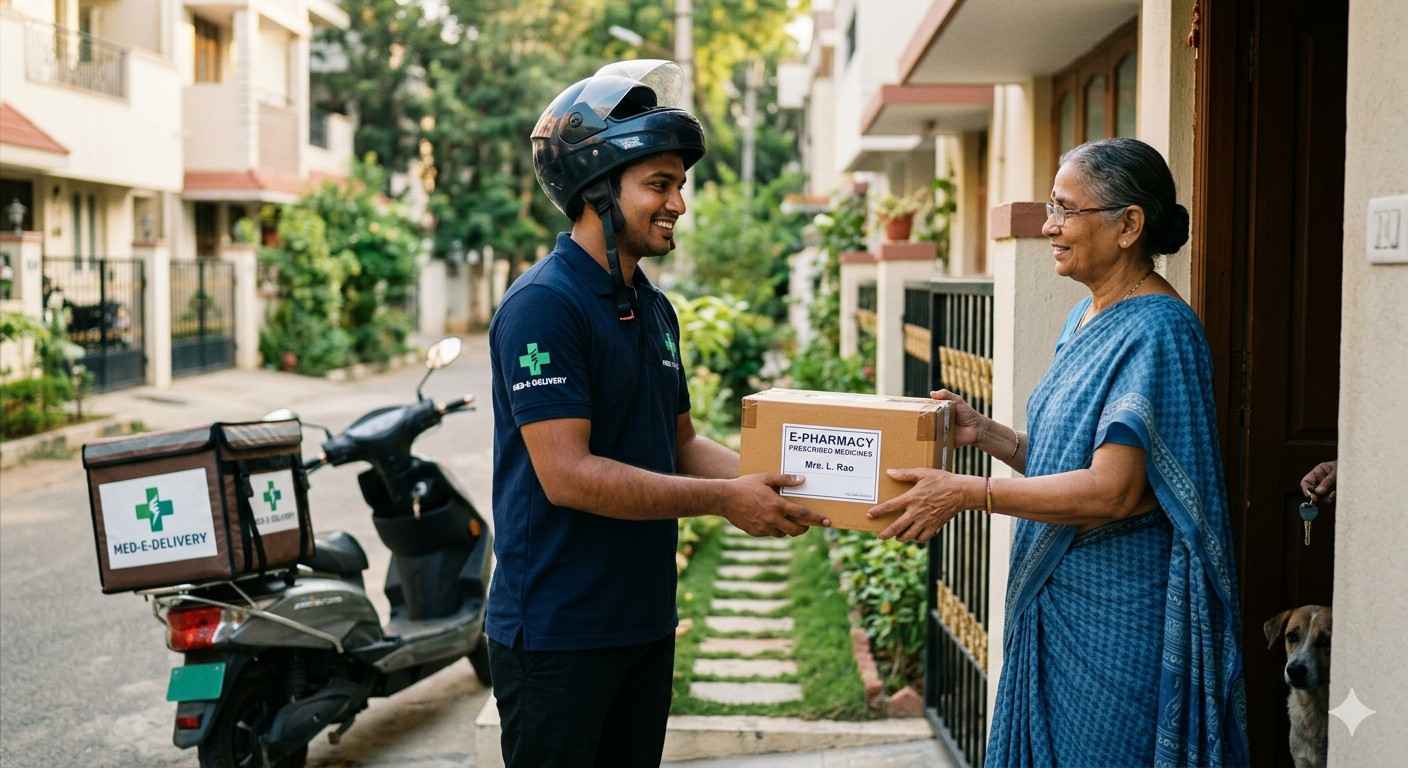
In 2026, the Indian e-pharmacy market is crowded. But all platforms are not built equal. The app you choose should be based on what you prioritise – discounts, faster delivery or reliability of a trusted brand.
Here’s a quick view of the top e-pharmacy apps and their deals.
PharmEasy is one of the largest e-pharmacy platforms in India. It offers a wide range of prescription and over-the-counter medicines. It allows users to upload their prescriptions, order medicines, and get them delivered at home. PharmEasy's strength lies in its wide geographic reach, making it a reliable option for users in tier-2 and tier-3 cities.
Key Features:
Apollo 24/7 is India’s largest omni-channel telehealth platform. It provides an AI-integrated healthcare ecosystem, catering to serve patients at every stage. It boasts a 20 million subscriber base and 150-plus on-call doctors.
Key Features:
Tata1mg is the go-to app for people who need both consultation and medicine in one go. It is a joint venture between Tata Digital and 1mg Technologies Pvt. Ltd. It operates in more than 1800 cities and has more than 260 million visitors.
Key features:
Netmeds is a leading e-pharmacy platform in India. It was acquired by Reliance Retail from its parent company Vitalic Health Pvt. Ltd in August 2020.
Key Features:
Flipkart Health+ was renamed as SastaSundar Health Buddies in 2025. It leverages Flipkart’s reliable delivery infrastructure, offering competitive pricing and fast home delivery. It was launched in April 2022, following Flipkart Group's majority acquisition of SastaSundar.com.
Key Features:
The best e-pharmacy app is the one that gets your medicine to your doorstep safely, quickly, and affordably, and right now, all five apps are competing to be that app.
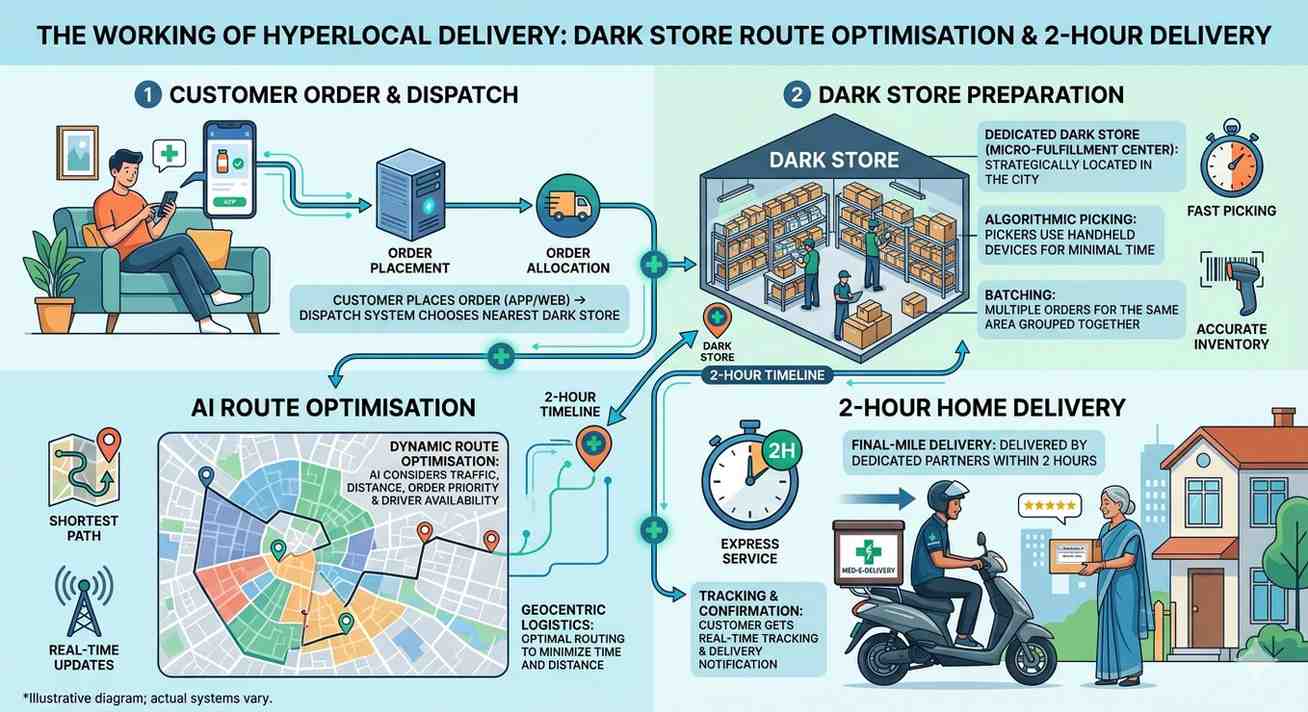
The way people access medicines is changing; they don’t drive to the nearest chemist or settle for next-day medicine delivery. Today, e-pharmacy platforms are offering home medicine delivery within two hours or less. This is powered by hyperlocal delivery networks and artificial intelligence route optimisation.
Hyperlocal delivery refers to the process of fulfilling customers’ orders from a nearby store, called a dark store. In the context of e-pharmacies, they fulfill customer orders from a pharmacy within a two to ten-kilometer radius.
The biggest advantage of hyperlocal delivery is its faster product delivery. Unlike e-commerce that ships from distant warehouses, they fulfill hyperlocal delivery by positioning their inventory close to where the demand exists. And as a result, the delivery window reduces from days to minutes.
As per Straits research data, the hyperlocal delivery market was valued at USD 3,801.05 billion in 2025 and is projected to grow to USD 14369.82 billion by 2034.
The goal of e-pharmacies is to cater to patients who are in urgent need of medicine. A diabetic patient, who has run out of insulin or a parent needing medicine for their child’s fever at midnight, cannot wait two days for standard delivery.
In these cases, speed isn’t just a convenience; it’s a need. In some cases, skipping or delaying medications is one of the main causes of preventable hospitalizations. E-pharmacies and home medicine delivery are trying to eliminate this gap, which affects a patient’s health.
The 2-hour delivery is only possible because of its sophisticated technology engine running in the background.
An e-pharmacy platform that offers a hyperlocal delivery depends on small, strategically placed stores called dark stores. These stores are closed to walk-in customers and are stocked with fast-moving medicines and healthcare products. They handle almost 300 to 500 deliveries daily. Once the customer places an order, the nearest gig-economy rider stationed near the store is alerted, who delivers the order at home.
As per Grand View Research, the global dark store market size was estimated at USD 15.27 billion in 2023 and is projected to reach USD 129.25 billion by 2030. In 2025, India had about 2,525 dark stores and is expected to grow to 7,500 dark stores by 2030.
At the center of hyperlocal delivery of e-pharmacies is AI-powered route optimsation. AI route optimization uses artificial intelligence, machine learning, and predictive analysis to map out traffic patterns, weather, delivery density, and real-time road conditions. These matrices will help it in assigning the most efficient path for every delivery agent.
Unlike traditional GPS-based navigation, AI-route optimization dynamically calculates routes in real-time by analyzing millions of variables and dynamically rerouting when conditions change. This helps in reducing fuel costs while improving delivery speed.
Demand forecasting and inventory intelligence in the e-pharmacy sector refers to the use of AI and predictive analytics to predict medication needs. This will help the e-pharmacy companies to optimize stock levels ahead and avoid stockouts of critical drugs, reduce waste from expiries, and lower holding costs.
Most e-pharmacy app allows its users to place orders and track deliveries in real time. It uses various technologies like GPS and geofencing to track a precise location. This technology allows e-pharmacy apps to manage multiple deliveries simultaneously with better location accuracy.
For real-time tracking, e-pharmacies use three major technologies – GPS tracking, geofencing, and push notifications. GPS tracking provides continuous live location coordinates for the courier. This allows both the platform and customer to continuously monitor the journey in real time.
This is complemented by geofencing, which establishes virtual perimeters around zones, such as the pharmacy or the patient’s neighborhood. This mechanism allows the app to automatically trigger status changes as the driver exits or enters. Finally, push notifications instantly deliver these automated updates to customers’ mobile phones, helping them to keep track of their delivery.
For the estimated 100 million Indians who live with chronic health conditions such as hypertension, diabetes, and thyroid disorders, managing medication is a lifelong logistical challenge. Missing a refill or forgetting a dose can have an adverse effect on the patient’s health.
As India’s e-pharmacy landscape grows, subscription-based medicine delivery is emerging as the future, automating chronic care and bringing pharmacy access directly to patients’ doors.
In subscription-based e-pharmacy models, patients enroll in a recurring delivery plan tied to their subscription, and medications are dispatched at regular intervals. The app carries the burden of tracking medicines for patients. Tata 1mg already offers care plans with free shipping and discounted consultations, while Netmeds provides three-month membership plans with unlimited free delivery, early iterations of what a mature subscription chronic care model could look like.
What separates a subscription platform from delivery services is intelligence. Leading e-pharmacy platforms are integrating an AI-powered refill reminder system that keeps track of prescription cycles and consumption patterns. They send reminders to users before they run out of medicines. Apollo 24/7’s AI chatbot, ‘Ask Apollo,’ and its diabetes self-management tool reflect AI integration in India’s e-pharmacy platforms.
The e-pharmacy sector in India has been operating in a legal grey zone. The regulatory framework meant to govern it remains stuck in draft form. In August 2018, the Ministry of Health and Family Welfare published draft rules under the Drugs and Cosmetics Act, 1940, proposing a dedicated Part VIB for the sale of drugs through e-pharmacy platforms. Eight years later, these rules are still to be formally notified.
Haripriya G, Harigovind PC & Rakesh PS, Researchers, School of Legal Studies, Cochin University of Science and Technology, in their research paper notes, “No legislation in India specifically regulates e-pharmacies... This convenient medium is currently facing some regulatory lacunae... Failure to do so will raise ethical concerns and adversely affect society’s health as a whole.”
The draft rules, if reinforced, would require all e-pharmacy operators to register with the Central Licensing Authority, pay a registration fee of Rs 50,000, and renew their registration every three years. Platforms will also be prohibited from selling narcotic drugs, psychotropic substances, tranquilizers, and Schedule X drugs through their portals.
The draft also has strict rules on data privacy. It explicitly states that the patient information collected through e-pharmacy platforms should not be disclosed to any third party. The draft also mandates that a registered pharmacist should verify every prescription before dispensing.
The platform is ready, the technology is proven, what the Indian e-pharmacy platform needs is a regulatory backbone to match its ambition.

.jpg)




, CDSCO.jpg "Fostering a Quality Culture in the Pharmaceutical Industry")