Telemedicine for Senior Chronic Care: Clinical Guidelines and Remote Care Technologies Guide

Fathimanoud, Correspondent, India Pharma Outlook
 Telemedicine for Senior Chronic Care: Clinical Guidelines and Remote Care Technologies Guide India Pharma Outlook

The growing importance of telemedicine for senior chronic care is clear from the rising number of older adults who need ongoing medical attention yet struggle to reach hospitals physically.

According to an Ixlayer survey reported by Fierce Pharma, 94% of pharmaceutical companies are already running or actively exploring direct-to-patient programs that include virtual consultations and home delivery.

This often leads them to fail to reach hospitals physically. Therefore, virtual consultations, remote patient monitoring, and connected devices are crucial in changing this reality.

Telemedicine for senior chronic care matters in a world where growing numbers of older adults need ongoing medical attention without the physical demands of frequent clinic visits.

They deliver regular check-ins, medication reviews, specialist input, and home-based tracking without the travel burden. Rising chronic disease rates, clinician shortages, and the strong preference for aging in place make these tools essential.

This guide details the clinical parameters, biometrics, interface requirements, regulatory standards, and practical barriers that define effective senior telehealth programs.

Key Takeaways

  • Understand the clinical parameters and eligibility criteria that make telemedicine safer and more effective for senior chronic care.
  • Learn which RPM metrics and connected devices can help clinicians detect health changes early.
  • Discover the accessible design features that make telehealth platforms easier for older adults to use and stay engaged with.
  • Explore the privacy, HIPAA, Medicare, and caregiver considerations that determine whether a senior telehealth program can deliver sustainable, quality care.

Also Read: Indian Telemedicine Apps in 2026: Enhancing Rural Health Accessibity

The Four Layers of Digital Senior Care

  • Telemedicine: Remote delivery of clinical services, such as virtual consultations, diagnosis, treatment, and follow-up.
  • Telehealth: The broader umbrella that includes telemedicine plus remote monitoring, digital health education, care coordination, and other technology-enabled healthcare services.
  • Remote Patient Monitoring (RPM): A specific telehealth model that uses connected devices to collect patient health data and transmit it to healthcare professionals for review and management.
  • Remote Elderly Care: A broader care approach focused specifically on supporting older adults at home through telemedicine, RPM, connected devices, caregiver support, and aging-in-place technologies.

Telemedicine is the clinical interaction; telehealth is the wider digital care ecosystem; RPM is the continuous data-monitoring component; remote elderly care brings these tools together around the needs of older adults.

Telemedicine is already making a big difference in India. eSanjeevani, the country’s national telemedicine service, has crossed 500 million teleconsultations as per PIB report.

The Union Ministry of Health and Family Welfare stated that eSanjeevani, India’s national telemedicine service, has crossed 500 million teleconsultations.

The ministry noted that this milestone shows how telemedicine is helping the country’s healthcare system reach more people by reducing problems of distance, location, and limited access, especially for those living in rural, remote, and underserved areas.

This large-scale success makes telemedicine a practical option for senior citizens who need regular care for chronic conditions but find frequent hospital visits difficult.

In May 2026, Vedanta Aluminium launched a 24x7 telemedicine facility at Lanjigarh in Odisha’s Kalahandi district, in partnership with Tata 1mg, to serve over 70,000 people across nearly 70 remote villages.

Pranab Kumar Bhattacharyya, CEO of Vedanta Alumina Business, said that Odisha remains central to Vedanta’s growth journey and that the well-being of local communities is at the heart of the company’s work in the state. He added that with the launch of the telemedicine service, the company is enhancing last-mile access to quality healthcare for those who need it the most.

Core Parameters of Telemedicine in Geriatric Chronic Disease Management

Telemedicine parameters for elderly patients are clinical benchmarks, frequency rules, and safety criteria that help define an effective senior telehealth program.

Providers need to determine whether remote care is clinically appropriate, whether the patient can use the required technology, who should participate in care, and when an in-person assessment is necessary.

Six practical parameters help establish this foundation:

1. Patient eligibility criteria: Providers should first determine whether an older adult is suitable for remote care. They should consider the patient's chronic conditions, clinical stability, ability to participate in virtual care, access to a suitable device, and availability of caregiver support. Patients with complex or unstable conditions may require in-person assessment or a hybrid care model.

2. Cognitive assessment protocols: Clinicians should assess memory, attention, communication, and decision-making ability before enrollment. These checks help determine how independently a senior can use telehealth services and follow care instructions. When additional support is needed, caregivers can assist with technology and daily care while keeping the senior involved in decisions to the extent appropriate.

3. Data privacy safeguards: Telehealth platforms must protect both consultation data and information collected through connected devices. Providers should use secure communications, appropriate authentication, encryption, access controls, and clear consent processes. Patients should understand what information is collected, who can access it, and when caregivers can participate.

4. Visit frequency standards: The frequency of virtual consultations should match the patient's condition, treatment plan, and level of risk rather than follow one fixed schedule for every senior. Stable patients may require periodic reviews, while changes in symptoms, medication, or remote readings may require earlier contact. RPM programs should also define how frequently clinicians review transmitted data.

5. Escalation pathways: Providers should establish clear actions for abnormal readings or worsening symptoms. Patient-specific thresholds can trigger a phone call, video consultation, medication review, urgent assessment, or emergency referral depending on the severity of the situation. This ensures that remote monitoring leads to timely clinical action rather than simply generating alerts.

6. Documentation requirements: Clinicians should document remote encounters with the same clinical discipline applied to other forms of care. Records should capture relevant symptoms, assessments, care decisions, consent, patient identification, transmitted data, and follow-up actions.

Together, these six parameters create the clinical foundation for senior telemedicine. They establish who should receive remote care, how often providers should engage, how patient information should remain protected, and what happens when a patient's condition changes.

Telehealth is also making it easier for patients to receive medicines for chronic conditions. For example, Eli Lilly has started offering its new oral GLP-1 drug through telehealth providers and direct home delivery services across the United States.

This allows eligible patients to consult a healthcare professional remotely and receive the medicine at home, reducing the need for in-person clinic visits.
Remote Patient Monitoring (RPM): Essential Metrics for Senior Care

Remote Patient Monitoring (RPM) uses connected medical devices to collect and transmit patients’ health data from their homes to healthcare professionals.

It extends virtual consultations by providing continuous visibility into vital signs and other health indicators between appointments. 

Clinicians can review these readings through digital dashboards, identify early signs of deterioration, and intervene before a condition requires hospital admission.

The global RPM market continues to expand as chronic diseases become more prevalent and more seniors prefer aging in place. 

Hospitals and clinics remain major users of RPM, while home-based monitoring is growing as healthcare providers extend care beyond traditional clinical settings.

Dr. Jayanta Thakuria, Senior Director – Internal Medicine & Rheumatology at Yatharth Super Speciality Hospital, explains that remote monitoring enables healthcare professionals to track vital signs such as blood pressure, blood sugar, pulse, and oxygen saturation from a patient’s home.

Regular monitoring helps identify abnormal changes early, allowing timely treatment before a condition worsens. He adds that this approach can help older adults with chronic diseases reduce unnecessary emergency room visits, follow prescribed treatment routines, and maintain greater safety and independence.

The essential metrics vary according to each patient’s condition:

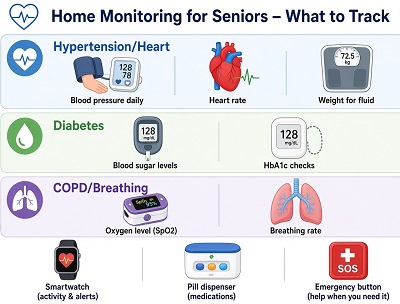
  • Hypertension and cardiovascular conditions: Daily blood pressure readings help clinicians track fluctuations, while heart rate variability and ECG data provide additional insights when cardiac risks exist. Daily weight measurements also help detect sudden weight gain, which may indicate fluid retention in patients with heart failure.
  • Diabetes: Continuous glucose monitoring (CGM) tracks blood sugar levels and flags potential hypoglycemic or hyperglycemic episodes. Periodic HbA1c tests provide a longer-term view of glucose control. Digital glucometers also allow patients and caregivers to record readings electronically, reducing manual transcription errors.
  • COPD and respiratory diseases: Oxygen saturation (SpO?), respiratory rate, and peak expiratory flow measurements help clinicians assess respiratory health. Pulse oximeters can automatically alert care teams when oxygen levels fall below an individualized target range.

Other connected devices such as smartwatches and fitness bands track heart rate, physical activity, and sleep patterns. Personal emergency response systems enable seniors to call for help with a single button press.

Similarly, motion and door sensors can flag falls or prolonged inactivity without using cameras. Smart medication dispensers release scheduled doses and notify caregivers about missed medication, while voice assistants provide reminders and support hands-free emergency calls.

These readings become useful when clinicians interpret them against personalized thresholds and established care plans. When a measurement crosses a defined limit, the RPM platform generates an alert that triggers the appropriate escalation pathway.

Care teams can then assess changes across days or weeks instead of relying on isolated readings during appointments. This continuous oversight supports timely intervention, helps reduce avoidable hospitalizations, and enables seniors to remain safely at home for longer.

Designing Accessible Telehealth Interfaces: Usability and Technical Parameters

Mostly for older adults, telehealth is useful only when they can navigate the platform comfortably and independently. Complicated interfaces can discourage seniors from attending virtual consultations, following care instructions, or using digital health services regularly.

Accessible design is therefore essential to effective telehealth delivery, particularly for seniors with limited dexterity, reduced vision, or low digital literacy. Platforms must minimize technology fatigue and make every interaction simple, clear, and predictable.

Essential Technical Parameters for Accessible Telehealth

  • Text readability: Use a minimum 16-point font with options to enlarge text.
  • Visual contrast: Maintain high contrast between text and backgrounds to improve readability.
  • Touch targets: Provide large buttons that are easy to tap for users with limited motor control.
  • One-touch access: Enable users to launch video consultations with a single tap.
  • Voice assistance: Support voice commands for starting visits, setting medication reminders, and requesting help.
  • Clear interface language: Replace medical jargon with plain language, and use text or symbols alongside color coding.
  • Error guidance: Display simple error messages with clear instructions to resolve problems.
  • User onboarding: Provide step-by-step guidance, illustrations, and short videos for first-time users.
  • Device connectivity: Enable simple Bluetooth pairing and automatic data uploads to reduce manual effort.
  • Battery visibility: Display clear battery indicators to help users monitor device readiness.
  • Low-connectivity support: Offer cellular-connected devices or alternatives for users in rural areas with limited Wi-Fi access.
  • Caregiver access: Provide separate caregiver logins or shared dashboards so family members can assist without accessing the senior’s personal credentials.

Together, these usability and technical features make telehealth easier to navigate, encourage consistent engagement, and support better adherence to chronic care plans.

Regulatory Compliance, Medicare Reimbursement, and Care Quality Standards

A virtual consultation may be easy to complete, but running a compliant senior telehealth program involves several checks behind the screen.

Healthcare providers must protect patient information, establish reimbursement eligibility, and track clinical outcomes to ensure remote care remains secure, accountable, and effective.

Three factors shape these requirements:

  • Patient privacy and clinical accountability: HIPAA-compliant safeguards, encryption, secure data storage, role-based access, and audit logs help protect health information. Clinicians must also document video consultations and remote data reviews, obtain informed consent, verify patient identity, and meet applicable state licensing requirements.
  • Medicare reimbursement: Eligible Chronic Care Management (CCM) and Remote Patient Monitoring services must meet the relevant coverage, billing, coding, and documentation rules. Records of qualifying monitoring activities, clinical reviews, and care coordination help substantiate reimbursement claims.
  • Care quality and outcomes: Hospital readmissions, medication adherence, and biometric trends help providers assess whether interventions are working. Reviewing these indicators allows care teams to identify emerging risks and adjust care plans when needed.

When privacy safeguards, reimbursement procedures, and outcome tracking work together, healthcare organizations can maintain regulatory compliance while building sustainable senior telehealth programs. Providers of remote senior care must clearly understand two key areas: the financial rules and the legal rules that apply to their services.

On the financial side, they need to know how insurance coverage works for elderly patients, what out-of-pocket costs families typically face, how tax and GST rules affect senior-care products, and how funding or capital can flow into the sector.

On the legal side, they must be familiar with laws such as the Maintenance and Welfare of Parents and Senior Citizens Act, regulations from bodies like the Insurance Regulatory and Development Authority of India (IRDAI), and any guidelines that cover digital or remote healthcare.

Only when providers fully grasp both the money-related rules and the legal requirements can they design remote senior-care programs that stay sustainable, remain compliant, and continue serving elderly people over the long term.

Overcoming Caregiver and Patient Barriers in Digital Geriatric Care

Even well-designed digital health systems can fall short when older adults struggle to use them or lack confidence in virtual care. 

Limited digital literacy, physical difficulties, and concerns about technology can prevent seniors from engaging consistently with telehealth services.

Family caregivers often bridge this gap by setting up devices, resolving connectivity issues, and assisting during virtual consultations.

Their involvement creates a three-way relationship between the senior patient, the caregiver, and the clinician, with each playing a distinct role in healthcare delivery.

Healthcare providers can make this arrangement more effective through practical training during enrollment.

In short, repeated practice sessions help patients and caregivers become familiar with the technology, while large-button devices and simplified interfaces make daily use easier.

When cognitive impairment affects a patient's ability to manage care independently, platforms should provide appropriate caregiver access while preserving the patient's participation and decision-making rights according to their capacity. Clear communication protocols also help caregivers coordinate daily care without overriding patient preferences or disrupting clinical decisions.

Connectivity and affordability present additional challenges, particularly for seniors in rural areas. Cellular-enabled devices can reduce dependence on home Wi-Fi, while hybrid care models combine remote monitoring with scheduled in-person consultations.

Insurance coverage for eligible devices and data plans can also ease financial barriers. To prevent device fatigue, clinicians should select monitoring tools according to individual needs rather than asking patients to manage multiple sensors unnecessarily. Monitoring frequency can then be adjusted as clinical conditions change.

Telemedicine for senior chronic care works best when clinical guidelines, reliable monitoring, accessible technology, regulatory compliance, and caregiver support function as parts of one coordinated system.

When providers address these practical barriers alongside clinical needs, they can improve continuity of care, reduce unnecessary travel, and help older adults manage chronic conditions at home while maintaining greater independence.

Frequently Asked Questions

What are the key parameters for telemedicine in senior chronic care? The key parameters include patient eligibility, cognitive assessment, data privacy safeguards, visit frequency standards, clear escalation pathways, and proper documentation of every remote encounter.

What vital signs and health metrics should be monitored remotely in elderly patients? Providers should track blood pressure, heart rate, daily weight, blood glucose, oxygen saturation, respiratory rate, and activity or sleep patterns according to each patient’s specific chronic condition.

What are the clinical guidelines for telehealth in older adults with chronic diseases? Clinicians must first check clinical stability and technology readiness, set personalized visit schedules, define alert thresholds, protect patient data, and escalate promptly when readings or symptoms worsen.

How can telemedicine platforms be made accessible and easy to use for seniors? Platforms should use large fonts, high contrast, big buttons, one-touch video access, voice commands, plain language, simple onboarding, and easy caregiver support features.

What are the benefits and challenges of remote patient monitoring for elderly patients? RPM helps detect problems early and reduces hospital visits, yet limited digital skills, device complexity, connectivity issues, and the need for caregiver help remain common challenges.

About the Author

Fathimanoud is a Correspondent with experience covering the manufacturing and pharmaceutical sectors. She has written several articles on the pharma and manufacturing industries, with a particular focus on pharmaceutical developments and industry updates.

on the deck

Most Viewed

Addressing Antimicrobial Resistance (AMR) Through Collaborative Efforts Fostering a Quality Culture in the Pharmaceutical Industry Advancements in Computer-Aided Drug Design for Pharmaceutical Research Why India is Gaining Popularity for Clinical Trials The Future of Kidney Transplants in India Usage of Conversational AI in the Health Insurance Sector Strategies for India to Reduce Its API Dependence on China Business Impact of USFDA Approvals on Indian Pharma Companies Innovative Strategies for Expanding Access to Life Saving Healthcare Solutions Badhal Village Crisis: How Rapid Diagnostics Could Have Saved Lives Why India is a Hotspot for Biotech Startups? Why Adapting Flexibility in IP Rights will Drive Generics Market Meeting the Challenges of High-Potency API (HPAPI) Production Impact of Human Factors Engineering on Medical Device Safety The Future of Pharma: Embracing Continuous Manufacturing The Role of Orphan Drugs in Treating Rare Diseases Emerging Technologies Shaping the Future of Drug Formulation Strategies for Optimizing Pharmaceutical Supply Chain Efficiency The Future of Medicine: Harnessing the Power of RNA-based Therapeutics AI in Medicine: Unmasking the Myths and Embracing the Transformative Reality Cycle Pharma Acquires Banner Life Sciences WHO's First-ever Global Summit on Traditional Medicine Starts in Gujarat The Importance of Data Integrity in Pharmaceutical Quality Control DCGI in Talks with Stakeholders to Develop a Standardised Web Platform to Assure Drug Quality and Patient Safety Glenmark Pharmaceuticals secures ANDA Nod for 0.03 per cent Tacrolimus Ointment Streamlining Laboratory Operations with a Modern LIMS Healthtech Start-up Suraksha QR Ropes In Actor Murali Sharma as its Brand Ambassador Unlocking the Potential of Pharmacogenomics: Enhancing Drug Safety and Efficacy The Impact of Pharmaceutical Testing on Drug Development India has Identified Three Health Priorities to Strengthen Global Health Infrastructure, says WHO National Health Authority launches 100 Microsites Project to Speed Up Digital Health Adoption India Should Partner with Australia to avail PBS for the Selection, Listing, and Pricing processes of exported drugs, says Sudarshan Jain Zydus Lifesciences India More than Doubles Profit Due to Increased Sales in the US India Triples Organ Donations over Past Decade says Union health minister Mansukh Mandaviya Advent Therapeutics Awarded $3 Million NIH Grant For Novel Neonatal Lung Therapy Three Pharma Marketing Strategies That Drive Sales Novartis Targets India's Rare Disease Market with 17 Clinical Programs UK Health Regulator approves GSK's Vaccine for the common respiratory virus RSV WHO Urges Increased Use Of Recommended Malaria-Fighting Tools Karnataka Budget Offered a Significant Boost to Health & Lifesciences Start-ups with Focus on Infrastructure & Innovation Three High Potential Moonshot Project Areas in Pharma CCI approves Bharat Biotech International-Eastman Exports deal How Biotech is Revolutionizing the Fight Against Cancer LifeCell and HaystackAnalytics ink strategic pact to scale-up TB whole genome sequencing pan-India Mankind Pharma IPO To Open On April 25 With A Price Fixed At Rs 1,026-1,080 Per Share US CDC Approves Second Omicron-Updated COVID Booster For Adults Three Trends that will Impact Pharmaceutical Industry in 2023 ModeX Therapeutics Commences Phase I EBV Vaccine Trial with Merck Designing Impactful Leadership and Talent Management Programs with Strategies for Success Novo Nordisk and Valo Health Partner to develop novel Treatments FOPE Calls for Extended Deadline for Schedule M Compliance Telix Pharma To Acquire ImaginAb to Boost Therapeutics and Innovation Roche Secures US FDA Approval for its Ultra-Sensitive ISH test Rappta Therapeutics and SpringWorks Partner on Molecular Glue Targeting PP2A Taro Pharma To Acquire entire stake in Antibe Therapeutics Innovent Biologics Secures Breakthrough Therapy Designation for IBI343 Emcure Pharma Launches Largest R&D Centre in Ahmedabad Zydus Bags USFDA Nod for Phase II(b) Trial to Optimize Usnoflast Dosage US FDA Approves Amgen's Lumakras-Vectibix Combo for KRAS G12C-Mutated mCRC Glenmark Pharma Unveils generic anticoagulant injectable emulsion Strides Pharma Bags USFDA Nod for OTC Acetaminophen-Ibuprofen Combo Tablets US FDA Lifts Hold on Sanofi's Trial to Make Cialis Available Over-the-Counter Hoth Therapeutics Expands Intellectual Property with New Patents Jaguar Health Starts POC Trial of Crofelemer for Rare Pediatric Disease MVID Pharma and Healthcare Sector Eyes Union Budget 2025 for Innovation Boost How Innovative Drug Formulations are Enhancing Treatment Outcomes Apollo and Mayapada Healthcare Unite to Boost Indonesia's Healthcare Novo Nordisk Reports Positive Phase 1b/2a Results for Amycretin Govt to Extend Schedule M Compliance Deadline for Drug Manufacturers to Dec Lupin Secures US FDA Nod for Ipratropium Bromide Nasal Solution ANDA Granules Pharmaceuticals Secures USFDA Nod for Key Generic Drug Bajaj Healthcare Bags DCGI Nod to Manufacture Pimavanserin API & Formulation Union Budget 2025: Healthcare Gets 9.78% Boost, Allocation Nears 1 Lakh Crore Metropolis & Roche Launch Self-Sampling HPV Test for Cervical Cancer Sigachi Industries Invests $1M in Hyderabad R&D Hub for API Innovation Pharma Testing Market Surges with Rising Demand for Biologics ISTH Releases Clinical Practice Guideline For Haemophilia Treatment Sanofi and Biovac Lead Polio Vaccine Manufacturing Capabilities Sun Pharma and Takeda Ink Pact To Market Gastrointestinal Drug Takeda and Ascentage Pharma Ink Option Agreement For Olverembatinib Enhancing Compliance through Effective Pharmaceutical Regulatory Affairs Strategies India poised to become a Global Hub for Clinical Trials: Exec SCHOTT Pharma Unveils Next-Gen Polymer Syringes for Enhanced Safety GSK's Jemperli Gains EU Nod for First-Line Treatment of Endometrial Cancer Union Health Secretary Urges Stronger Drug Regulations for Quality Control Telangana Govt Inks Landmark Deals to Propel Life Sciences and Job Growth R&D in Indian Pharma: Breakthroughs and Innovations in 2024 Dr. Reddy's Partners with Shanghai Henlius to Develop Cancer Drug Uniphar Expands Global Footprint with Three New Facilities 74th Indian Pharmaceutical Congress 2025 Opens Registrations AGC Pharma Expands HPAPI Capabilities in Barcelona to Meet Growing Demand The Future of Genomic Sequencing: Trends That Will Define the Next Decade Lexaria Bioscience Ethics Review Board Nod to Commence New GLP-1 Study Amitabh Kant Urges India to Focus on Innovation at BioAsia 2025 Government Enhances Research & Integration Initiatives in Unani Medicine Blind & Deaf individuals face Major Barriers to access Medicines: Report C-CAMP and PariSante Campus launched Indo-French Life Sciences Hub Jaguar Health Begins Pediatric Trial for Crofelemer in Short Bowel Syndrome Algiax Pharma Reports Promising Phase 2a Results for AP-325 Govt Bans 34 Antimicrobials for Use in Animals Pharmaceutical Procurement Strategies: How to Optimize Costs Personalized Medicine: Get Tailored Treatment Plans for You Now How to Bridge the Healthcare Gap in Emerging Markets with MedTech The Evolution of In-Vitro Diagnostics: Trends and Future Prospects Needle-Free Injection System: A Game Changer in Less Pain Vaccination How Global Capability Centers are Shaping the Future of Biometrics Building a Successful Pharma Brand in India: The Role of Scientific Communication Unlocking India's Innovation Potential in Pharma The Future of Green Chemistry in API Production Top 10 Pharmaceutical Recruitment Consultants - 2024 | Pharma Outlook Blockchain for Secure Pharmaceutical Supply Chains - 2025 & Beyond Mass Spectrometry in Biomarker Discovery for Early Disease Detection Iconovo and Lonza Team up to Advance Intranasal Biologic with ICOone Nasal Fetal Imaging to Cardiac Diagnosis: The Expanding Role of Ultrasound Balancing Innovation and Affordability in Medical Solutions for India Changing Landscape for LTBI and Syndromic Testing Methodologies How Advanced Training Methods can Enhance Patient Care Balancing Cost Efficiency and Compliance in Pharmaceutical Manufacturing LUB Urges Govt to Scrap Mandatory Lab Testing for Cough Syrup Exports Role of Optical Imaging in Early Cancer Detection and Treatment Hoth Therapeutics Unveils Promising Data for KIT-Targeting Therapy Pharmexcil Engages ASEAN Nations to Boost Pharma Trade Ties Fortis Partners with Teleflex for South Asia UroLift Training Anti-Infectives: How New Research is Shaping Infection Control Building Bridges for Sustainable Growth through Strategic Alliances in Ethical Pharmaceuticals Quality as the Cornerstone of Lab Solutions FDA Approves Roch's NSCLC Diagnostic Linked to Emrelis How Early Detection is Transforming Cancer Treatment in India Ensuring Data Privacy in Pharma World Enhancing Clinical Trial Supply Chain Resilience to Address Global Disruptions in India Cost-Effectiveness of Minimally Invasive Surgery in Outpatient Settings How Organic Synthesis is Accelerating Drug Discovery in Pharma Strategic finance for pharmaceutical innovation and stability Top 10 Teleradiology Service Providers - 2024 | Pharma Outlook Importance of Investing in R&D and Quality for Competitive Advantage in Eye Care Top 10 In Vitro Diagnostics Companies - 2024 | Pharma Outlook Phytopharmaceuticals: Driving Global Herbal Medicine Innovation Gender Gap in Healthcare: Why Women's Health Needs More Research Impact of Modern Technology on the Indian Life Sciences Sector Why Global Pharma Expects CDMOs to Be Ready for Joint Inspections The Role of Customizable Stent Grafts for Treating Complex Anatomies Nutraceuticals vs Pharmaceuticals: Complementary or Alternative in Chronic Disease Management? Top 10 Pharma CDMO Companies In India – 2023 | Pharma Outlook Leaping Towards Global Compliance with Revised Schedule M Meril Concludes TechVentory, Boosts AI-Driven Healthcare Supply Chains 10 Pharma Sector Revolutions in India Standardizing Medicine Labeling and Embracing Digital Transformation Creating a patient-centric healthcare ecosystem for all Biomanufacturing of Enzymes: A Sustainable Approach to Industrial Biotechnology Integrating CSR into HR Practices to Enhance Brand Reputation in Pharma Merck Launches Phase 3 Trial for Promising Dengue Vaccine V181 Breakthrough: Eye-Opening Healthcare Strategies Doctors Swear By on Doctor's Day 2025 Bristol Myers Squibb Reports Strong Phase 3 Results for Deucravacitinib trail Alcon Launches Innovative Daily Lenses Designed for Long-lasting Comfort Apisolex Excipient by Lubrizol Backs Phase I Drug Success FDA Approves Enflonsia to Prevent RSV in Infants with One Dose Biosimilars in India 2025 Market Trends, Growth Forecast & Opportunities How Regulations Are Shaping India's Medical Device Landscape Bharat Biotech Partners with GSK for Shigella Vaccine Development Eli Lilly Obesity Drug Shows 11.5% Weight Loss in 12 Weeks Laborate Pharmaceuticals: Illuminating Pathways Of Quality, Affordability Innovation In Healthcare Sun Pharma Bags CDSCO Approval to Produce Fexuprazan Hydrochloride Tablets The Fusion of Biology, Medicine, Health, and AI Glenmark Gets DCGI Nod to Launch Oncology Drug BRUKINSA in India Kyndryl Partners with Dr Reddys to Automate Global IT Operations How Robotic Assisted Surgery Is Redefining Precision in Kidney Transplants Top 10 Women Disruptors in Asia Pharmaceutical Industry

Editor's Guest

Related Articles

© 2026 India Pharma Outlook. All Rights Reserved.