
Zeenat Parween, Correspondent, India Pharma Outlook
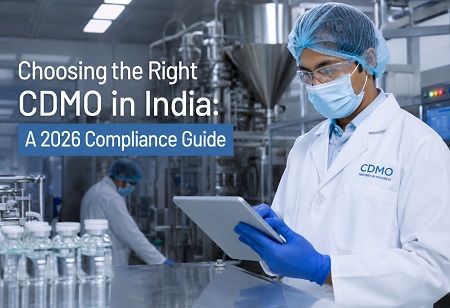
The pharmaceutical outsourcing landscape has changed dramatically in recent years, making the search for the Right CDMO in India a far more strategic decision than ever before.
In 2026, selecting a Contract Development and Manufacturing Organization (CDMO) is no longer just about manufacturing capacity, technical expertise, or cost efficiency.
Regulatory expectations have intensified, supply chains remain vulnerable to disruption, and data integrity standards continue to evolve across global markets, increasing the importance of a strong Compliance Guide for pharmaceutical and biotech companies evaluating CDMO partnerships.
As a result, pharmaceutical and biotech companies must now evaluate CDMO partners with far greater depth than ever before.
A “clean” inspection history alone is no longer enough to determine whether a manufacturing partner is truly reliable. Regulators such as the FDA, EMA, and MHRA are increasingly focused on operational transparency, quality culture, digital traceability, and continuous compliance readiness.
Even highly experienced manufacturers can face observations during inspections. What matters most is how effectively those issues are managed, corrected, and prevented from recurring.
In this environment, companies that fail to properly assess a CDMO’s compliance maturity risk far more than operational inconvenience. Poor partner selection can lead to import alerts, delayed product launches, costly remediation programs, regulatory scrutiny, and long-term damage to commercial credibility.
The stakes are especially high for organizations operating in biologics, sterile manufacturing, cell and gene therapy, and other highly regulated segments where compliance failures can rapidly escalate into global supply chain disruptions.
Modern CDMO evaluation therefore requires a broader and more strategic approach. Sponsors must look beyond surface-level certifications and examine how a manufacturing partner operates internally, responds to risk, manages data, and maintains inspection readiness. The strongest CDMO relationships in 2026 are built not only on manufacturing capability, but also on shared accountability for quality, patient safety, and regulatory success.
Also Read: Pharma CDMOs in India & CDMO 2.0 Model: Detailed Review 2026
"India has long held the reputation of being the 'pharmacy of the world,' especially in the generic pharma segment ... However, when it comes to CDMO — the service-driven side of the pharma industry — India still plays a relatively small role on the global stage," says Dr. Abdelaziz Toumi, CEO, Lupin Manufacturing Solutions (LMS)
When evaluating a CDMO, 2026 best practices require auditing more than just a "clean" history:

One of the biggest mistakes pharmaceutical companies make when evaluating aCDMO is assuming that a facility with zero observations automatically represents the safest option. In reality, regulatory inspections are complex, and even well-managed facilities may receive findings from agencies such as the FDA, EMA, or MHRA. What separates strong CDMOs from weak ones is not the absence of past issues, but the level of transparency surrounding them.
In 2026, best practices require sponsors to request inspection records covering at least the previous three to five years. These records should include FDA Form 483 observations, Warning Letters, EMA findings, MHRA reports, and any associated corrective action documentation. A reliable CDMO should be willing to openly discuss these findings rather than avoid or minimize them.
Inspection histories reveal far more than compliance status alone. They provide insight into operational discipline, leadership accountability, and the organization’s overall quality culture. Recurring observations related to contamination control, documentation practices, environmental monitoring, or data management often indicate systemic weaknesses that may continue to create risk in the future.
Transparency has become increasingly important because global regulators now share intelligence more frequently across jurisdictions. A compliance issue identified during one inspection may quickly influence regulatory decisions in multiple markets. This interconnected oversight environment means pharmaceutical companies must evaluate a CDMO’s global compliance exposure rather than focusing only on local approvals.
Key records sponsors should typically request include:
A CDMO that openly discusses past inspections demonstrates maturity and confidence in its quality systems. By contrast, incomplete disclosure or resistance to sharing historical findings should immediately raise concerns during vendor qualification.
A regulatory observation alone does not define a CDMO’s reliability. The real measure of operational maturity lies in how effectively the organization responds after a problem is identified.
In many cases, experienced pharmaceutical companies view remediation effectiveness as a stronger indicator of quality culture than inspection outcomes themselves. Even highly advanced manufacturing facilities can encounter compliance gaps. What matters is whether leadership responds quickly, identifies root causes accurately, and implements sustainable corrective actions.
In 2026, regulators are placing greater emphasis on long-term remediation effectiveness rather than temporary fixes designed to satisfy inspection deadlines. Agencies increasingly expect manufacturers to demonstrate that corrective actions are fully integrated into operations and continuously monitored over time.
Sponsors evaluating a CDMO should carefully review how previous deficiencies were addressed. This includes analyzing root-cause investigations, CAPA implementation timelines, employee retraining efforts, and follow-up monitoring programs. Repeated findings in the same operational area often indicate that earlier remediation efforts were incomplete or ineffective.
A mature remediation strategy usually reflects strong executive involvement. High-performing CDMOs treat compliance as a company-wide responsibility rather than an isolated quality department function. Leadership teams actively monitor deviation trends, allocate resources for continuous improvement, and maintain visibility into inspection readiness across facilities.
Several indicators often reveal whether remediation programs are truly effective:
A CDMO’s response to failure often reveals more about its long-term reliability than the failure itself. Organizations capable of learning from inspections and continuously improving operations are generally better positioned to maintain compliance stability in increasingly demanding regulatory environments.
Rajendra Kumar Sahu (CEO) & Jordi Robinson (CCO), Navin Molecular said, "India remains economically advantageous in comparison with its competitors ... The bigger and more established Indian CDMOs have made huge advances and investments over the past decades, and their facilities would rival the infrastructure and quality seen in the west. As well as excellent facilities, India boasts a large, educated workforce."
Data integrity has become one of the most heavily scrutinized aspects of pharmaceutical manufacturing in 2026. Regulatory agencies now view weak data governance not simply as a documentation issue, but as a direct threat to product quality, patient safety, and manufacturing reliability.
As manufacturing operations become increasingly digitized, sponsors must evaluate whether a CDMO maintains secure, validated, and traceable electronic systems across all critical processes. Reliance on outdated paper-based systems or partially digitized workflows significantly increases compliance risk.
Modern regulatory expectations require electronic systems that include audit trails, secure user access controls, electronic signatures, automated backups, and validated data management processes. Regulators also expect organizations to demonstrate full traceability of manufacturing records, laboratory testing data, and quality investigations.
Weak data controls can create serious operational consequences. Even small inconsistencies may trigger warning letters, import restrictions, delayed approvals, or regulatory investigations. In severe cases, regulators may question the credibility of entire manufacturing datasets, forcing companies to repeat validation activities and stability studies at enormous cost.
Sponsors should pay particular attention to whether the CDMO complies with FDA 21 CFR Part 11 requirements and equivalent international standards. This is especially important in sterile manufacturing, biologics production, and advanced therapy operations where traceability expectations are extremely high.
Critical systems commonly evaluated during audits include:
Another major consideration in 2026 is the growing use of automation and AI-assisted manufacturing tools. Many advanced CDMOs now rely on predictive analytics, automated deviation detection, and digitally integrated quality monitoring systems. While these technologies improve operational efficiency, they also introduce new validation and oversight requirements.
Sponsors must therefore ensure that digital systems remain transparent, validated, and fully reviewable during inspections. Regulators are becoming increasingly cautious about automated systems that lack sufficient human oversight or clear traceability.
Ultimately, strong data integrity systems are no longer optional. They are now considered one of the core foundations of modern pharmaceutical compliance.
Also Read: How CDMOs Are Driving Agility and Innovation in the Pharmaceutical Supply Chain
Quality agreements have evolved far beyond legal documentation. In 2026, they serve as critical operational frameworks that define responsibilities, communication expectations, and quality oversight between sponsors and CDMOs.
Weak or generic agreements create dangerous compliance gaps long before manufacturing begins. During deviations, product complaints, or regulatory inspections, unclear responsibilities can quickly escalate into delayed investigations, reporting failures, and operational confusion.
A strong quality agreement clearly defines accountability across all major quality functions, including change control, deviation management, batch release procedures, supplier qualification, documentation review, and regulatory communication. Every agreement should be tailored to the specific manufacturing process, product category, and regulatory market involved.
One of the most important sections within a quality agreement involves change management procedures. Even seemingly minor manufacturing adjustments can create major regulatory implications if sponsors are not informed properly. Changes involving raw material suppliers, analytical methods, equipment, or process parameters may require additional regulatory filings or validation activities.
In 2026, regulators increasingly expect pharmaceutical sponsors to maintain active oversight of outsourced manufacturing operations. Companies can no longer assume that compliance responsibility rests solely with the CDMO. Regulatory agencies continue to emphasize that sponsors remain ultimately accountable for product quality and patient safety.
Effective quality agreements generally define:
Strong agreements also establish expectations during inspection events. Sponsors should know exactly when they will be notified about regulatory findings and how communication will occur throughout the inspection process.
The best CDMO partnerships treat quality agreements as living operational documents rather than static contracts. They are reviewed regularly, updated proactively, and integrated into day-to-day quality management systems.
In highly regulated pharmaceutical environments, inspection readiness cannot be treated as a temporary activity. Leading CDMOs in 2026 operate under the assumption that regulators could arrive at any time.
One of the clearest indicators of this mindset is the strength of the organization’s internal audit program.
Internal audits help identify operational weaknesses before regulators uncover them. Mature CDMOs conduct regular, risk-based audits covering manufacturing operations, laboratories, warehouses, computerized systems, utilities, supplier networks, and quality processes. These audits are designed not only to identify compliance gaps, but also to strengthen continuous improvement efforts across the organization.
Mock inspections have become increasingly common among advanced CDMOs. These exercises simulate real FDA or EMA inspections and test how effectively employees respond under regulatory pressure. Mock audits evaluate documentation accessibility, employee preparedness, interview consistency, and operational discipline.
Elite CDMOs often conduct these exercises using independent third-party experts who can provide objective assessments of inspection readiness.
A proactive audit culture usually reflects strong leadership engagement. Organizations with mature compliance systems typically involve executive management directly in audit reviews, quality metrics, and CAPA oversight. Compliance is treated as a strategic business priority rather than a reactive obligation.
Strong internal audit programs also support operational continuity by identifying risks before they escalate into larger regulatory events. This reduces the likelihood of supply disruptions, delayed approvals, or costly remediation programs.
For pharmaceutical sponsors, partnering with a CDMO that prioritizes continuous inspection readiness significantly lowers long-term operational and regulatory risk.
In 2026, the consequences of selecting the wrong CDMO extend far beyond routine operational setbacks. Increasing regulatory scrutiny, global supply chain complexity, and stricter compliance expectations have significantly raised the risks associated with poor manufacturing oversight. A single compliance failure at the CDMO level can quickly escalate into regulatory action, commercial disruption, financial losses, and long-term reputational damage.
Pharmaceutical and biotech companies are therefore under growing pressure to evaluate manufacturing partners not only for technical capability, but also for operational resilience and quality maturity. Failure to properly assess compliance readiness can lead to serious business consequences that affect product availability, launch timelines, investor confidence, and market competitiveness.
Then immediately continue with:
 In 2026, import alerts and shipment detention have become some of the most damaging consequences of poor CDMO selection. Regulatory agencies such as the FDA are increasing oversight of global pharmaceutical manufacturing facilities, particularly those involved in API production, sterile manufacturing, and high-risk therapeutic categories, including facilities monitored under FDA “Green List” import mechanisms. When regulators identify significant compliance deficiencies at a manufacturing site, products can be blocked from entering critical markets, creating immediate supply chain disruption.
For pharmaceutical companies operating with lean inventory models, even a temporary import restriction can trigger widespread operational problems. Products detained at ports may lead to inventory shortages, missed delivery commitments, delayed commercial launches, and revenue losses across multiple regions. In some cases, one compliance issue at a single manufacturing facility can affect several products simultaneously, especially when companies rely heavily on a single CDMO partner.
The global nature of pharmaceutical regulation has also intensified the impact of import restrictions. Regulatory agencies increasingly share inspection intelligence and compliance findings across jurisdictions. As a result, a warning action in one country may quickly influence regulatory decisions in others, expanding the commercial consequences beyond the original market.
Companies evaluating CDMOs in 2026 must therefore examine not only current compliance status, but also the organization’s long-term inspection history, operational consistency, and ability to maintain continuous regulatory readiness.
The financial cost of correcting compliance failures after a regulatory incident is often far greater than companies initially expect. In many cases, post-incident remediation programs can cost two to three times more than proactively selecting a compliance-focused CDMO from the beginning.
When serious deficiencies are identified during inspections, pharmaceutical companies may be forced to invest heavily in corrective actions across multiple operational areas. These expenses can include facility upgrades, equipment replacement, consultant support, additional validation activities, employee retraining programs, and expanded quality oversight initiatives. In severe cases, manufacturing operations may need to pause entirely until regulators are satisfied with remediation efforts.
The situation becomes even more expensive when data integrity concerns are involved. Regulators may question the reliability of entire manufacturing datasets, forcing companies to repeat stability studies, analytical testing, process validation, and batch documentation reviews. These delays create both direct financial losses and long-term commercial setbacks.
Remediation costs also extend beyond operational spending. Regulatory scrutiny can negatively affect investor confidence, partnership opportunities, and market reputation. Public warning letters or import restrictions may influence customer trust and create uncertainty around future product availability.
In 2026, pharmaceutical companies increasingly recognize that prevention is significantly less expensive than recovery. Choosing a CDMO with strong quality systems, transparent operations, and mature compliance culture is now considered a critical financial risk-management strategy rather than simply a regulatory requirement.
"The Indian companies are more preferred in terms of contract manufacturing for the new products as they were able to maintain that trust even during Covid-19 … companies is required to manufacture campaign based molecules that even China does not have as they are used to long term campaigns," says Abhishek Aggarwal, President & COO, Bharat Rasayan Ltd.
Product launch delays remain one of the most serious consequences of weak CDMO compliance performance. In highly competitive pharmaceutical markets, timing is often directly connected to commercial success. Even a few months of delay can significantly affect revenue potential, market share, and investor expectations.
Regulatory deficiencies at a CDMO can disrupt commercialization timelines in several ways. Failed validation activities, unresolved deviations, incomplete investigations, contamination events, or weak data integrity controls may delay product approvals or trigger additional regulatory review. In some situations, manufacturers may need to repeat critical process qualification activities before products can proceed to market.
For biotech companies and emerging pharmaceutical firms, these delays can be particularly damaging. Many organizations operate within limited funding windows and depend heavily on milestone-driven approvals. A prolonged manufacturing setback may impact investor confidence, partnership agreements, and long-term growth strategy.
Commercial risks become even greater in specialized therapeutic categories such as biologics, cell and gene therapy, and sterile injectables, where manufacturing complexity already creates significant regulatory pressure. In these sectors, operational failures at the CDMO level can rapidly escalate into large-scale launch disruptions.
Satakarni Makkapati, CEO of Aurobindo Biosimilars, Vaccines and Peptide Businesses (Aurobindo Pharma) says, "The kind of capacities that we are installing for mammalian cell culture manufacturing are over 15 kL bioreactor scales. This is higher than the capacities that you see in India in contract manufacturing."
Beyond immediate revenue impact, delayed launches may also reduce competitive advantage. Companies risk losing market exclusivity opportunities, first-to-market positioning, and early physician adoption if competitors reach commercialization faster.
For this reason, pharmaceutical sponsors in 2026 increasingly evaluate CDMOs not only for manufacturing capability, but also for their ability to support predictable, stable, and inspection-ready commercialization pathways.
The role of the CDMO has fundamentally evolved in 2026. Pharmaceutical outsourcing is no longer centered solely around manufacturing capacity or cost reduction. Today’s most valuable CDMO partners contribute to regulatory strategy, quality management, supply chain resilience, and long-term operational stability.
As regulatory expectations continue to rise, pharmaceutical companies must adopt a more sophisticated approach to vendor evaluation. Inspection transparency, remediation effectiveness, data integrity systems, quality agreements, and proactive audit readiness have all become essential indicators of compliance maturity.
Organizations that fail to thoroughly assess these areas expose themselves to significant operational, financial, and regulatory risk. Import alerts, remediation costs, delayed launches, and damaged credibility are no longer rare consequences. They are increasingly common outcomes of inadequate oversight and poor partner selection.
The strongest CDMO partnerships are those built on transparency, accountability, and shared responsibility for quality and patient safety. In an increasingly complex global pharmaceutical environment, the most successful companies will not necessarily be those with the largest manufacturing networks, but those with the most resilient and compliance-focused partnerships.
.jpg)

.jpg)



, CDSCO.jpg "Fostering a Quality Culture in the Pharmaceutical Industry")