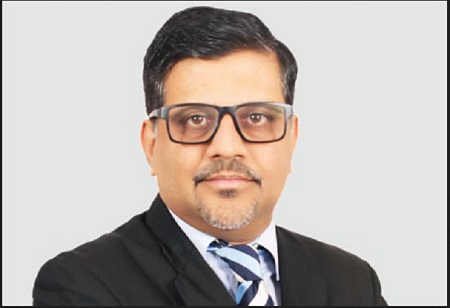
Deepak Arora, Country Lead and Managing Director & General Manager, Sanofi India Limited
The pharmaceutical industry is undergoing a significant transformation, moving beyond its traditional strengths in manufacturing and generics towards innovation, research and patient-centric healthcare.
As India strengthens its position in the global pharmaceutical landscape, collaboration between industry, government, academia and healthcare stakeholders will play an increasingly important role in driving this transition.
On the topic of the power of partnerships in advancing healthcare innovation and strengthening India's pharmaceutical ecosystem, Deepak Arora, Country Lead and Managing Director & General Manager – Pharma at Sanofi India Limited, shares his perspectives on patient-centric leadership, India's evolving innovation capabilities, public-private collaboration and the policy reforms needed to encourage research and development. Drawing on more than three decades of experience across international markets, he also highlights how collective action can improve healthcare access and address public health challenges.
With more than three decades of experience in the pharmaceutical industry across different markets and geographies, what is one lesson from your experience that has always stayed with you?
Irrespective of geographical boundaries, the organizations we work for, or the teams we lead, one fundamental principle remains unchanged: keeping the patient at the center. The strategy should follow from that principle.
I often tell my team that whenever they make an important decision, they should imagine an empty chair with a patient sitting in it. Every decision should be made with the responsibility of serving that patient in mind.
Similarly, trust is another important element. Transparency, consistency in communication, and delivering on commitments are essential, particularly in an environment filled with uncertainty. Connecting to that, leadership itself is also about enabling teams to serve the larger purpose of putting patients first.
Do the fundamentals of solving challenges differ across cultures, or do they remain the same at the core?
What binds us together in this industry is the patient. What may change are the ecosystem and the readiness of the country in which we serve that patient.
For example, in Africa, the complete healthcare ecosystem needs to be developed before innovation can be introduced effectively. Bringing innovation into a country does not achieve much if diagnostic screening and reimbursement systems are not ready. Public-private partnerships also play an important role in building this ecosystem.
India, on the other hand, already has experience with innovation and a certain level of readiness for access. So, the requirement here is to expand it.
The challenges are different because the public and private healthcare ecosystems operate differently. While a large number of patients and much of the volume are in the public sector, whereas the private sector largely depends on out-of-pocket expenditure.
Therefore, the approach may differ depending on the country, but the patient remains the central consideration.
According to you what has been the biggest transformation in India's pharmaceutical industry over the last six decades?
India has traditionally been known as the pharmacy of the world, with its strength in manufacturing and generics. However, the industry is now moving towards writing its next chapter in innovation.
Some of the developments I have witnessed include the growth of Global Capability Centers (GCCs), greater attention to early innovation, and constructive engagement with the government to discuss reforms and policies that can strengthen the innovation ecosystem.
Having returned after four years, the transformation is particularly evident. India is no longer being recognized only as a manufacturing and generic powerhouse rather it is emerging as a country that can contribute to global innovation.
And proving this two major developments stand out. The first is BioPharma Shakti and the reforms being introduced by the government. The second is the Indo-French Innovation Year and the Bharat Innovates initiative, which brought deep-tech and AI startups from India onto a global platform and helped present India's innovation capabilities to the world.
Understanding the importance of partnerships, how does the idea of power of partnership resonate with you?
We experience the power of partnerships every day. Public-private partnerships with the government and stakeholders, including patient advocacy groups, are essential. Improving patients' quality of life cannot be achieved by one organization working alone. It requires different stakeholders to work together, communicate the same message, and ensure that it reaches the people who need it.
It is also not a question of innovation versus generic organizations. As a company, we work with the Indian pharmaceutical industry to take our innovations to the last mile. We have been working with organizations such as Emcure, Cipla, and DRL. This is another example of how partnerships can help extend access.
The growth of Make in India initiatives and GCC forums, through which innovation hubs are being developed, is also evidence of partnerships between the industry and the government, including state governments.
What role did Sanofi play in India's polio eradication campaign, and what lessons did it leave behind?
Polio eradication was not just a campaign. It was an ambitious goal that was taken up as a challenge and made achievable through collective efforts. Active partnerships played a major role in bringing together the pharmaceutical industry, public health organizations, patient advocacy groups, and supply-chain stakeholders around a shared mission.
Sanofi focused on ensuring consistent vaccine supply, reaching the last mile, and creating awareness. It was not simply about pushing the campaign from one end. Efforts had to come from both sides to ensure that the vaccines reached people and that the initiative was supported.
This achievement cannot be attributed to one organization alone. It was the collective achievement of all stakeholders. The biggest lesson is that we cannot accomplish such goals independently. We have to work together and sometimes take the challenge personally to make it happen. I am proud to have been part of an organization that contributed to India's polio eradication mission.
Can the polio eradication campaign serve as a blueprint for addressing future public health challenges?
COVID-19 provided another example of how industries can come together. It did not matter where the innovation originated; technology transfers took place, and stakeholders worked collectively to address the challenge of vaccine availability. The effort was not limited to making vaccines available in India. It also involved ensuring that they reached people in the last mile and supporting the rest of the world.
The polio-free India campaign and the COVID-19 response have given us a clear blueprint. Different therapeutic areas and diseases will bring their own challenges, but the experience has shown that we are capable of working together.
We should not duplicate efforts; instead, we should replicate successful approaches and bridge the gaps where we could not perform well earlier. We should also focus on speed over perfection to make things happen faster.
What are the biggest opportunities for India as it emerges as a global hub for innovation?
I would bring the discussion back to GCCs. I do not particularly like the term Global Capability Centers because it can create the impression that these centers are meant only for backend work or cost reduction. Today, I would rather call them innovation hubs.
Sanofi is one example. Over the last three years, we have expanded our resources, and our workforce is moving towards 5,000 employees across two offices in Hyderabad. The work being undertaken here is no longer limited to conventional go-to-market strategies.
We are working in areas such as artificial intelligence, data science, early research and development, health economics and outcomes research, and innovative access models for different countries. These activities are being driven by India's talent.
Make in India should not be understood only in terms of manufacturing facilities. It is also about creating innovation hubs and developing talent through GCCs for the rest of the world. This transformation is already happening, and I believe that within the next two to three years, we will see more innovation coming from India.
Our responsibility is not only to bring Indian innovation to the global stage but also to identify opportunities to apply some of these innovations within our own country.
What capabilities should India invest in as GCCs and innovation take center stage?
Some of the important areas of investment include artificial intelligence, big data science, real-world evidence, and health economics and outcomes research. India was somewhat behind in health economics and outcomes research, but we are now catching up.
Innovation should not be viewed only in terms of price. It should also be assessed through cost-effectiveness. The capabilities we are developing can help us demonstrate this and apply some of these approaches in the public healthcare sector.
Building capabilities in health economics and real-world evidence, along with generating our own data, can change the perception that innovation is expensive. It can help demonstrate how innovation can also be cost-effective.
How can industry-government collaboration and public policy support innovation in India?
One important requirement is to encourage investment in India so that the country is not viewed only as a manufacturing destination. Manufacturing and generics should coexist with innovation. This can happen when the industry receives incentives for research and development and when reforms are introduced in areas such as intellectual property.
Regulatory Data Protection (RDP) is one example. There are several misconceptions surrounding it, but countries such as China have taken steps to protect technical data. Significant investment goes into generating this data in terms of money, effort, resources, and time. If there is uncertainty about whether the data will be protected or appropriately incentivized, it becomes difficult to encourage further investment.
India therefore needs forward-looking policies that protect data, strengthen regulatory pathways, improve ease of doing business, and enable innovation to reach the market earlier.
I would also like to clarify that RDP does not mean extending patents. It is about protecting clinical data, which can help innovation and generics coexist, while supporting affordability and access.
What message would you give to the next generation entering the pharmaceutical industry?
This takes me back to why I joined the pharmaceutical industry three decades ago. I had never planned to enter this field. However, one presentation changed my perspective. A general manager at Eli showed us a product, and it reminded me of something I had seen at home. My mother was taking insulin, and I understood that there was no life without it.
That is the connection I want young professionals to develop with the pharmaceutical industry. It is not just about product launches, brands, money, or assets. The biggest asset of any organization is its people, and people should join with a sense of purpose.
The purpose is to serve millions of people living with diseases and improve their lives. Regardless of the function they work in, professionals should remember that their work contributes to bringing a smile to patients and improving the lives of people suffering from serious diseases. We should also remember that any one of us could become a patient tomorrow.
The speed of translating innovation into execution remains important. Today's talent is also ahead in the way it thinks about technology. Artificial intelligence is already familiar to the younger generation, and they approach it from a different perspective. Combining that outlook with patient-centricity will be important for the industry's future. I welcome young people to join the pharmaceutical industry.



, CDSCO.jpg "Fostering a Quality Culture in the Pharmaceutical Industry")