
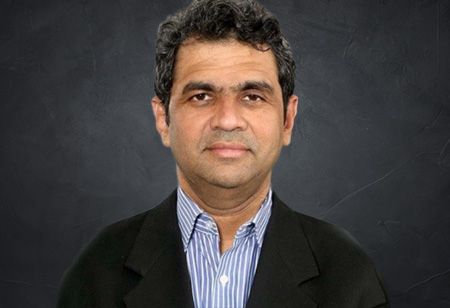
Dr. Rajiv Chhibber, Joint Forum Coordinator Association of Indian Medical Device Industry (AiMeD)

In an insightful discussion on “Building a Strong MedTech Ecosystem” with Thiruamuthan, Assistant Editor at India Pharma Outlook, Dr. Rajiv Chhibber, Joint Forum Coordinator, Association of Indian Medical Device Industry (AiMeD), shares his perspectives on strengthening India's position as a globally competitive MedTech hub. Drawing on his extensive experience across policy forums, government engagements, and industry platforms, he highlights the importance of balancing immediate industry needs with broader national priorities. His exposure to leading MedTech hubs in Singapore, Boston, and Germany has further reinforced the value of collaborative, innovation-driven ecosystems in driving sustainable growth.
In an increasingly dynamic geopolitical and technology-driven landscape, Dr. Chhibber believes that adaptability, stakeholder alignment, and evidence-based policymaking are critical to navigating complexity and delivering long-term value for both industry and society.
Given the growing importance of regional corridors in MedTech development, how are they reshaping manufacturing, innovation, and supply chain ecosystems?
Regional MedTech corridors are redefining the global healthcare manufacturing landscape by shifting the industry from a concentrated production model to a more distributed, resilient, and innovation-driven ecosystem. Countries are increasingly developing specialized corridors that integrate manufacturing, R&D, logistics, testing infrastructure, and academia within a coordinated framework.
Globally, there are several successful examples that offer valuable lessons. The Minnesota MedTech corridor in the United States, which is closely associated with companies such as Medtronic, demonstrates how strong collaboration between academia, advanced manufacturing, and the clinical ecosystem can create sustained innovation leadership.
Similarly, during a visit to Germany, I had the opportunity to learn more about the Tuttlingen cluster, often referred to as the world capital of surgical instruments. It showcases how a highly specialized SME-driven ecosystem can establish global leadership in niche segments such as surgical devices and instruments.
India also has emerging examples of such regional specialization. The Surat belt, for instance, has evolved into an important hub for cardiovascular device manufacturing, highlighting the potential of focused industrial ecosystems within the country.
Another notable example is Singapore, where Biopolis and the Tuas Medical Devices Park demonstrate how integrated infrastructure, regulatory efficiency, and export-oriented manufacturing can create a highly competitive MedTech ecosystem.
Overall, these regional corridors are reshaping the industry by bringing together manufacturing capabilities, innovation ecosystems, supply chain networks, research institutions, and regulatory support within a single framework. This integrated approach not only strengthens manufacturing competitiveness but also accelerates innovation, improves supply chain resilience, and enables regions to build leadership positions in specific MedTech segments.
India's future MedTech leadership will depend on building specialized regional ecosystems that combine talent, regulatory efficiency, logistics, and advanced manufacturing capabilities.
Amid increasing demand for localized healthcare solutions, what role do regional corridors play in improving accessibility and responsiveness in MedTech delivery?
The whole concept of regional corridors is basically propelled in the right direction, as it was expected with the availability, accessibility, and affordability.
So, I would say that regional corridors would improve accessibility by enabling healthcare technologies to be designed, manufactured, and distributed closer to the end-user market. In a diverse country such as India, healthcare needs vary significantly across regions. In this regard, making localized innovation and manufacturing increasingly important.
So, I think, if we look at China, from a global point of view, the Shenzhen Medical Electronics Corridor in China illustrates how dense manufacturing ecosystems can rapidly respond to market demand through agile supply chains, component integration, etc.
In terms of India, we can leverage similar corridor-based models to develop regional-specific healthcare capabilities. For instance, if we take South India, it has emerged as a very strong electronics and imaging device corridor, but that's because of the engineering ecosystem present there. It has improved not only accessibility but also the responsiveness of academia towards MedTech delivery.
On the other hand, looking at the northern corridors, the focus is more on consumables. Further, if you go to the northwest areas, it's more on implants, diagnostics, and rehabilitation technologies.
Ultimately, the industrial corridors are confined largely to the infrastructure available there. Furthermore, these corridors will also improve responsiveness. A clear example is in the past, during COVID emergencies, when it reduced dependency on distant supply chains. India has demonstrated its ability to rapidly scale domestic manufacturing of diagnostics, PPEs, ventilator components and oxygen-related devices.
I would state this as when industry and government collaborated closely with academia, I think we had the best solutions available.
Also Read: Unlocking India's Innovation Potential in Pharma
As MedTech companies expand beyond traditional hubs, how are emerging corridors influencing investment patterns and infrastructure development?
The emerging corridors are significantly altering investment flows. Earlier, what was happening is the investment was confined to one or two regions.
However, now the necessary measures are taken, which is definitely altering the investment flows by encouraging companies to establish manufacturing and R&D bases closer to the strategic trade routes.
This enables companies to have an advantage of having skilled labor pools. Hence, I think that is a pattern which is now becoming more and more predominant globally.
In essence, India is also now revitalizing its entire pattern. Countries such as Ireland and Costa Rica have built successful Med-Tech ecosystems through strong regulations, skilled talent, workforce development, and business-friendly policies. Currently, India is striving to strengthen its own MedTech ecosystem and can learn from these models to become a globally competitive manufacturing and export hub.
The country has shifted towards a more state-centric model. The opportunity lies between combining scale and strategic geography. Certainly, India has been doing this through agreements such as EFTA trade agreement between European Union, UK, Gulf, and Oman trade agreements.
As a matter of fact, India can position itself as a trusted manufacturing and distribution base connecting Europe, Middle East, Africa, and Indo-Pacific markets. It is true that these corridors play a crucial role.
Despite India's progress in developing industrial infrastructure and policy support, companies have not yet fully leveraged initiatives such as PM Gati Shakti. This is significant because MedTech manufacturing depends heavily on integrated infrastructure, including multimodal logistics, cold-chain networks, cleanroom facilities, and reliable transport connectivity. As emerging industrial corridors become better connected to ports, airports, freight corridors, and digital logistics systems, they are likely to attract greater domestic and foreign investment.
When assessing the competitiveness of regional corridors, what factors such as talent availability, regulatory support, or logistics, matter most for sustainable growth?
Three critical pillars stand out for the success of India’s MedTech corridors: skilled talent, regulatory efficiency, and logistics integration. India possesses a strong foundation of engineering and pharmaceutical talent, but the next phase of growth will require deeper investments in biomedical engineering, regulatory sciences, quality systems, and translational research. These capabilities are essential for ensuring regulatory predictability and enabling faster approval pathways, both of which are critical for investor confidence.
Regulatory efficiency is critical for the success of MedTech corridors. In India, healthcare is largely a state subject, which can sometimes result in variations in regulatory implementation. Medical devices are categorized into classes A, B, C, and D, with lower-risk devices generally regulated at the state level and higher-risk devices overseen by central authorities. Given this regulatory landscape, coordination across stakeholders becomes crucial. The most successful MedTech corridors globally demonstrate that competitiveness is driven not by isolated incentives alone, but by the depth and integration of the overall ecosystem.
Logistics has also emerged as a key differentiator. Strategic policies can play a transformative role by reducing logistics costs and integrating manufacturing zones with ports, railways, airports, and industrial corridors. Recent geopolitical disruptions and supply-chain challenges have reinforced the importance of building domestic capabilities and reducing dependence on external trade routes.
The long-term sustainability of MedTech corridors depends not only on production capacity but also on the efficient movement of products across domestic and international markets. Global examples demonstrate this clearly. Germany's industrial corridors have benefited from decades of specialized technical training and workforce development. Singapore has leveraged highly coordinated regulatory systems and advanced infrastructure, while the Boston–Cambridge innovation corridor in the United States has shown how universities, hospitals, startups, and venture capital can come together to create a thriving innovation ecosystem.
India has the potential to replicate these successes by building an ecosystem that effectively integrates talent, regulatory efficiency, and logistics, thereby supporting both sustainable growth and global competitiveness.
Also Read: Pharmaceutical Procurement Strategies: How to Optimize Costs
In an environment where global supply chain disruptions have exposed vulnerabilities, how are regional corridors strengthening resilience and continuity in MedTech operations?
Recent disruptions, including the COVID-19 pandemic, geopolitical tensions in West Asia, and recurring global shipping bottlenecks, have reinforced the importance of diversified and regionally distributed manufacturing ecosystems. As a result, many countries are increasingly adopting China+1 and friend-shoring strategies, supported by free trade agreements that facilitate the seamless movement of goods and services across partner nations.
Countries such as Vietnam, Mexico, Costa Rica, and several Eastern European economies have benefited significantly from this shift by positioning themselves as reliable alternatives within global supply chains. Their success has been driven not only by manufacturing capabilities but also by efforts to improve the ease of doing business and attract long-term investment.
For the MedTech sector, resilience requires the development of localized supplier ecosystems across critical segments such as electronics, polymers, metals, sterilization technologies, packaging, and precision engineering. Regional manufacturing corridors can further strengthen supply-chain continuity by reducing overdependence on a single geography and enabling faster responses during periods of disruption.
India's experience during the pandemic demonstrated that domestic manufacturing capabilities can be scaled rapidly when policy and industry work in alignment. Initiatives such as the Production Linked Incentive (PLI) scheme have accelerated investments in high-value manufacturing. Looking ahead, specialized corridors focused on implants, diagnostics, critical-care devices, and digital health technologies, supported by Global Capability Centers (GCCs), could significantly enhance India's healthcare resilience while strengthening its export potential.
From a border perspective, resilience should be viewed not merely as a crisis-management strategy, but as the foundation for long-term healthcare sovereignty supported by globally competitive manufacturing capabilities.
While policy frameworks continue to evolve, how effective are current incentives and regulatory mechanisms in supporting corridor-led MedTech growth?
After COVID, India has introduced several policy initiatives that have strengthened the momentum for corridor-led MedTech growth. Key among these are the Production Linked Incentive (PLI) scheme and the establishment of dedicated medical device parks in Uttar Pradesh, Madhya Pradesh, and Tamil Nadu. In addition, emerging MedTech clusters across regions such as Rajkot, Odisha, Himachal Pradesh, and the Northeast are helping to expand the country's manufacturing footprint.
Infrastructure initiatives, including PM Gati Shakti and other connectivity-focused programs, are further supporting the development of integrated MedTech corridors. Together, these measures have helped attract manufacturing investments and enhance confidence in India's MedTech ecosystem.
India is also witnessing growing international interest. Industry bodies are increasingly engaging with global stakeholders, embassies, and trade delegations to explore collaborations in research and development, commercialization, testing infrastructure, standards harmonization, component manufacturing, and export growth.
At the same time, trade agreements such as EFTA and TEPA, along with ongoing engagements with the European Union and the United Kingdom, are creating more opportunities to integrate Indian manufacturing corridors deeply into global value chains.
From an industry perspective, the long-term objective should be to build a globally benchmarked MedTech ecosystem where Indian manufacturers compete not only on affordability, but also on innovation, quality, reliability, and technological capability.
For him, leadership is anchored in a simple yet powerful belief: sustainable progress in healthcare is built on collaboration, credibility, and long-term institution building. These principles have consistently guided his approach to leadership, policy engagement, and strategic decision-making across the MedTech ecosystem.
Key pillars that define his leadership philosophy include:





, CDSCO.jpg "Fostering a Quality Culture in the Pharmaceutical Industry")