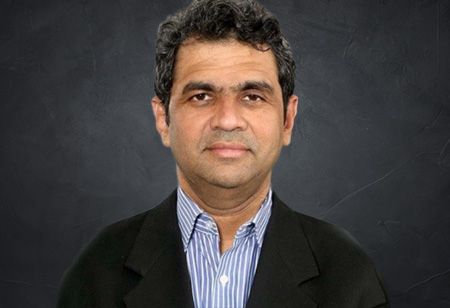
Manojkumar S, Co-Founder & CEO
Ranjith Kumar Velusamy, Co-Founder & Chief Business Officer and Pradeep Arunachalam, Co-Founder & CXO
For years, India's pharmaceutical and life-sciences sector has depended heavily on animal studies and imported tissue models for preclinical research. At the same time, reconstructed human tissues, organoids and other Non-Animal Methods (NAMs) are receiving greater attention because they can provide information based directly on human biology.
The opportunity for India, therefore, is not simply to adopt these technologies, but to develop credible models locally and make them available to industry at a commercial scale.
Biodimension Technology Private Limited was established to address this gap. Before setting up the company, its founders spoke with more than 50 stakeholders across pharmaceutical companies and research organizations and found a recurring problem: although tissue-engineering research existed in academia, India lacked locally developed, market-ready tissue models. Biodimension set out to change that by combining tissue engineering, human cells, biomaterials and biofabrication to develop reconstructed tissues, primary-cell products and patient-derived organoids for research, safety and efficacy testing.
Turning Tissue-Engineering Research into a Business
Biodimension's beginnings were considerably smaller than its scientific ambitions. Co-Founders Manojkumar Sampathkumar, Pradeep Arunachalam and Ranjith Kumar Velusamy came from interconnected biotechnology and research backgrounds, with their professional relationships tracing back to VIT and earlier academic associations.
The company started from a 150 sq. ft. office converted into a laboratory. At that stage, even consistently running contamination-free batches was an important achievement. The breakthrough came with BioDEpi, Biodimension's proprietary reconstructed human epidermis model. Early investment from VIT-TBI helped take the model towards product readiness and provided the first institutional validation of the founders' idea.
The business has since moved into a nearly 6,000 sq. ft. facility in Bengaluru and built a team of scientists around its tissue-engineering capabilities. Its first paying customer came onboard in 2024. Investments from Campus Angels Network and Indian Angel Network followed, while ISO 9001:2015 certification strengthened its quality framework. Biodimension today works with more than 50 organizations, a significant shift from the founders' early days of validating whether a domestic market for such models existed at all.
Biodimension works with human primary cells, biomaterials and biofabrication techniques to create three-dimensional, multicellular models designed to behave more like actual human tissues
Manojkumar S, Co-Founder & CEO , Ranjith Kumar Velusamy, Co-Founder & Chief Business Officer and Pradeep Arunachalam, Co-Founder & CXO
Moving Beyond Flat Cell Cultures
What Biodimension is attempting to improve is the biological relevance of laboratory testing. Conventional 2D cell cultures grow cells on flat surfaces and are useful for many research applications, but they cannot fully reproduce the structural complexity of human tissue. Biodimension instead works with human primary cells, biomaterials and biofabrication techniques to create three-dimensional, multicellular models designed to behave more like actual human tissues.
Its work now extends beyond reconstructed skin to disease models and patient-derived cancer organoids. As these organoids originate from patient samples, they can preserve important aspects of an individual's tumour biology, opening possibilities for studying drug response and disease behaviour in a more patient-relevant setting.
“The company is selective about what it develops. A proposed model must address a genuine testing requirement, be capable of being produced and validated consistently, and have a realistic route towards regulatory acceptance.
Reconstructed skin offered a relatively immediate commercial application, while disease models and cancer organoids represent longer-term opportunities in drug development and personalized medicine”, speaks Manojkumar Sampathkumar, Co-Founder & CEO.
Making New Models Usable for Industry
One of Biodimension's more important decisions has been to avoid remaining purely an R&D organization. Its reconstructed tissues, organoids and primary cells are being offered alongside testing services that pharmaceutical, personal-care and other life-sciences companies can incorporate into their existing workflows.
That distinction matters because scientific novelty alone does not guarantee industry adoption. Companies need reproducibility, documentation, defined turnaround times and confidence that a new testing approach can withstand regulatory scrutiny.
“This has also been Biodimension's biggest challenge. The founders found that market awareness and regulatory readiness were harder barriers than developing the underlying science. Indian companies and regulators were accustomed to established animal-testing routes and, where advanced tissue models were required, imported products”, shares Pradeep Arunachalam, Co-Founder & CXO.
Biodimension has consequently invested in validation, quality systems and regulatory engagement. Beyond ISO 9001:2015, it is working towards further Indian approvals as well as alignment with OECD guidelines and European requirements. It has also had to build specialized talent internally because experienced tissue-engineering professionals remain relatively scarce in India.
A Longer Road Towards Functional Tissues
The immediate opportunity for Biodimension lies in the growing acceptance of NAMs. As regulators place greater emphasis on validated human-relevant evidence, the company wants its models to meet international requirements rather than function as lower-cost domestic substitutes. Its ambitions, however, go considerably further. “Biodimension sees today's reconstructed tissues and organoids as an early foundation for increasingly functional tissue constructs.
Over time, as biofabrication and regenerative medicine advance, the company intends to move towards tissue and eventually organ manufacturing, supported by international collaborations in validation and technology development”, mentions Ranjith Kumar Velusamy, Co-Founder & Chief Business Officer.
For Biodimension, that long-term goal connects directly with the problem that led to its creation. India should not have to remain dependent on imported technologies to study human biology. By first commercializing locally developed tissue models and then building deeper capabilities in organoids and biofabrication, the company is attempting to create an indigenous base for a field that could become increasingly important to drug development, personalized medicine and regenerative healthcare.



.jpg)



, CDSCO.jpg "Fostering a Quality Culture in the Pharmaceutical Industry")